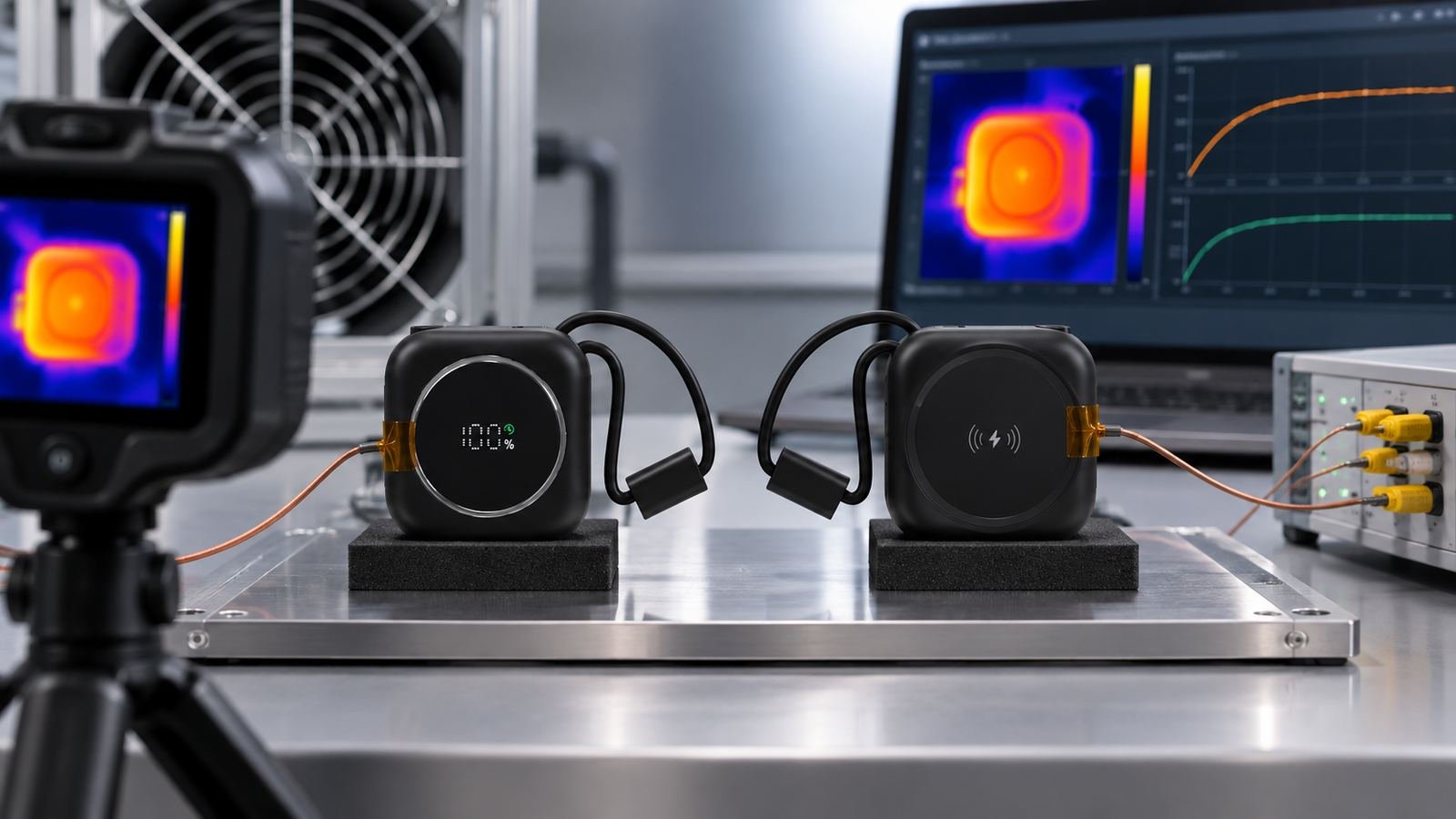

Power Bank Thermal & DC-DC Efficiency Reference

Quick answer: thermal and DC-DC efficiency must be evaluated at a defined operating point. Sustained output depends on conversion loss, cell loading, PCB and connector resistance, cable loss, firmware limits and enclosure heat paths.

Tie efficiency and temperature data to the exact SKU specification, PCBA/firmware revision, cable state, battery state, ambient condition and test duration.

← Engineering Resources · Next: Built-In Cable Loss →

AI-generated ZEROSET engineering visual: thermal dc dc efficiency hero

Quick Engineering Review

Separate peak output from sustained performance at a defined operating point.

Operating Point
Define input/output voltage, current, battery state and load before comparing results.
Efficiency
Measure input and output power at the same condition; do not use one best-case percentage universally.
Temperature
Record hotspots and enclosure temperature over the intended operating duration.
Revision State
PCBA, firmware, cable and cell/PACK state must match the tested sample.
AI-generated ZEROSET engineering visual: thermal dc dc efficiency review

Buyer Decision Points

Conversion Efficiency
Compare input and output power at the same voltage, current, battery state and load.
Cell & Power Path
Cell current, MOSFETs, inductors, PCB copper and connectors all add loss and heat.
Hotspots & Enclosure
Measure component hotspots and enclosure temperature rather than one average reading.
Duration & Derating
Confirm the target output can be sustained for the intended duration without thermal derating.
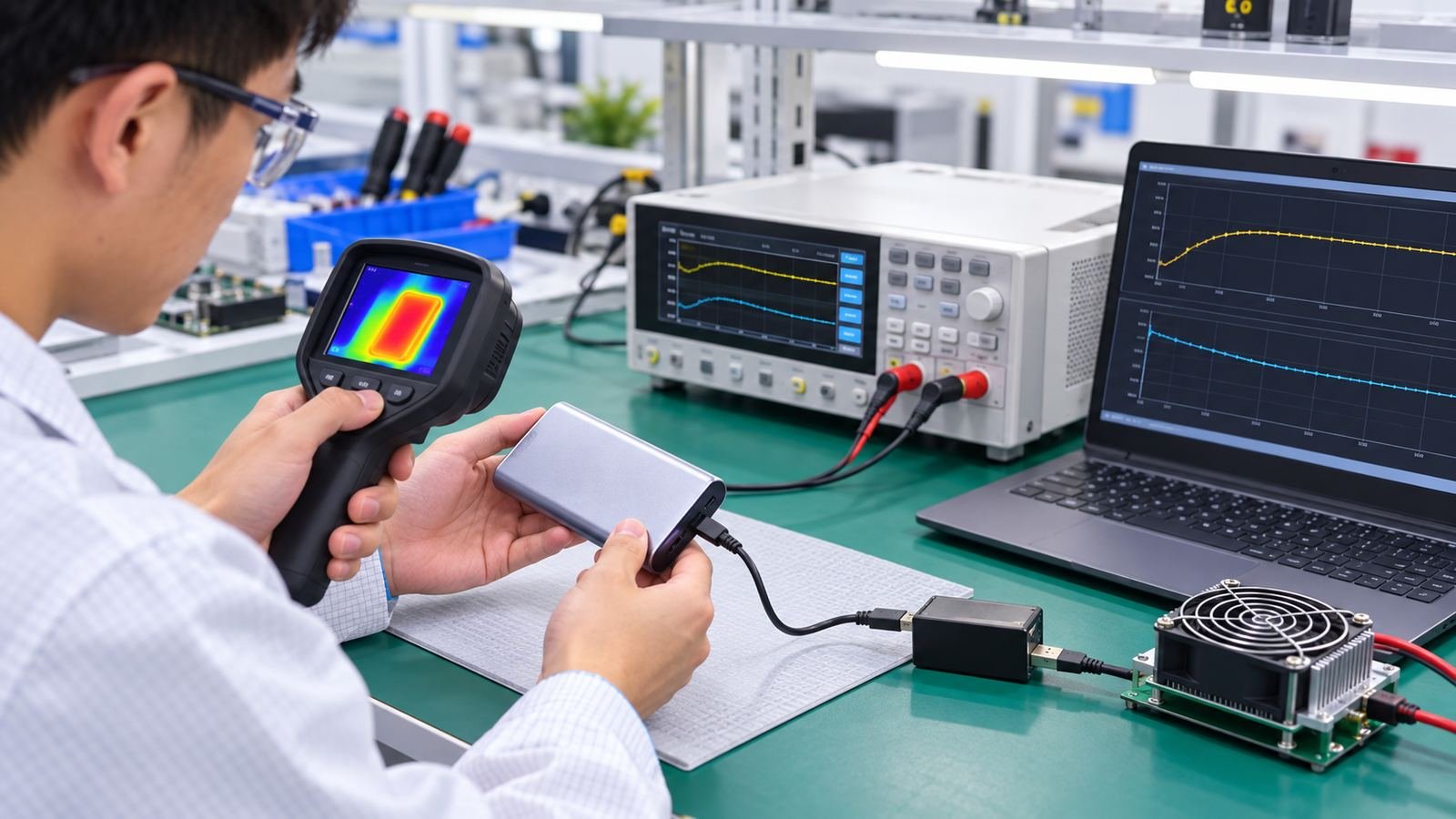
Power bank thermal efficiency buyer decision reference

Thermal & Efficiency FAQ

Does peak wattage prove sustained output?
No. Sustained power depends on efficiency, current-path loss, thermal limits and firmware behavior over time.
Is one efficiency percentage enough?
No. Efficiency changes with operating point, battery state, load, cable and temperature.
Why record ambient temperature and test duration?
Because the same SKU can show different thermal behavior at different ambient conditions and after heat has accumulated.