Project snapshot: This FLINQ power bank case study covers FLINQ Mammoth 20K, SEVVA Mammoth 20K and VOYA 10K — three documented Amit Electronics programs with model-level public cross-checks.
“One manufacturing program can support several retail stories, but each SKU still needs its own identity.”
These three brand programs show how a customer can build different 10K and 20K propositions while keeping engineering and sourcing control organized. Shared platform thinking can improve efficiency, but capacity, charging behavior, labeling and compliance still need to remain traceable to each final SKU.
The interesting problem here was reuse without sameness. FLINQ and SEVVA could benefit from a common 20K direction, but each still needed its own retail identity. VOYA then moved to a slimmer 10K role, where reusing the same platform would have weakened the product story instead of saving time.
20,000mAh · white / black retail program · EAN-controlled artwork
Story: The Mammoth role is endurance. Once the core product was right, colour, EAN and packaging control became the important differences at retail.
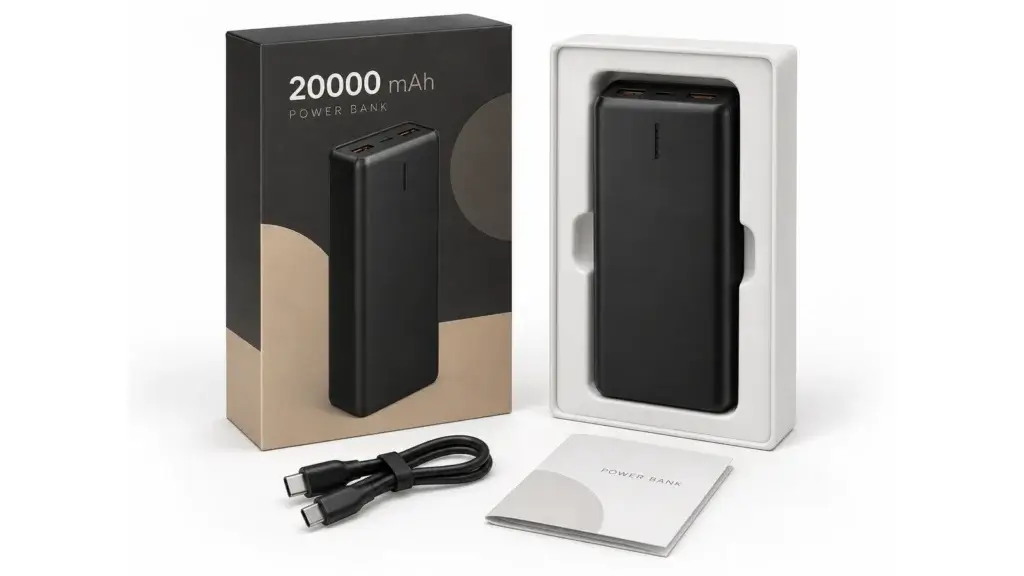
20,000mAh · shared retail direction · separate brand and packaging execution
Story: SEVVA shows where platform reuse helps most: keep the mature 20K hardware, then separate the brand through artwork, colour system and packaging.

10,000mAh · slim format · 12W retail message · separate platform direction
Story: VOYA needed a different answer: lighter, slimmer and easier to carry. At that point, forcing the 20K architecture to do the job would have saved a platform but damaged the product role.

Evidence: FLINQ Official EAN List · SEVVA Public Manual. Public sources cross-check product identity only.
Buyer takeaway: reuse mature platforms when the core product fits; separate CMF, artwork and packaging; change platform when the product role changes. Factory & Quality Control → · Custom Development →
FLINQ Mammoth 20K, SEVVA Mammoth 20K and VOYA 10K programs handled through Amit Electronics.
FLINQ, SEVVA and VOYA are separate retail-brand references. The case’s retained records should be used to describe each supported configuration rather than to claim a single group-wide factory relationship. For procurement teams, a useful next step is to request the exact SKU’s documented specification, approved sample and traceable evidence for the claim being evaluated. ZEROSET can assess comparable private-label OEM/ODM manufacturing requirements, including capacity, charging outputs, brand artwork, destination country and order forecast; modifications must be validated for the final configuration rather than inherited from an unrelated brand’s listing.
They cross-check product identity, public specifications or market presence only. Manufacturing claims remain limited to retained project evidence.
A public shop listing can show the claimed capacity, appearance and package design for an individual FLINQ, SEVVA or VOYA device. It cannot prove ZEROSET supplied every item sold under those labels. For procurement teams, a useful next step is to request the exact SKU’s documented specification, approved sample and traceable evidence for the claim being evaluated. ZEROSET can assess comparable private-label OEM/ODM manufacturing requirements, including capacity, charging outputs, brand artwork, destination country and order forecast; modifications must be validated for the final configuration rather than inherited from an unrelated brand’s listing.
The retained records cover related programs handled through the same customer context, showing how related platform directions can support different retail brands and capacity tiers.
Three brand references illustrate how related consumer-electronics channels can position different products. They do not imply a legally shared brand owner, identical product internals or common certification. For procurement teams, a useful next step is to request the exact SKU’s documented specification, approved sample and traceable evidence for the claim being evaluated. ZEROSET can assess comparable private-label OEM/ODM manufacturing requirements, including capacity, charging outputs, brand artwork, destination country and order forecast; modifications must be validated for the final configuration rather than inherited from an unrelated brand’s listing.
No. Public links cross-check product identity or market presence only. Manufacturing claims remain limited to retained project evidence.
A listing for a FLINQ, SEVVA or VOYA product is not direct manufacturing proof. Supplier evaluation needs controlled project evidence and clear identification of which SKU ZEROSET actually handled. For procurement teams, a useful next step is to request the exact SKU’s documented specification, approved sample and traceable evidence for the claim being evaluated. ZEROSET can assess comparable private-label OEM/ODM manufacturing requirements, including capacity, charging outputs, brand artwork, destination country and order forecast; modifications must be validated for the final configuration rather than inherited from an unrelated brand’s listing.
Compare user runtime, size, weight, charging power, cable or port layout, target price and channel role rather than using capacity as the only difference.
A 10K product can be a portable mainstream option; a 20K product appeals to consumers wanting longer reserve capacity. Separate each model’s weight, Wh, rated output, cable design and price target. For procurement teams, a useful next step is to request the exact SKU’s documented specification, approved sample and traceable evidence for the claim being evaluated. ZEROSET can assess comparable private-label OEM/ODM manufacturing requirements, including capacity, charging outputs, brand artwork, destination country and order forecast; modifications must be validated for the final configuration rather than inherited from an unrelated brand’s listing.
Yes when the selected architecture and certification scope allow it. Logo, CMF, artwork and packaging can vary while the approved product configuration remains controlled.
A common mature power bank platform may accommodate several authorized customer logos and packaging designs. However, private-label projects should protect confidential brand artwork and agree quality control for each run. For procurement teams, a useful next step is to request the exact SKU’s documented specification, approved sample and traceable evidence for the claim being evaluated. ZEROSET can assess comparable private-label OEM/ODM manufacturing requirements, including capacity, charging outputs, brand artwork, destination country and order forecast; modifications must be validated for the final configuration rather than inherited from an unrelated brand’s listing.
Battery and PCB revision, capacity, charging profiles, cable or port configuration, labeling, packaging and compliance evidence should stay traceable to the exact SKU.
Even if an ODM battery platform is shared, carton text, plug or cable variants, model names, regional labels and traceability remain specific to each approved customer and SKU. For procurement teams, a useful next step is to request the exact SKU’s documented specification, approved sample and traceable evidence for the claim being evaluated. ZEROSET can assess comparable private-label OEM/ODM manufacturing requirements, including capacity, charging outputs, brand artwork, destination country and order forecast; modifications must be validated for the final configuration rather than inherited from an unrelated brand’s listing.
Yes, subject to engineering feasibility and IP boundaries. The project can start from current platforms or deeper custom development.
ZEROSET can evaluate a similar multi-brand supply arrangement with separate approved designs, forecast volumes, production instructions and market documentation. It is not an offer to reproduce third-party trademarks. For procurement teams, a useful next step is to request the exact SKU’s documented specification, approved sample and traceable evidence for the claim being evaluated. ZEROSET can assess comparable private-label OEM/ODM manufacturing requirements, including capacity, charging outputs, brand artwork, destination country and order forecast; modifications must be validated for the final configuration rather than inherited from an unrelated brand’s listing.
Send target brands or channels, capacity tiers, charging power, form factor, quantity, CMF, packaging and destination-market requirements for each intended SKU.