Project snapshot: retained DBASNE H30 retail evidence supports a 10,000mAh wired program; public H30 listings separately cross-check the 22.5W market specification. A separate 5,000mAh magnetic engineering sample is shown only as an independent development direction.
“A good case study is sometimes about keeping two similar-looking development directions separate.”
The H30 evidence supports a 10K wired retail product, while the separate magnetic sample does not carry the same model identity. For sourcing and second-source work, that distinction matters: visual similarity is useful for direction, but only model-level evidence should define the released specification.
The sourcing problem here is familiar: two samples can look close enough to confuse a buyer, while the battery, PCB and charging architecture underneath are completely different. The safest route is to treat appearance as a starting point and lock the exact electrical version before quotation or mass production.
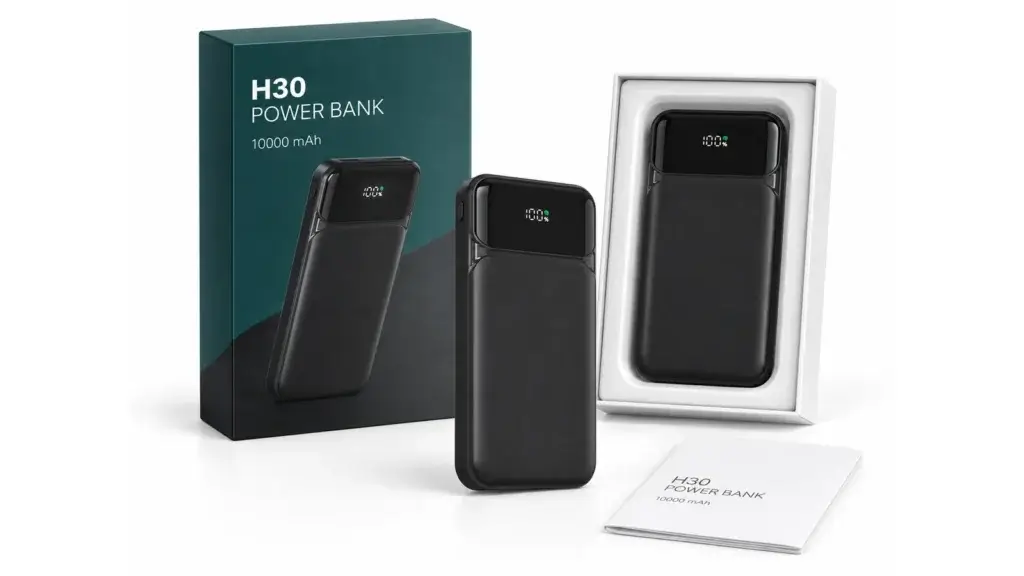
Retained DBASNE H30 sample and packaging support a 10,000mAh wired retail program.
Separate engineering evidence shows a 3.85V / 5,000mAh / 19.25Wh cell, PCB and wireless-charging coil. It is not presented as H30 or MP051 proof.
Why keeping the samples separate matters: the H30 retail route is about a straightforward 10K wired product; the magnetic sample is a different development question involving coil position, cell thickness and magnetic alignment. Mixing the two would make both the quotation and the final specification less reliable.
Evidence boundary: project samples support project-specific claims; public marketplace and manual records are used only for independent model or category context.
F97 — 10K / 22.5W built-in-cable route
B97 — 10K / 35W higher-output route
F91 / LJ02 — magnetic options
For a similar retail program, start from the closest mature platform, then customize CMF, packaging and required product details.
Development story: if the buyer wants the familiar H30-type 10K experience, the F97 route keeps the project close to that position. If the brief shifts toward higher output or magnetic use, moving to B97 or F91/LJ02 is cleaner than forcing one platform to cover every requirement.
The retained DBASNE H30 sample and packaging support the H30 model identity and 10,000mAh project evidence. Public records separately cross-check the 22.5W market specification.
The H30 evidence discussed in this DBASNE case is specific to the retained product and project materials, not to every item in the brand’s portfolio. The page presents H30 as a 10,000mAh, 22.5W-class power bank reference. Prospective buyers should still confirm output profiles, rated energy, sample revision and the scope of any manufacturing claim before using it as a procurement baseline. These points are especially relevant to importers, retail chains and private-label electronics brands evaluating a China power bank manufacturer. Technical discussions should cover the approved cell/PACK and PCB, rated input and output rather than headline wattage alone, labeling for the selling market and sample acceptance criteria. Where the case provides no proof of a particular volume or certification, do not treat it as established.
No. It is shown only as a separate engineering sample. No H30 or MP051 model label is visible on that sample.
The separate 5,000mAh magnetic sample should not be relabeled as the H30 merely because it appears in related materials. A model number is a technical identifier, not a generic style description. Check the printed device label, connector arrangement, form factor and evidence chain for MP051 independently before discussing any magnetic power bank OEM offer. Buyers considering their own 10,000mAh or 20,000mAh power bank project should ask for an exact-SKU quotation and a comparison of appearance, charging behavior, reliability checks, packaging and required shipping documentation. Brand-name references can inspire retail positioning, but the commercial decision should rest on tested requirements and an independently approved OEM configuration.
The retained evidence identifies H30 as a 10K wired project, while the separate 5K magnetic sample lacks an H30 model label. Keeping them separate avoids unsupported model attribution.
Keeping H30 and the magnetic sample distinct avoids inaccurate statements about capacity, wireless charging support, internal cell configuration and factory history. A buyer searching for a DBASNE H30 manufacturer or a similar China power bank supplier needs a clear separation between confirmed documented products and illustrative references. Product-level specificity also protects compliance statements from accidental carryover. For a procurement-ready comparison, ZEROSET recommends documenting the destination market, forecast quantity, desired logo and carton presentation, target charging devices and planned sales channel. Such details let an OEM/ODM power bank supplier distinguish validated existing platforms from changes that need engineering review, instead of offering generic specifications as if they fit every brand and country.
Compare battery and rated capacity, port or cable layout, PD / QC behavior, display, dimensions, weight, thermal performance and packaging requirements.
For a 10,000mAh 22.5W private-label power bank, compare the output protocol set, USB-C input and output ratings, actual rated output capacity, cable choices, enclosure dimensions, measured thermal rise and price tier. Similar nominal mAh values alone do not prove equivalent performance or retail quality. A proper quotation names the exact platform and test conditions. These points are especially relevant to importers, retail chains and private-label electronics brands evaluating a China power bank manufacturer. Technical discussions should cover the approved cell/PACK and PCB, rated input and output rather than headline wattage alone, labeling for the selling market and sample acceptance criteria. Where the case provides no proof of a particular volume or certification, do not treat it as established.
Yes. Buyers can start from current built-in-cable platforms or a higher-output PD platform, then customize CMF, packaging and required product details.
ZEROSET can evaluate a comparable 10K retail OEM platform using the required branding, packaging and target-market specifications. A project quote should identify what can remain on a mature platform and what would require new tooling, cell or PCB changes. Buyers should not assume the new private-label unit is identical to DBASNE H30 without technical cross-checking. Buyers considering their own 10,000mAh or 20,000mAh power bank project should ask for an exact-SKU quotation and a comparison of appearance, charging behavior, reliability checks, packaging and required shipping documentation. Brand-name references can inspire retail positioning, but the commercial decision should rest on tested requirements and an independently approved OEM configuration.
Yes. A buyer can provide a sample or specification and ZEROSET can review compatibility, required matching points and potential platform or component differences.
A second-source review should compare controlled BOM versions, battery lot characteristics, connector footprint, USB charging behavior, exterior tolerances and approved sample performance. Packaging compatibility is only one part of manufacturing interchangeability. Request new-supplier validation and documented change management before substituting a different production route. For a procurement-ready comparison, ZEROSET recommends documenting the destination market, forecast quantity, desired logo and carton presentation, target charging devices and planned sales channel. Such details let an OEM/ODM power bank supplier distinguish validated existing platforms from changes that need engineering review, instead of offering generic specifications as if they fit every brand and country.
Yes. Current magnetic power bank platforms can be evaluated for 5,000mAh or 10,000mAh private-label projects as a separate development direction.
A magnetic model represents a different charging and mechanical architecture and requires separate evaluation for coil alignment, magnets, heat, charging compatibility and product claims. Do not infer Qi2 or MagSafe certification from magnetic attachment alone. If a buyer wants a magnetic version, specify desired capacity and wireless output and request a separate OEM engineering assessment. These points are especially relevant to importers, retail chains and private-label electronics brands evaluating a China power bank manufacturer. Technical discussions should cover the approved cell/PACK and PCB, rated input and output rather than headline wattage alone, labeling for the selling market and sample acceptance criteria. Where the case provides no proof of a particular volume or certification, do not treat it as established.
Lock the approved battery, PCB, charging behavior, ports or cables, display, housing, CMF, labels, packaging and destination-market document set.
Before production, agree on the cell grade, PCB revision, charging protocol matrix, labeling, pack artwork, visual criteria, testing scope and sample approval. Battery transport documentation and destination-specific compliance evidence must match the final configuration. An agreed golden sample and change-control procedure help ensure that later purchases reflect the originally approved SKU. Buyers considering their own 10,000mAh or 20,000mAh power bank project should ask for an exact-SKU quotation and a comparison of appearance, charging behavior, reliability checks, packaging and required shipping documentation. Brand-name references can inspire retail positioning, but the commercial decision should rest on tested requirements and an independently approved OEM configuration.
Send target market, quantity, capacity / power direction, preferred form factor, cable or magnetic requirements, CMF, packaging and compliance needs.