
How to Compare Power Bank OEM Quotes Without Comparing Different SKUs
How do you compare OEM quotes when suppliers define the product differently?
A lower unit price can reflect an omitted cable, different cell, thinner packaging or an unpriced test requirement. The useful comparison is the cost of a saleable, approved SKU, not the first number in an email.

Freeze the commercial baseline
Give each bidder one revision-controlled RFQ. Define target market, capacity and energy declarations, port and charging functions, enclosure/finish, accessories, packaging, labels, evidence package, forecast volume and shipment assumptions. Ask each supplier to mark deviations explicitly.
Write acceptance criteria for the sample and the production lot before asking for the final unit price. An offer that prices only an unspecified “similar model” stays provisional until its bill of materials and deliverables are clear.
Normalize the quote, then compare risk
Break the response into base unit, tooling or setup, packaging, accessories, testing, freight basis and any recurring or one-time charges. Record MOQ, lead time, payment terms, revision validity and which costs change with quantity. Keep currency and Incoterms together with the numbers.
Separate a quote exception from a negotiation point. A missing test report is a scope difference; a shorter payment window is a commercial tradeoff. Do not blend them into a single score that hides an unapproved design.
Use an equivalence gate before selection
Ask for an evidence pack tied to the proposed exact model and hardware revision. Compare sample configuration to the quote line and intended artwork. If two bids use different cell models or power controllers, treat them as alternative SKUs with explicit engineering review.
The selected supplier should receive a signed decision record: approved SKU baseline, open deviations, sample gate, price validity and re-quote triggers. That record prevents a later “equivalent component” substitution from silently changing the economics.
Buyer approval matrix
| Line item | Supplier A / B evidence | Buyer decision |
|---|---|---|
| Cell and capacity | Cell model, pack configuration, Wh basis | Equivalent or different SKU? |
| Charging path | Ports, protocols, included cable | Same user promise? |
| Retail pack | Artwork, insert, label, carton | All deliverables priced? |
| Evidence | Test documents and exact revision | Included, excluded or pending? |
| Commercial | MOQ, Incoterm, lead time, payment | Landed comparison possible? |
A buyer scenario
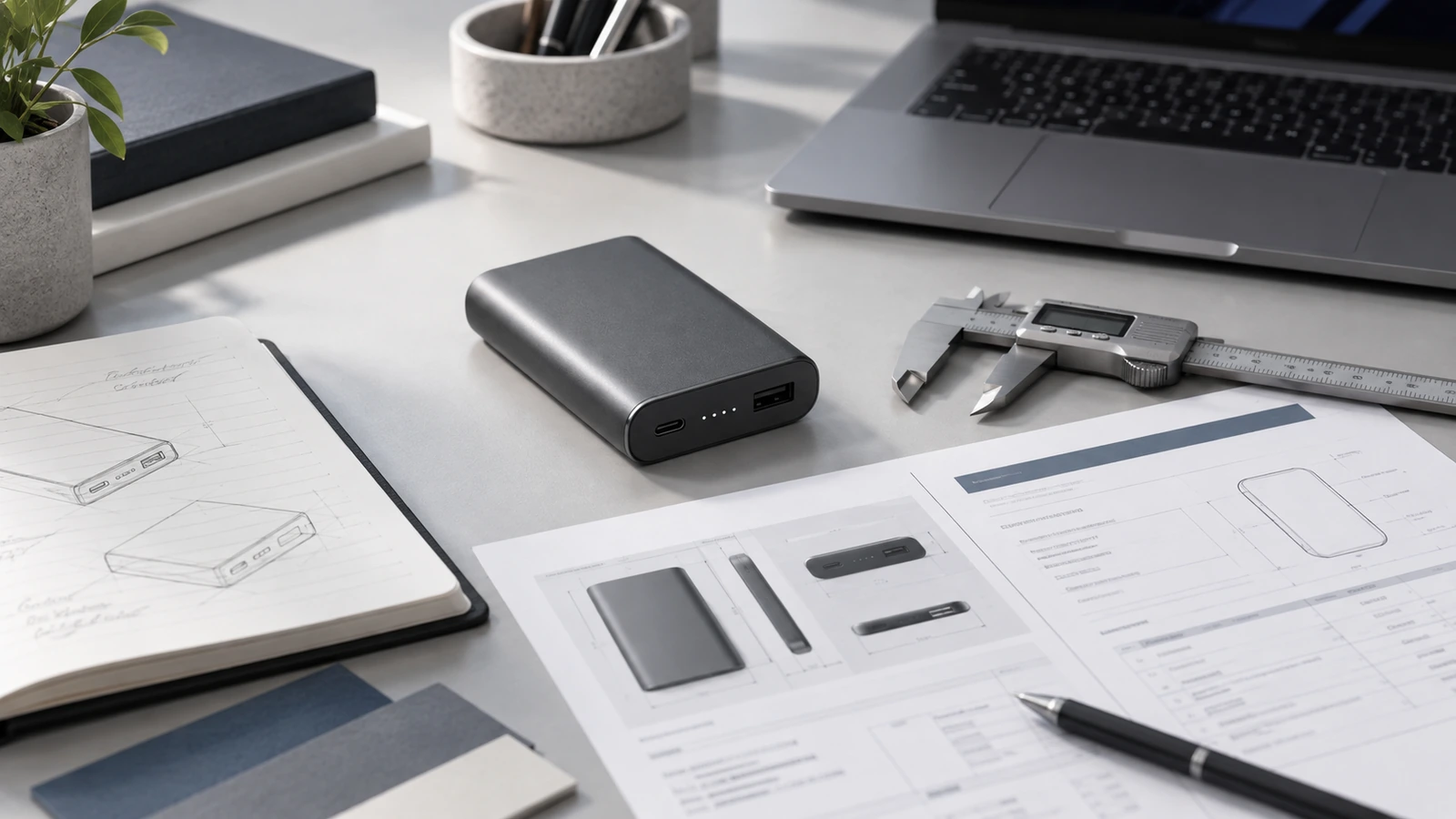
Illustrative buyer scenario: a brand receives a cheaper quote for a 10,000 mAh power bank. The second bidder excludes the retail cable and quotes a plain box while the first includes printed packaging and a test-document handover. The buyer requests a revised like-for-like quote and keeps the original offers as separate scope options. This is a method example, not a recorded ZEROSET sale.
Frequently asked questions
Why do two 10,000 mAh quotes differ so much?
The capacity label alone does not fix cell selection, charging features, included accessories, packaging or evidence scope.
Should I compare FOB and EXW prices directly?
No. Normalize the delivery term and included handling before drawing a price conclusion.
Is MOQ the only volume issue?
No. Check price breaks, packaging minimums, component commitments and forecast flexibility.
What if a supplier proposes an equivalent cell?
Treat it as a documented alternative with affected test and approval gates, not an automatic substitution.
Can I choose before samples?
You can shortlist commercially, but keep technical and artwork approval conditional on an exact-SKU sample.
How do I request exclusions?
Ask each bidder to state included, excluded, optional and pending items line by line.
What is the final comparison output?
A normalized sheet, deviation list and signed decision record tied to an RFQ revision.
Primary sources and scope
These sources explain standards or rules; they do not certify any ZEROSET model. Verify the exact SKU, destination and current requirements before making a market claim.