Power Bank Sourcing Guide for Buyers
A practical decision framework for new suppliers, second-source projects and OEM/ODM programs: lock one comparable RFQ, compare capability beyond price, validate the approved SKU and revision, then choose the lightest commercial route that fits the project.
Price without a fixed scope is not comparable.
Define one measurable RFQ first, then compare product state, supplier capability, validation evidence and commercial assumptions on the same basis.
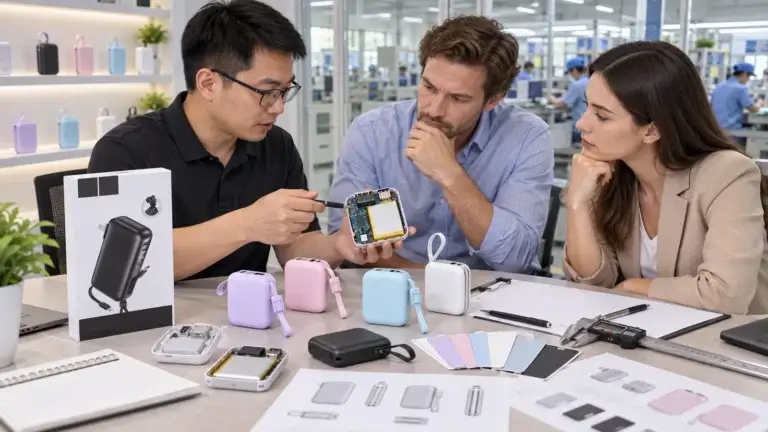
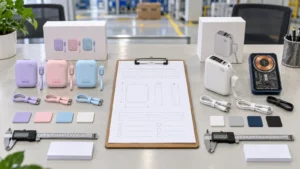
Build a Comparable Power Bank RFQ
Lock one measurable scope before comparing suppliers.
Productcapacity · power · portsScope
CMF · packaging · complianceCommercial
MOQ · samples · timing
Sourcing Workflow
Market → RFQ → validation → first order.
01 · Defineuser · market02 · Quote
spec · MOQ03 · Validate
factory · sample04 · Order
consistency
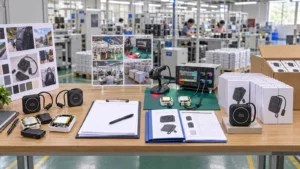
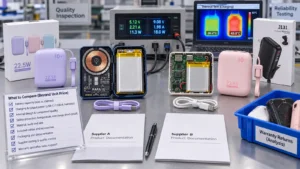
Compare Beyond Unit Price
Check cell/PACK consistency, real charging performance, exact-SKU compliance, MOQ, lead time, warranty and change control.

Make the Sourcing Decision in the Right Order
1 · Lock the SKUDefine market, capacity, power, ports/cables, packaging, quantity and compliance scope before comparing suppliers. 2 · Compare Capability
Check engineering response, cell/PACK control, quality systems, exact-SKU compliance support and change control—not unit price alone. 3 · Validate the Release Basis
Use the approved sample, specification, BOM and revision as the reference for the first order.
Choose the Commercial Route Before You Compare Price
Existing PlatformFrom 1,000 pcs/model Internal Modification
From 2,000 pcs/model Second Source / Product Upgrade
Send the existing SKU, sample, drawings or specification; define required match points and acceptable improvements. New Private Mold
From 3,000 pcs/design
Typical mature-project baseline: 500 pcs/color · samples 7–10 days · mass production about 30 days.
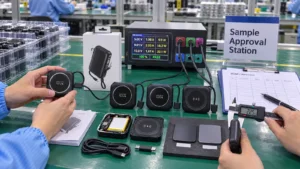
Validate Before the First Order
Confirm charging, finish, interfaces, packaging, approved BOM and revision before commercial release.
Validation & NPI →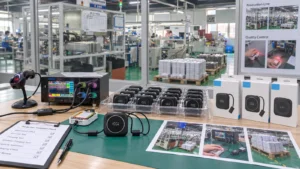
Verify the Supplier
Check real products, factory controls and documented manufacturing evidence before supplier approval.
Power Bank Sourcing Guide FAQ
What should a power bank RFQ include?
Market, capacity, power, ports or cables, CMF, packaging, compliance, quantity and launch timing. RFQ template →
How should buyers compare power bank suppliers?
Compare cell/PACK control, real charging output, factory QC, exact-SKU compliance, MOQ, lead time and change control—not unit price alone.
What should samples validate before the first order?
Charging, finish, packaging, artwork, interfaces and the approved BOM or product revision.
What compliance and transport evidence should buyers check?
Match product compliance to the exact SKU and market, then confirm lithium-battery transport evidence such as UN38.3 requirements for the shipping route. Quality & Compliance →
Additional Power Bank Sourcing FAQ
What is the fastest way to make supplier quotations comparable?
Send one fixed RFQ with the same capacity, power, interfaces, battery basis, packaging, quantity and compliance scope to every supplier. Separate optional features instead of letting each supplier interpret the project differently.
How should a buyer verify a supplier's stated power-bank capacity?
Check the cell configuration, nominal voltage and Wh, then compare rated output and test conditions. A large mAh number alone does not show usable energy at the USB output.
Why should buyers ask about cell and PACK control?
The cell, protection circuit and PACK assembly affect capacity, current capability, safety, consistency and traceability. Buyers should know which battery configuration is approved for the final SKU.
What should be checked during a supplier factory audit?
Review the real production site, incoming inspection, battery handling, assembly flow, test equipment, calibration, aging, traceability, nonconforming-material control, change control and final shipment release.
How should buyers handle supplier substitutions after approval?
Require the supplier to disclose substitutions to cells, PCB, firmware, cables, connectors, plastics or packaging. Assess the impact, document the new revision and revalidate affected requirements before production release.
What evidence is useful before approving a new supplier?
Useful evidence includes approved samples, specifications, BOM control, quality records, production capability, test procedures, compliance documents for the exact SKU and relevant manufacturing case evidence.
Explore the Other Guide Topics
Private Mold & ODM · Engineering · Quality & Compliance · Product Design & Platform Decisions
Related News
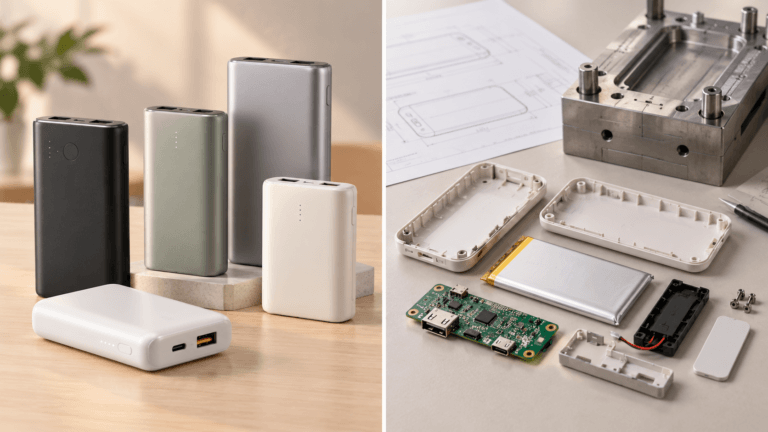

Need a Comparable Power Bank RFQ?
Send the target market, capacity, power, interfaces, quantity, packaging and compliance scope. ZEROSET can map the brief to a current platform or a deeper development route.