
ZEROSET Buyer Decision Guide · October 2026
From Brief to Approved Power Bank Sample
Eight decisions that turn a product idea into a sample a buyer can actually approve—and a factory can repeat.
Start with a reference SKU, sketch, or intended user. A finished specification is not required for an initial discussion.
- 1Define the user and channel
- 2Choose the development route
- 3Freeze the decision-driving requirements
- 4Review the actual sample
- 5Match evidence to the exact SKU
- 6Approve the golden sample
- 7Test the pilot build
- 8Release changes and production
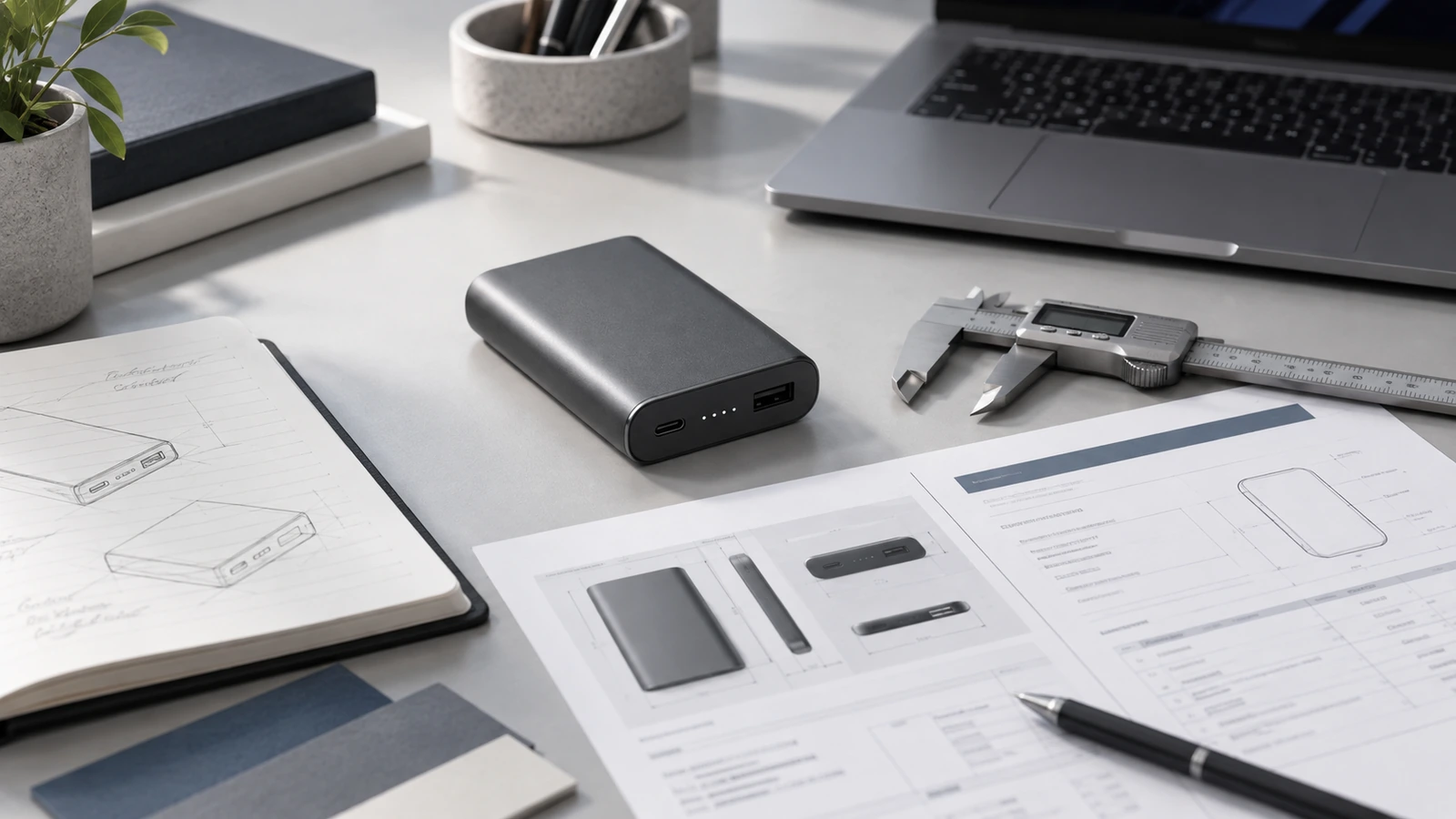
Short answer: approve a power bank sample only after the buyer, factory, and market owner agree on the same product definition, the same test conditions, and the same version of the evidence. A pleasing prototype alone is not a production approval.
Eight gates before a production order
Use the gates as decision points, not as a claim that every project follows one fixed schedule. A mature platform, controlled ODM change, second-source match, and new private mold require different depth of work.
Define the buyer and the use
Write one sentence naming the user, sales channel, target market, and reason this SKU belongs in the range. Decide whether portability, cable convenience, magnetic attachment, higher power, or visual identity is the primary promise.
Exit evidenceA one-page brief with intended devices, use setting, channel, and competing products.
Choose the development route
Ask whether an existing platform can satisfy the brief. Separate a color and packaging change from an internal electronics change, a second-source replacement, or new tooling. Each route changes the sample and approval work.
Exit evidenceA route decision with what may change, what must remain, and who approves it. See private mold versus mature platform.
Freeze the variables that drive cost and risk
Confirm target capacity and Wh, charging profiles, ports or built-in cables, dimensions, cell/PACK approach, enclosure finish, artwork, packaging, quantities, and the markets to be served. Mark unknowns explicitly.
Exit evidenceA revision-controlled product specification and an RFQ that names the exact variant.
Review the sample under real use
Check the sample against the approved brief, including device combinations and conditions that matter to the intended shopper. For integrated cables, assess both electrical behavior and mechanical handling; for higher output, review heat and sustained behavior under defined conditions.
Exit evidenceA signed sample review with measurements, photos, defects, and open questions—not “looks good” in a chat.
Match every claim to the exact SKU
Collect the applicable battery, transport, safety, and market documents for the actual model and version. A general standard, another model’s report, or a supplier promise does not establish that this SKU is approved for a target market.
Exit evidenceA document register showing model/variant, issuer, scope, date, market, and responsible reviewer. Start with the market guide.
Approve one golden sample
Freeze the product and its representation together: BOM, firmware where applicable, cable and connector, CMF, printed claims, packaging artwork, and accepted deviations. Keep a physical or controlled digital reference both sides can identify.
Exit evidenceA versioned golden-sample record tied to the purchase order.
Use a pilot build to test repeatability
Check whether the production process can reproduce the approved sample: incoming materials, assembly instructions, functional tests, cosmetic limits, traceability, and handling of failures. Record what changed between prototype and pilot.
Exit evidenceA pilot-build review and an owner for each open corrective action.
Release production with change control
Agree who may authorize a substitute cell, cable, connector, color, artwork, or process change. A new sample or document review may be needed when a change affects the approved product or a market claim.
Exit evidenceA current revision, inspection plan, escalation route, and release decision for the first production lot.
What should move from one gate to the next?
Each gate should hand over something another person can verify. The table below is a compact decision map; adapt the depth to the project rather than collecting documents for their own sake.
| Decision | Buyer brings | Factory returns | Approval question |
|---|---|---|---|
| Product route | User, channel, reference and target markets | Platform or development options with stated differences | Does this route solve the shopper problem? |
| Sample scope | Priority devices, features and acceptance criteria | Identified sample version and measured results | Was the actual use case tested? |
| Market evidence | Destination and claims to appear on product or box | Exact-SKU document list and known gaps | Who verifies applicability before launch? |
| Production release | Signed golden sample and permitted changes | Pilot findings, controls and open actions | Can the approved version be repeated? |
For a phone-led assortment, use the 22.5W/35W/45W guide to make the power-tier decision before asking a sample to prove an unclear range strategy.
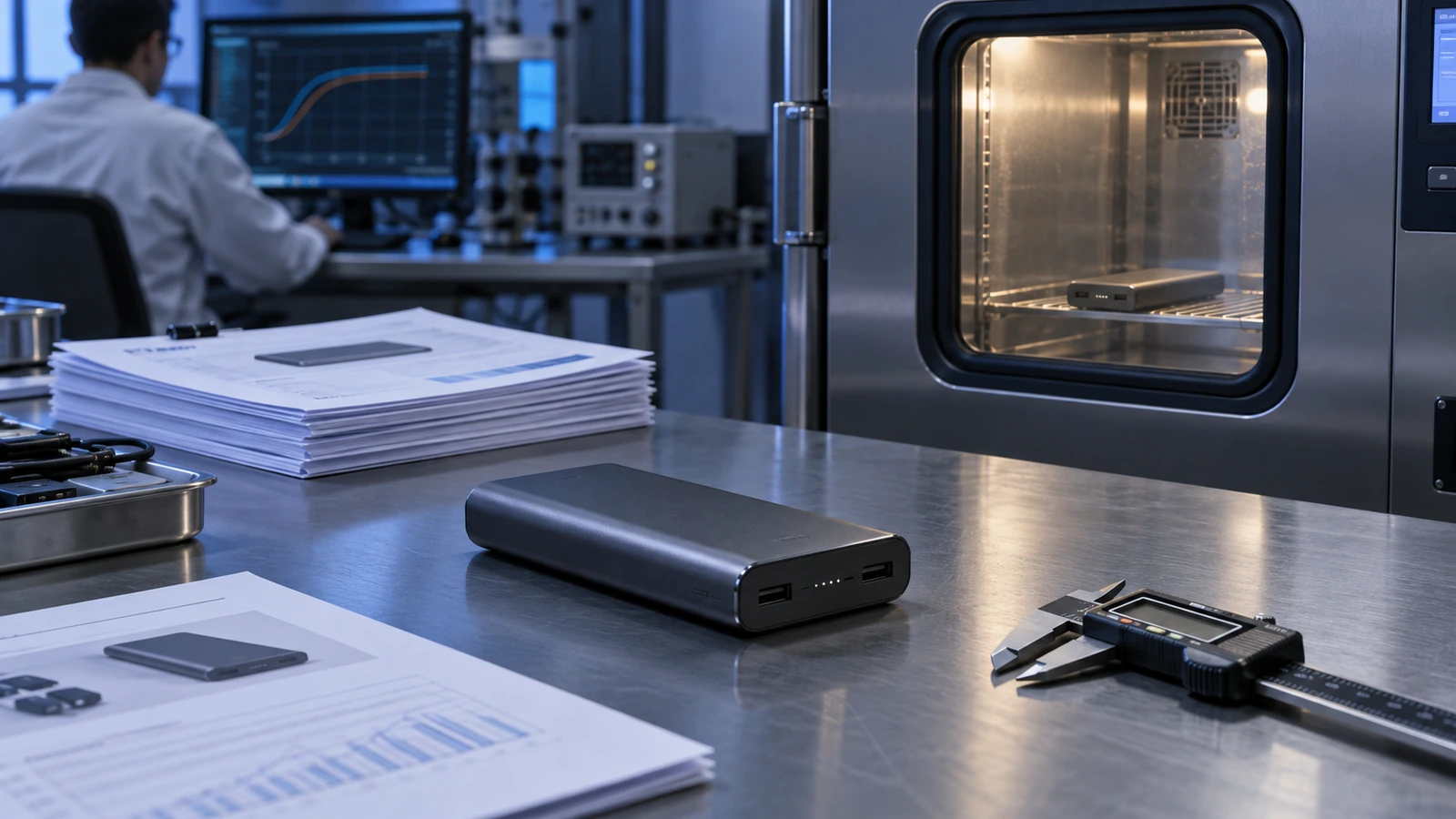
A short buyer scenario
Illustrative scenario · not a customer case
The sample everyone liked—but no one could identify
A retail buyer selects a compact built-in-cable power bank for a travel shelf. The color and hand feel win the review. One week later, a revised cable assembly arrives with the same exterior. The sales team still has the first sample, the factory measures the second, and packaging describes a charging result neither team has checked on the launch devices.
The fix is a shared revision record: name the cable change, retest the agreed combinations, update the claim sheet, and approve one golden sample before the artwork and purchase order are released. The story illustrates an approval failure mode; it does not describe a documented ZEROSET customer or measured product result.
Start the conversation with five useful inputs
Send the target market, intended user, reference SKU or image, desired form and charging role, and estimated first order. If a value is unknown, say so. ZEROSET can discuss whether an existing platform, controlled ODM update, second-source route, or new development best fits the brief; model-level specifications and commercial terms require a current project review.
Buyer FAQ
Can I start without a finished specification?
Yes. A reference product, sketch, intended user, target market, and priority features are enough for an initial route discussion. A formal quotation and sample approval need a more exact variant definition.
What is the difference between a presentation sample and an approval sample?
A presentation sample helps choose direction. An approval sample must be identifiable by version and checked against defined acceptance criteria. It should connect to the specification, claim sheet, and later golden-sample record.
Should I choose the highest charging wattage available?
Choose a power tier for the target devices and range role. Maximum stated output does not mean every connected device will draw that power. Validate the exact device, cable, protocol, and use condition.
Can one certificate cover every model in a family?
Do not assume so. Review the issuer, scope, variant, report and target market for each exact SKU. Similar appearance is not proof of shared coverage.
When should artwork be approved?
After the claims, identifiers, market needs and product configuration have been reviewed together. A late product change can make previously approved packaging inaccurate.
What if a component changes after the golden sample?
Record the proposed change, assess its effect on performance and documents, and decide whether a new sample or test is needed before using it in production.
Does a pilot build replace incoming and outgoing inspection?
No. A pilot tests whether the intended process can repeat the design and reveals what controls are needed. Lot-level material and finished-product checks remain part of production release.
What belongs in my first WhatsApp message?
Your company and target market, one reference image or SKU, the main product role, estimated quantity, and the decision you need help making. Use the quote form when the specification is ready for formal review.