
Power Bank Supplier Evaluation Scorecard
A buyer scorecard for comparing power bank suppliers beyond unit price, including product fit, engineering response, cell/PACK control, quality systems, compliance support, change control and commercial execution.
A low unit price cannot compensate for an uncontrolled product state.
Score suppliers against one fixed RFQ and require evidence for engineering, quality, compliance, production and change-control claims before commercial approval.

Supplier Scorecard · 8 Decision Areas
Rate each area 0–5, apply the weight, and close any critical risk before approval.
01 · Manufacturing Reality — 10%
Factory role · lines · production control · traceability · CAPA
02 · Product Engineering — 15%
Cell/PACK · PCB · PD/PPS · thermal · DFM/NPI
03 · Cell / PACK Control — 20%
Cell model · lot traceability · PACK · substitution control
04 · Quality System — 15%
IQC/IPQC/final · aging · defect handling · CAPA
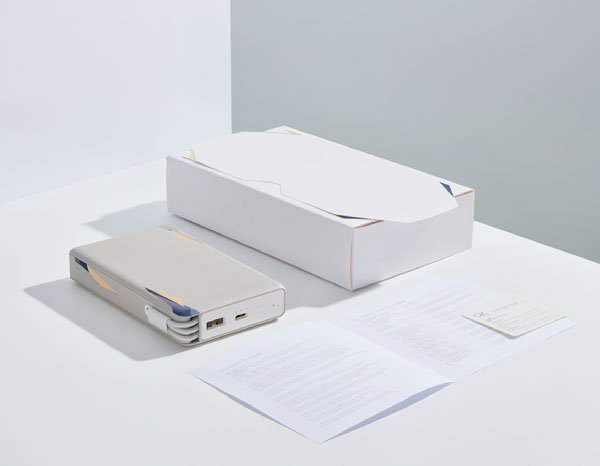
Manufacturing & Quality Evidence — production control, traceability and corrective action.
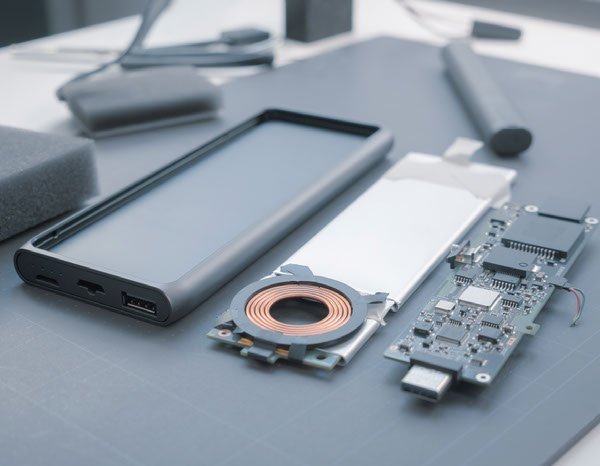
Engineering & Product Control — cell/PACK, charging, structure, thermal and validation.
05 · Compliance Evidence — 10%
Exact-SKU reports · battery/transport · market labels
06 · Sample Discipline — 10%
Sample ID/revision · test/deviation · golden sample
07 · Commercial Execution — 10%
Quote scope · MOQ/lead time · ownership · response
08 · Change Control & After-Sales — 10%
BOM notice · buyer approval · defect response · corrective action
Critical-Failure Rule
Section score = (average rating ÷ 5) × weight. No evidence, no full points. Close substitution, traceability, change-control or compliance gaps before approval.
Evidence to Verify
High scores should point to evidence another reviewer can inspect: documents, drawings, samples, test results, traceability records or factory observations.

Factory & Engineering

Cell & Document Control

Quality System

Commercial Execution
Approval Signals & Red Flags
Good Signs
✓ Exact cell and configuration identified.
✓ Engineering uses measurable data.
✓ Samples carry IDs and revisions.
✓ Documents match the proposed SKU.
✓ Deviations and changes are controlled.
Red Flags
× “A-grade cell” with no controlled model.
× “Supports PD” with no profile/test evidence.
× One document set claimed for unrelated SKUs.
× No sample/BOM/firmware revision state.
× Silent component substitution is treated as normal.
Next Buyer Tools: Factory Audit → · Product Specification → · MOQ & Lead Time → · Certification by Market → · Validation & NPI → · Custom Development → · Factory & QC → · Send Supplier Brief →
Power Bank Supplier Evaluation FAQ
Should the cheapest supplier receive the highest score?
No. Compare price only after product scope, assumptions and deviations are visible.How should unsupported supplier claims be scored?
Do not award full points. Record the missing evidence and keep the item open until it can be verified.Can the scorecard replace a factory audit?
No. Use the Factory Audit Checklist for deeper verification of manufacturing, cell/PACK, quality, traceability and change control.What if a supplier scores well but fails one critical control?
Treat the critical control separately. A high total should not override unresolved substitution, traceability, compliance or change-control risk.How should buyers compare ZEROSET with other manufacturers?
Use the same criteria and evidence requirements for every supplier and verify exact-SKU documents, samples, traceability and production controls.Additional Supplier Evaluation FAQ
What categories should carry the most weight in a power bank supplier scorecard?
Weight should reflect project risk. Engineering capability, battery and PACK control, quality systems, traceability, compliance support and change control are usually more important than price alone.
How should a buyer score evidence that is only promised but not shown?
Do not score it as fully verified. Mark the item open, request objective evidence and update the score only after the supplier demonstrates the claimed capability.
Should sample quality and factory capability be scored separately?
Yes. A good sample proves one product state; factory capability determines whether that state can be reproduced consistently at scale.
How can buyers compare suppliers quoting different customization scopes?
Normalize the scope first. Separate standard OEM, deeper ODM, new tooling, certification, packaging and accessories so the commercial and technical offers can be compared on the same basis.
When should a supplier be re-evaluated after initial approval?
Re-evaluate after major product changes, repeated quality issues, significant production relocation, critical supplier substitutions or changes that affect compliance or traceability.
Comparing More Than One Power Bank Supplier?
Use one RFQ baseline and score the returned configuration, engineering support, quality controls, compliance scope and production readiness on the same evidence basis.