
Power Bank Product Specification Template
A practical specification template for freezing the approved power bank SKU after supplier selection, covering product identity, battery, charging, interfaces, mechanics, packaging, compliance and revision control.
The RFQ compares proposals; the product specification freezes the selected measurable SKU.
Use one controlled document to define exactly what will be sampled, approved and released to production, including revision-sensitive technical and packaging details.
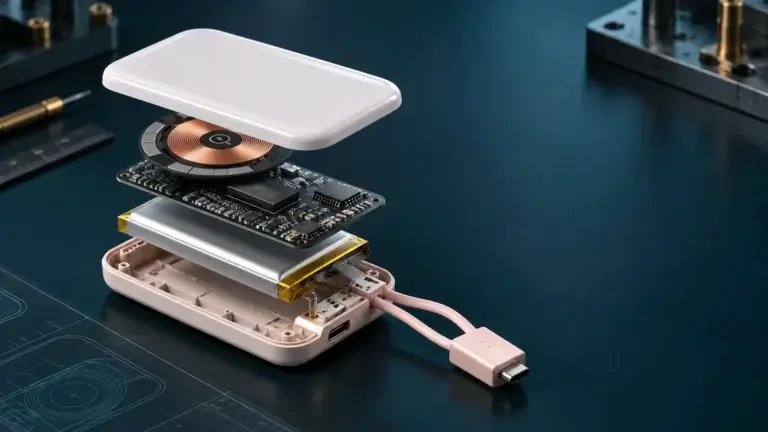
Four Areas to Freeze Before Validation
Make the exact SKU testable and traceable across four production-critical areas.

1 · Electrical & Charging
Capacity/Wh · input/output · PD/PPS · ports · cables · wireless · simultaneous use.
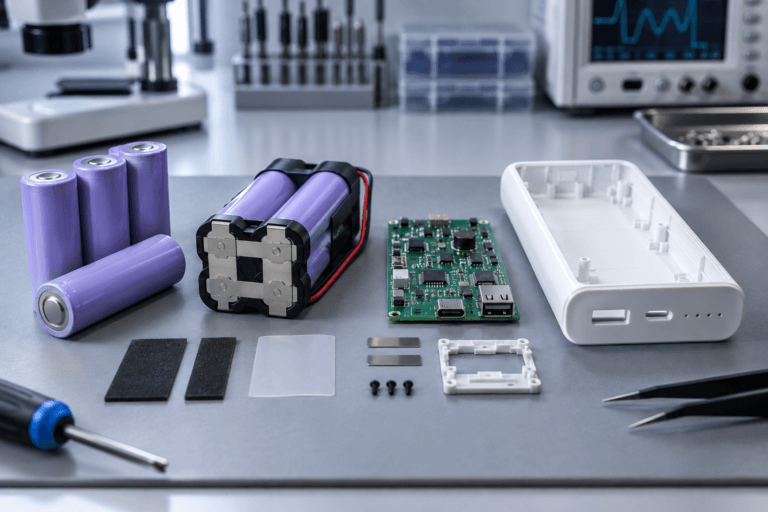
2 · Cell / PACK & Components
Cell model/supplier · PACK architecture · protection · PCBA/firmware · traceability · substitution.

3 · Mechanical, CMF & Packaging
Dimensions · housing · stack-up · mechanism · color/texture · logo · artwork · labels · pack-out.
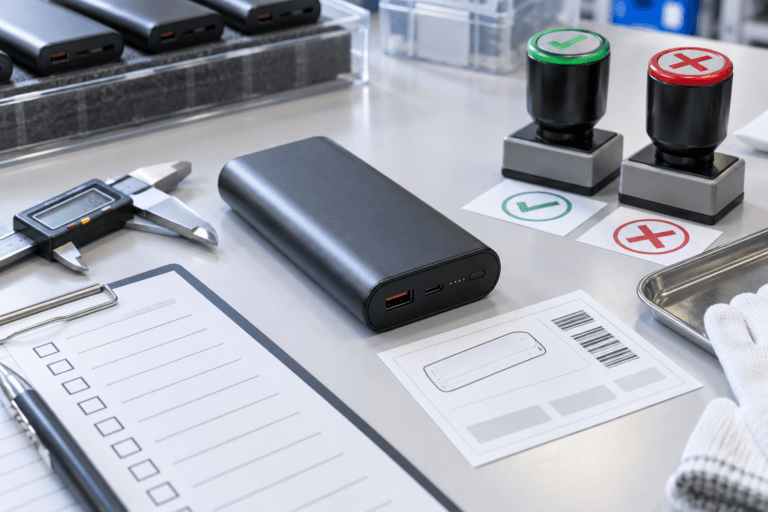
4 · Acceptance, Compliance & Revision
Acceptance · market evidence · labels · golden sample · BOM/firmware revision · change control.
Product Specification · 12 Controls
Every production-critical item should have an approved value, test method, controlled reference or a visible To Confirm state.
01 · Document Control
SKU · revision · date · approver · RFQ/PO/sample ID
02 · Product Identity
Platform · market · mAh/Wh · dimensions · weight
03 · Cell / PACK
Cell model/source · PACK · protection · traceability
04 · Input / Output
USB-C/A · input/output · combined output · pass-through
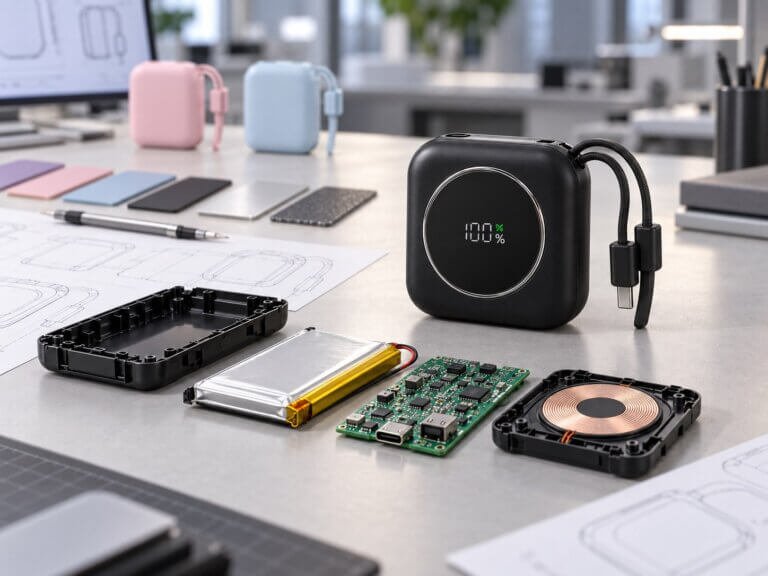
Lock SKU identity, cell/PACK and I/O first.
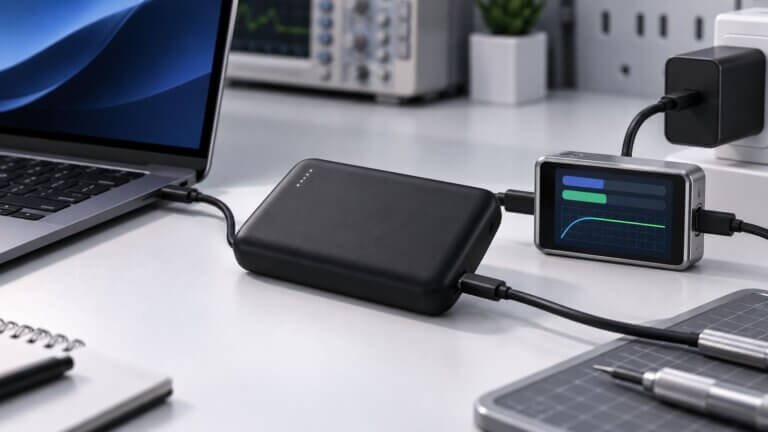
Validate charging, mechanics and CMF against the approved sample.
05 · Charging Protocols
PD/PPS · cable rating · direction · test method
06 · Ports / Cables / Wireless
Ports · built-in/retractable cable · wireless · display
07 · Mechanical
Dimensions · stack-up · tolerances · fastening
08 · CMF / Branding
Pantone · texture · logo · printing · indicators
09 · Packaging
Pack type · artwork · barcode · manual · accessories
10 · Compliance / Labeling
Market · labels · declarations · battery/transport evidence
11 · Acceptance Criteria
Energy · protocol · thermal · mechanical/cosmetic · aging
12 · Change Control
Golden sample · BOM/firmware · alternates · ECN · revision
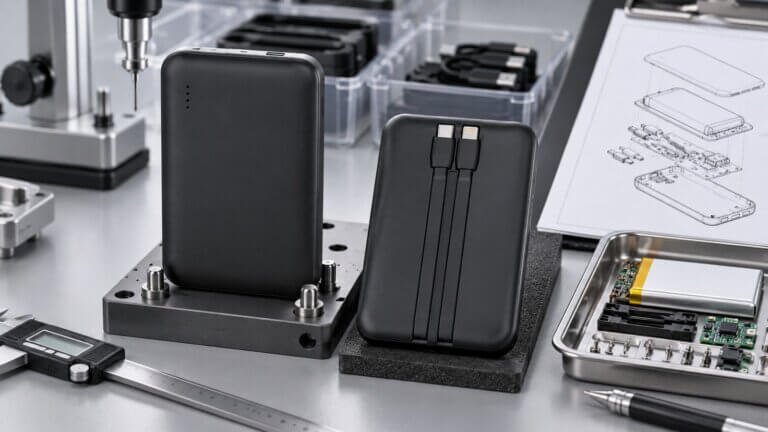
Keep packaging, compliance and revisions traceable.
Specification rule: production-critical requirements should be measurable, linked to an approved reference, or visibly marked To Confirm. Avoid vague terms such as “high quality battery,” “fast charging” or “same as sample” without a defined acceptance basis.Release One Revision, Then Control Every Change
RFQ compares proposals. Product Specification freezes measurable requirements. Golden Sample approves the physical state. PO & Change Control govern what is ordered and what may change.
Use measurable targets, test conditions, approved references and controlled revisions. For internal modification, second-source or new private-mold projects, update the specification revision whenever the approved product state changes.
Commercial route reference Existing PlatformFrom 1,000 pcs/model Internal Modification
From 2,000 pcs/model Upgrade / Second Source
Lock required match points and acceptable changes New Private Mold
From 3,000 pcs/design
Standard color: from 500 pcs/color · mature sample: 7–10 days · mature production: about 30 days.
RFQ Template → · Sample Approval → · Golden Sample → · BOM & Change Control → · Validation & NPI → · Custom Development → · Send Specification →
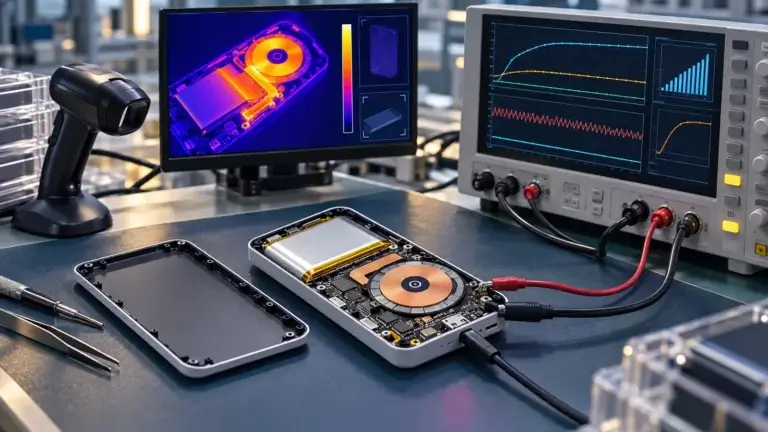
Power Bank Product Specification FAQ
When should a buyer create the product specification?
Once one SKU is defined well enough to control measurable requirements. Update the revision as engineering and samples are approved.
Can an approved sample replace the written specification?
No. The sample anchors the physical state; the specification controls electrical values, components, firmware, tests and packaging revision.
How detailed should PD and PPS requirements be?
Define port direction, power, required profiles or PPS APDO behavior and the verification method. “Supports PD” alone is too broad.
What happens when a component, firmware or packaging state changes?
Assess impact, validate where required, approve the change and release a new controlled revision before production.
Additional Power Bank Specification FAQ
What sections should a power bank product specification include?
Include product identity, capacity and Wh, battery configuration, charging input and output, PD/PPS behavior, ports or cables, mechanical dimensions, materials, CMF, packaging, labeling, tests and revision control.
How should rated capacity be written in a specification?
State nominal battery capacity and voltage, Wh and any rated output or usable-energy basis separately so cell-side capacity is not confused with USB output energy.
Should built-in cables have their own specifications?
Yes. Define connector type, length, electrical output, protocol support, mechanical requirements and any repeated-use or bending criteria.
How should simultaneous-output behavior be specified?
State which ports or cables may operate together, the total available power and how power is redistributed when multiple outputs are active.
Why should packaging revision be tied to the product specification?
Packaging can contain electrical ratings, model names, compliance marks and accessories. A mismatched artwork revision can create shipment or market errors even when the product itself is correct.
Who should approve specification revisions?
The buyer and responsible engineering or quality owners should approve material changes before the revised specification becomes the production baseline.
Need to Freeze an Exact Power Bank SKU?
Send the selected model, battery configuration, ports, charging profiles, housing, packaging and target market. ZEROSET can help turn the approved proposal into a controlled product specification.