Power Bank Compliance File Map: What Buyers Need Before Mass Production
A buyer-facing map of UN38.3, SDS/MSDS, IEC 62133-2, CE, RoHS, FCC and market-specific evidence—plus the release gates that keep documents tied to the exact production SKU.
“We had a folder full of certificates. The shipment was still delayed because half the files belonged to a different model.”
That is the compliance problem buyers should solve before mass production. A document can be genuine and still be useless for the project if the model number, battery configuration, BOM, market version or shipment scenario does not match the product being released.
The practical rule is: build a file map around the exact SKU—not around a generic factory certificate folder.
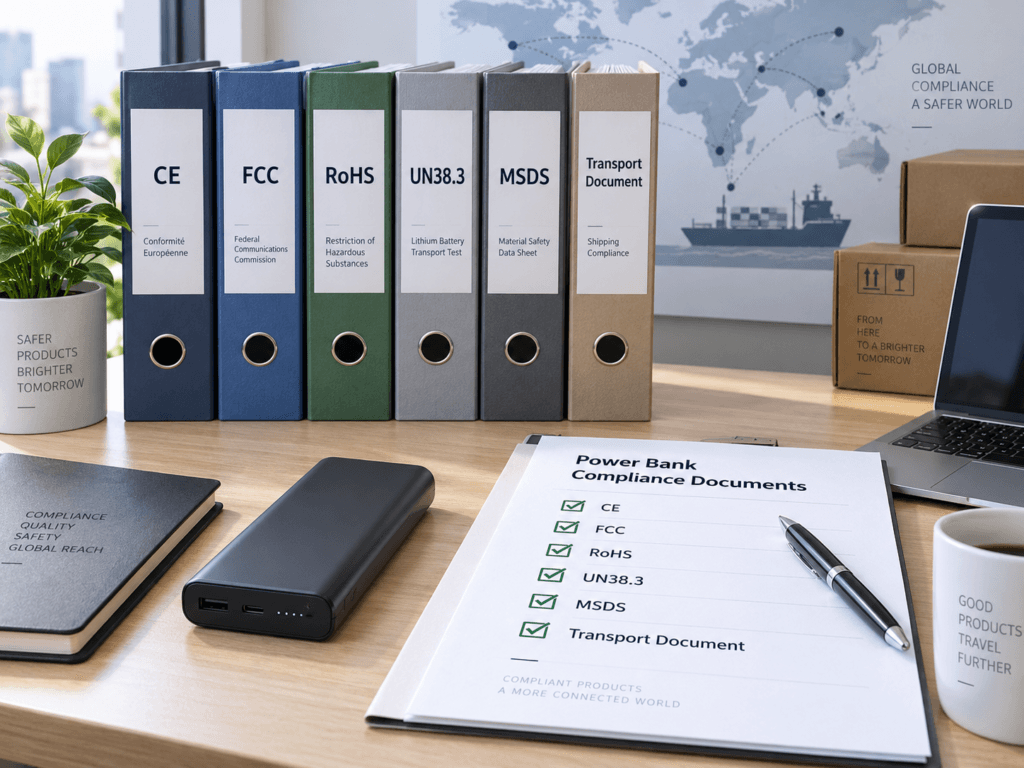
Do Not Treat Compliance as One Certificate
- UN38.3, SDS/MSDS, product safety standards, CE/RoHS evidence and FCC authorization solve different questions.
- Not every file applies to every market or every SKU; the exact scope must be checked before release.
- A valid document for another model is not automatically valid for the production SKU.
- Mass-production artwork, BOM, model name, battery configuration and logistics documents should all point to the same released variant.
Power Bank Compliance File Map
| File / evidence | Main question it answers | Buyer check |
|---|---|---|
| UN38.3 test evidence / test summary | Has the lithium cell or battery design completed the transport tests required under UN Manual of Tests and Criteria, subsection 38.3? | Match the battery design, manufacturer, model and current transport documentation to the shipment SKU. |
| SDS / MSDS | What safety, handling, hazard and transport information is provided for the substance or battery-related material? | Confirm the document is current and relevant. “MSDS” is still common trade language; “SDS” is the modern standardized term. |
| IEC 62133-2 evidence | Does the portable sealed lithium cell/battery meet the applicable safety requirements and tests under IEC 62133-2? | Check whether the target market or certification route requires it, and whether the evidence matches the proposed cell/battery configuration. |
| CE technical documentation / EU Declaration of Conformity | For products in scope of applicable EU legislation, has the responsible economic operator assessed conformity and prepared the required documentation? | Do not ask only for a generic “CE certificate.” Identify the applicable EU legislation, test evidence, technical file and DoC for the exact product. |
| RoHS evidence | Does the EEE in scope meet EU restrictions on specified hazardous substances? | Check material/component evidence and the final product scope rather than relying on a logo image. |
| FCC authorization evidence | For products subject to U.S. FCC rules, which authorization procedure applies to the RF/digital functions? | Certification and Supplier’s Declaration of Conformity are different procedures; the applicable route depends on the device. |
| Market-specific files | Does the exact SKU meet additional national or channel requirements? | Confirm destination-specific needs such as PSE, KC, UL-related requirements or retailer documentation before tooling/artwork is locked. |
What Each File Does Not Prove
UN38.3 is not a market-entry certificate
UN38.3 is tied to lithium-cell and battery transport testing. It does not by itself prove that a finished power bank complies with every product-safety, EMC, radio or environmental requirement in the destination market.
SDS/MSDS does not replace UN38.3
An SDS communicates safety and handling information. It is not a substitute for the lithium-battery transport tests in subsection 38.3, and it does not certify the finished product for sale.
CE marking is not “EU approval”
The European Commission states that CE marking is required only for products covered by relevant EU harmonisation legislation, and it does not mean the EU itself approved the product as safe. The manufacturer or responsible party must identify the applicable rules and maintain supporting technical documentation.
FCC is not one universal certificate
The FCC uses different equipment-authorization procedures. Depending on the device, Certification or Supplier’s Declaration of Conformity may apply. Buyers should map the product functions before asking the supplier for a generic “FCC certificate.”
IEC 62133-2 evidence must match the battery design
IEC 62133-2 covers safety requirements and tests for portable sealed secondary lithium cells and batteries. Buyers should verify whether the cited report/certificate covers the exact cell or battery configuration used in the released SKU.
Six Release Gates Before Mass Production
Any late change to the cell, PCB, charging profile, housing, wireless function or model identity should trigger a review of which reports and declarations remain valid. Change control is part of compliance—not only an engineering process.
Official Sources for Buyer Verification
Useful ZEROSET Resources
FAQ
Does every power bank need CE, FCC, RoHS, UN38.3, SDS and IEC 62133-2?
No. The required set depends on the destination market, product functions, battery design, retailer/channel and shipment scenario. The purpose of the file map is to identify which evidence applies to the exact SKU.
Can one report be reused across multiple SKUs?
Sometimes a report or component-level evidence can support more than one product, but buyers should never assume this automatically. The scope, model identity, construction and allowed variants must be checked.
When should compliance documents be checked?
Before artwork and mass-production release, with another review after any meaningful change to the battery, PCB, charging architecture, housing, wireless function or model identity.
Related News


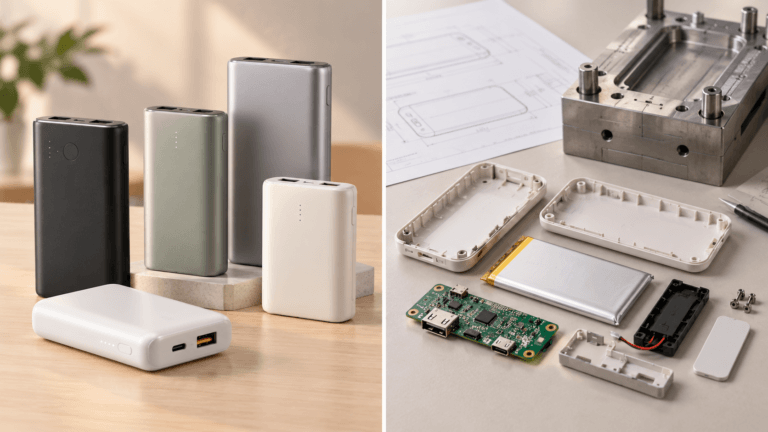
Build the File Map Before You Release the SKU
Send the destination market, product architecture, battery configuration and shipment method. ZEROSET can help organize the model-level evidence checklist before mass production.