Magnetic Power Bank Launch Decisions: Fit, Heat and Charging Evidence
What evidence should a buyer approve before launching a magnetic power bank?
Magnetic models are often selected from a product render, then judged by a phone case the factory never saw. The launch decision should therefore follow the user’s complete path: attach, carry, charge and remove. This article turns those actions into sign-off gates.
Start with a defined fit envelope
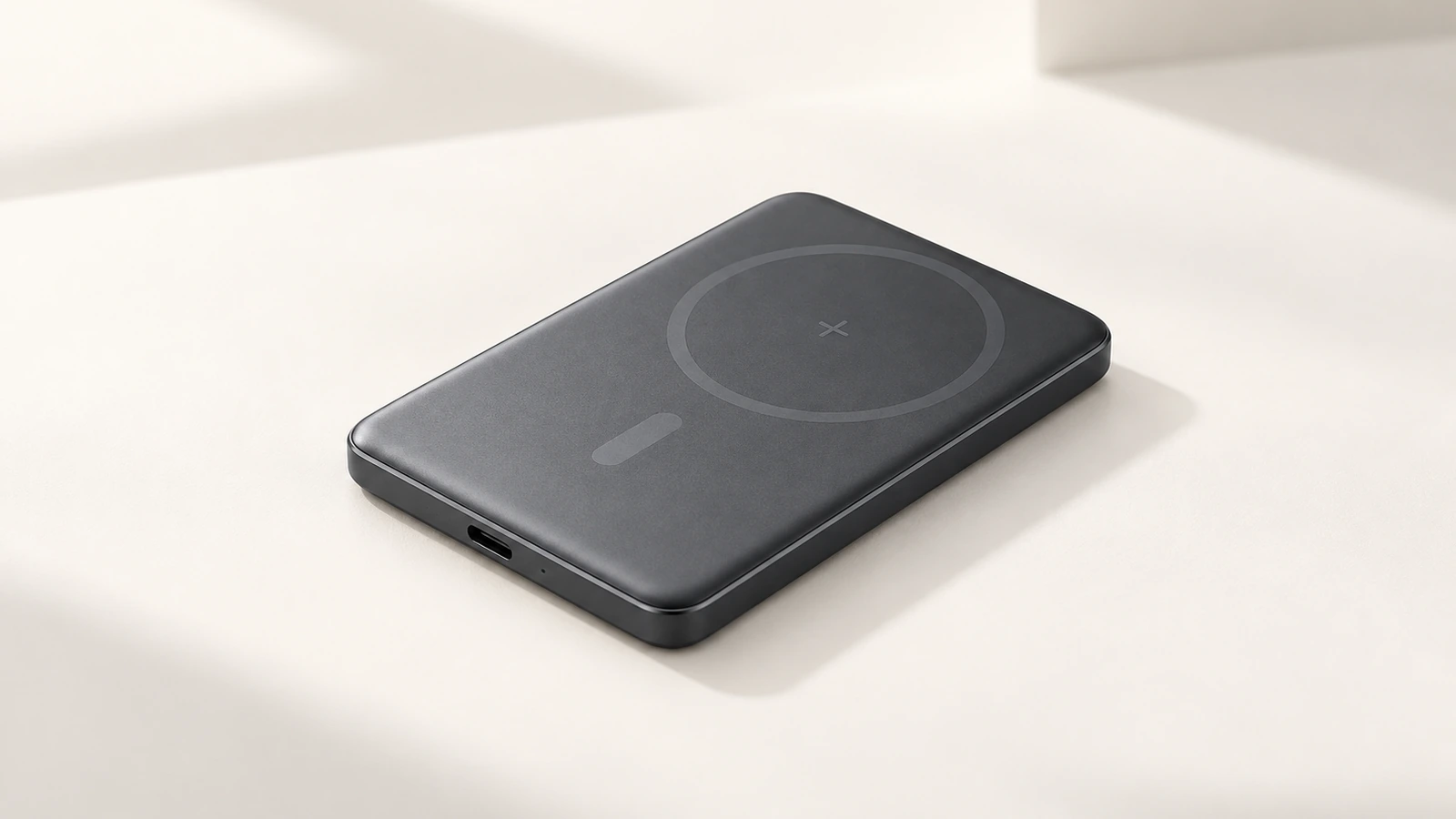
Write down the phone families, case types and case thicknesses you intend to support. Record whether the promise is bare-phone attachment, case-on attachment, or both. Test the weakest acceptable combination, not only the strongest magnet-to-metal demonstration.
Set a practical pass condition for normal orientation changes, pocket removal and cable use. A fit exception should change the claim or the target-device list; it should not disappear into a vague “compatible with most phones” line.
Separate alignment, heat and power
The user experiences placement, temperature and delivered energy together, but each has a different cause. A unit may align well yet charge slowly because of device negotiation or heat throttling. Keep a test record with phone model, software version, case, starting battery state, ambient conditions, alignment and time window.
Ask for a charging trace or repeatable observation at early, middle and sustained stages. Record the highest observed rate separately from the stable rate. The Wireless Power Consortium’s certification database can substantiate a Qi claim for a specific registered model; a magnetic appearance cannot.
Freeze the SKU before claims and artwork
The approved sample should be tied to cell, PCB, coil, magnet stack, enclosure, firmware and packaging revision. A change to coil position, magnet geometry or thermal materials can invalidate a prior fit or heat result even if the sales SKU name stays the same.
Write the retail claim only after the device matrix and exact SKU evidence agree. Keep the exceptions table with the launch file so a future return or support complaint can be traced to a tested combination.
Buyer approval matrix
| Gate | Evidence to retain | Release rule |
|---|---|---|
| Fit | Named phone and case matrix; orientation notes | No unsupported compatibility claim |
| Heat | Temperature observations with ambient and placement | Review any uncomfortable or unstable use |
| Charge | Device and cable/time trace; peak versus sustained | Claim only the measured supported mode |
| Identity | Sample/BOM/firmware/artwork revisions | Retest affected gates after a change |

A buyer scenario
Illustrative buyer scenario: a retailer chooses a slim magnetic model for commuters. The bare phone holds and charges in a demonstration. A common thick case shifts the contact position and the rate falls during a longer charge. The buyer narrows the packaging claim to tested case families and requests a coil-position review before approving print. This is a decision example, not a ZEROSET customer result.
Frequently asked questions
Does a strong magnet prove wireless charging performance?
No. Retention and energy transfer are separate checks; measure charging with named devices and cases.
Can we say Qi2 if the layout looks compatible?
Use Qi or Qi2 marks only when the exact product is certified and listed under the applicable WPC program.
What is the minimum phone test matrix?
Include your actual priority phones, bare and intended case conditions, several starting battery states, and the orientations you advertise.
Should we quote a peak wattage?
A peak is not the same as a sustained user result. State the conditions and avoid implying every device reaches that peak.
When does a design change require retesting?
Retest the gates affected by coil, magnet, enclosure, firmware, cell or thermal changes.
How do we make the artwork safer?
Tie every compatibility and power statement to the exact SKU, device matrix and approved evidence revision.
What should go into the RFQ?
Give the target phones, case assumptions, thickness limit, market, desired claim and required evidence package.
Primary sources and scope
These sources explain standards or rules; they do not certify any ZEROSET model. Verify the exact SKU, destination and current requirements before making a market claim.