
Built-In Cable Power Banks in Retail: How Buyers Should Read the Shelf Signal
A retail-focused framework for deciding whether built-in cable is a genuine assortment role, a packaging story or simply another feature added to a crowded power bank range.
“Every supplier showed us a built-in cable model, so the team assumed the feature itself was the strategy.”
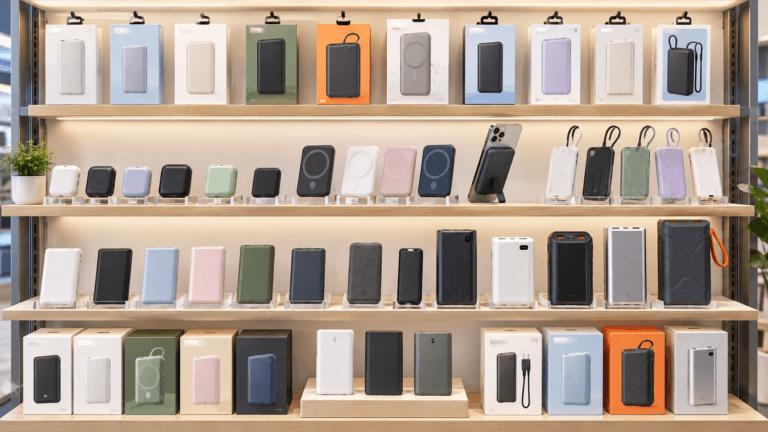
It is not. Integrated cable can create a very clear retail benefit—less to carry, less to forget, faster setup—but the shelf signal becomes weak when every SKU uses the same cable story with only a different shell or wattage.
The buyer’s job is to ask: does the cable architecture create a distinct use case, or is it only one more icon on the box?
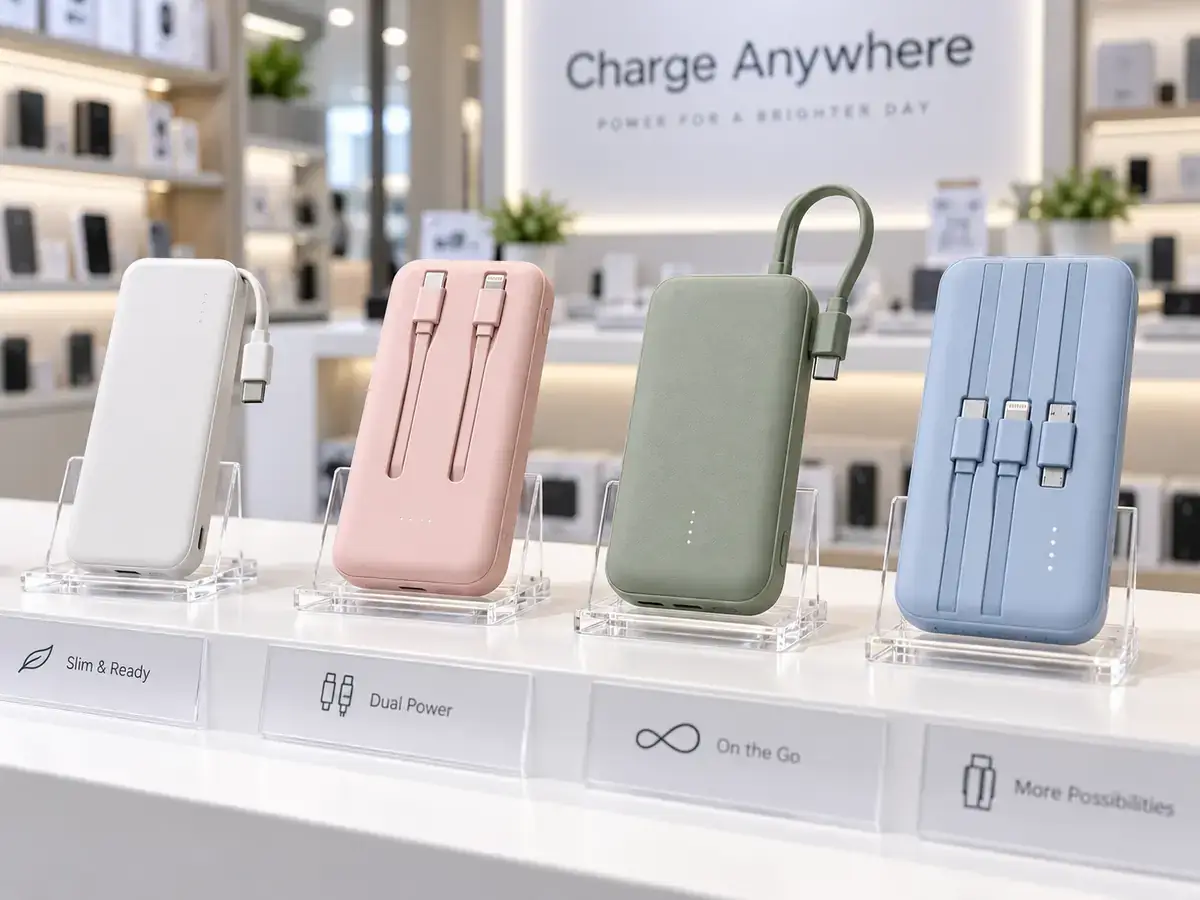
Read the Cable as a Product Role, Not Just a Feature
- Built-in cable is strongest when it removes a visible daily friction: carrying, finding or forgetting a separate cable.
- Single-cable, dual-cable and retractable architectures can own different retail roles even at the same capacity.
- Capacity and wattage should support the use case rather than replace it.
- Retail presence is evidence of market availability—not proof of demand, sell-through or factory relationship.
Three Shelf Signals Buyers Should Separate
The strongest built-in cable proposition is usually easy to explain in one sentence. “10K everyday power bank with an integrated USB-C cable” is clearer than a front panel overloaded with six secondary features.
What Retail and Product References Can Show
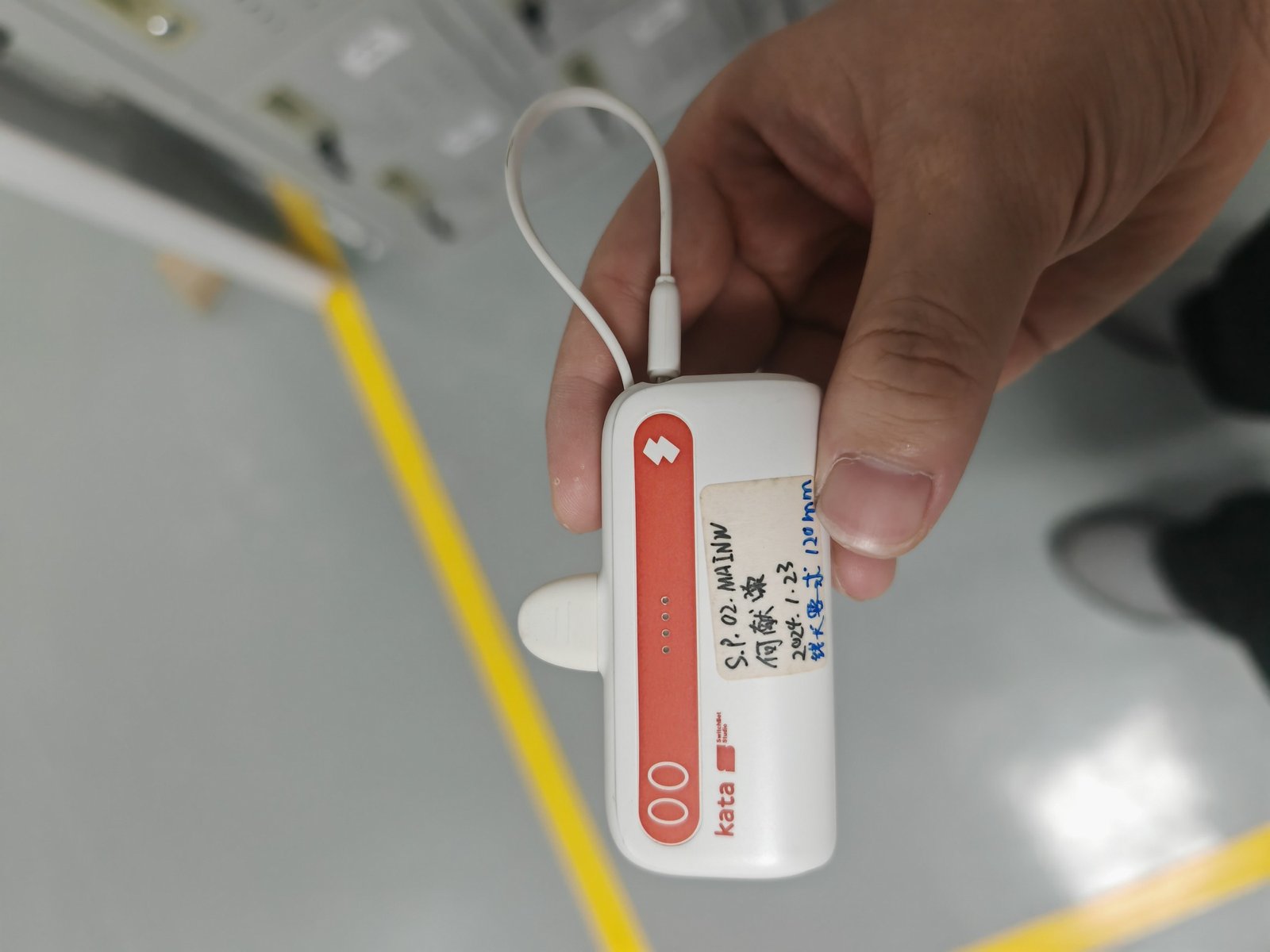
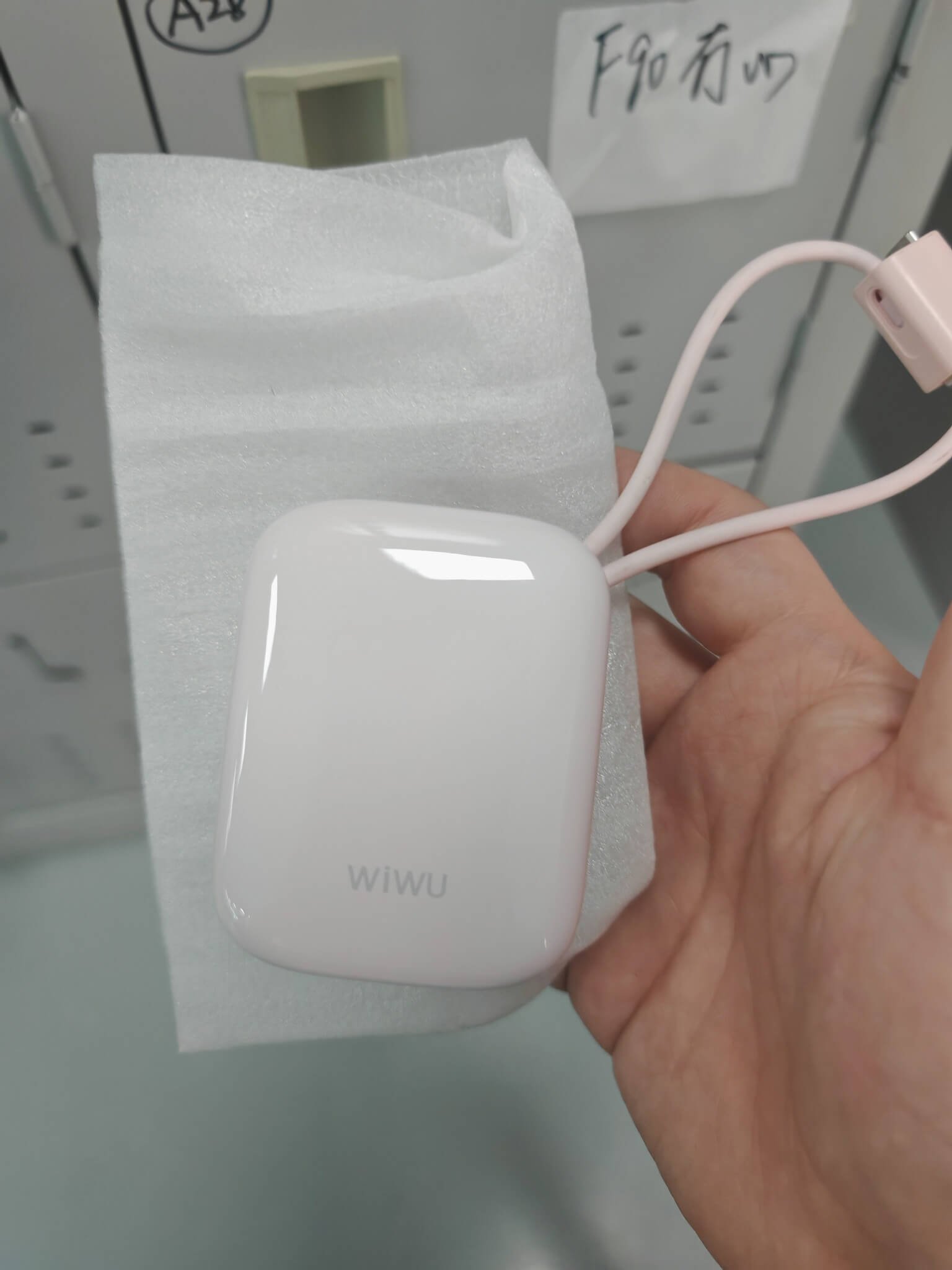
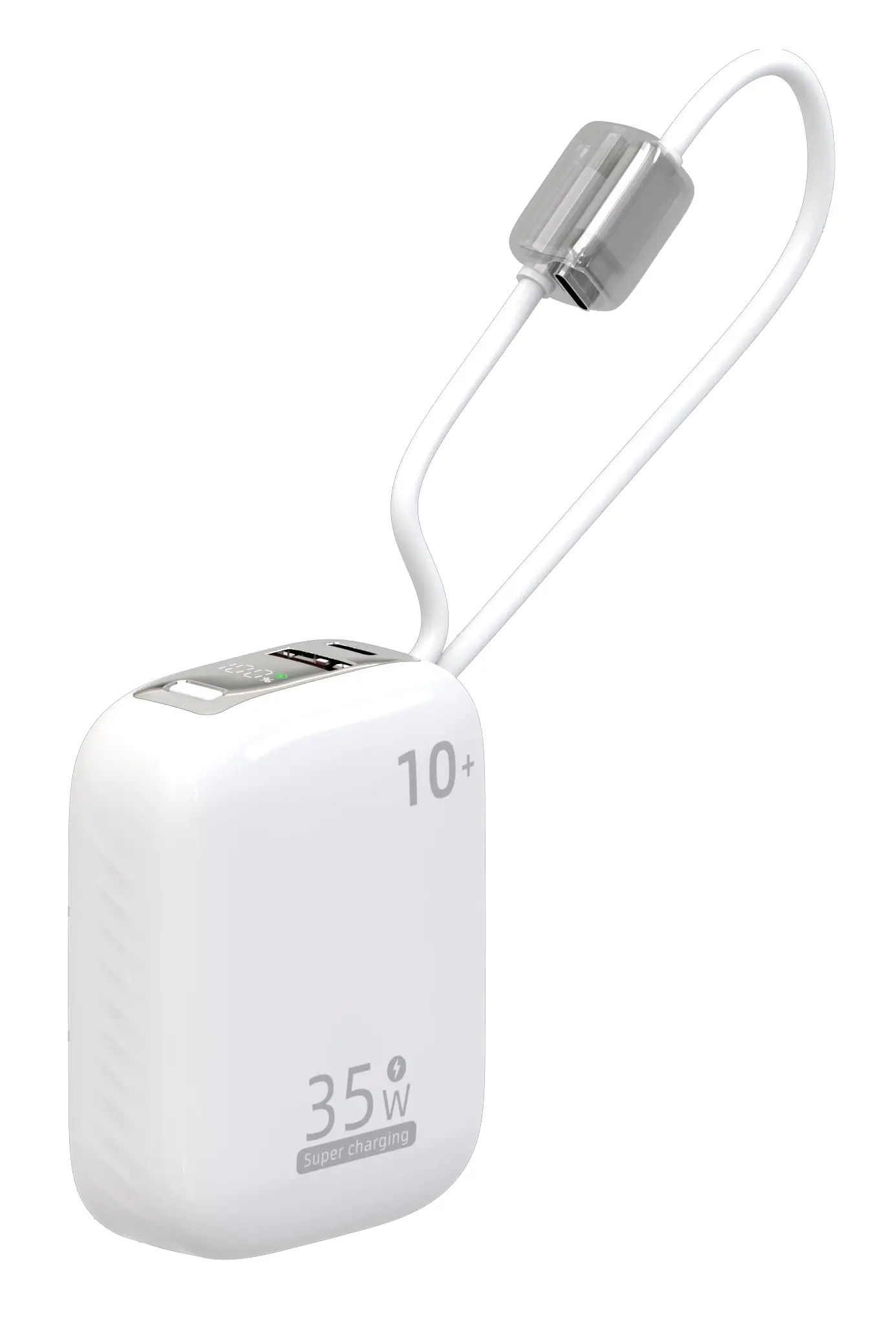
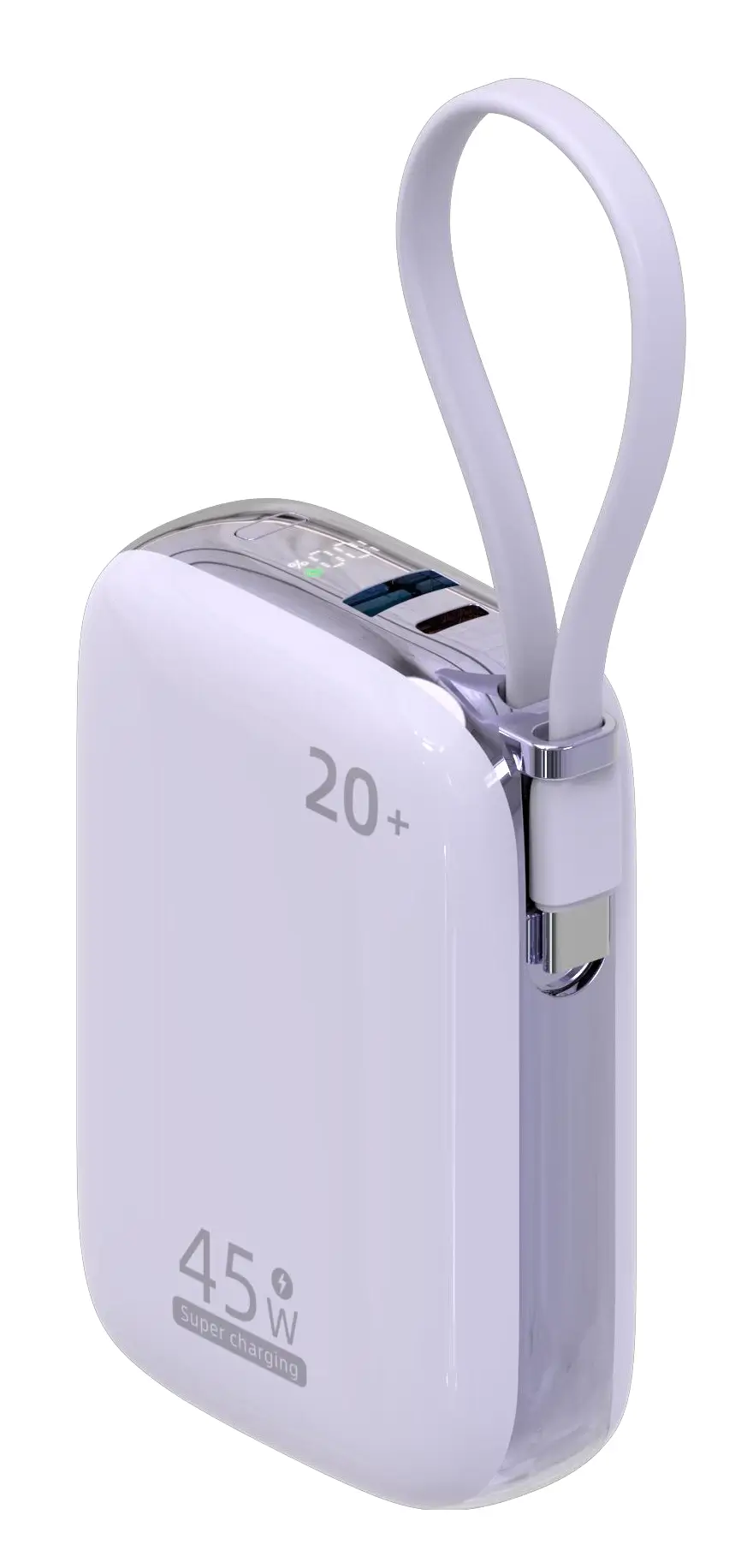
Do Not Let Every Built-In Cable SKU Do the Same Job
| Range role | Useful architecture | Main buyer story | Risk to avoid |
|---|---|---|---|
| Compact / entry | Small capacity, short integrated cable or direct-use format | Carry less and charge immediately | Too little differentiation from low-cost generic models |
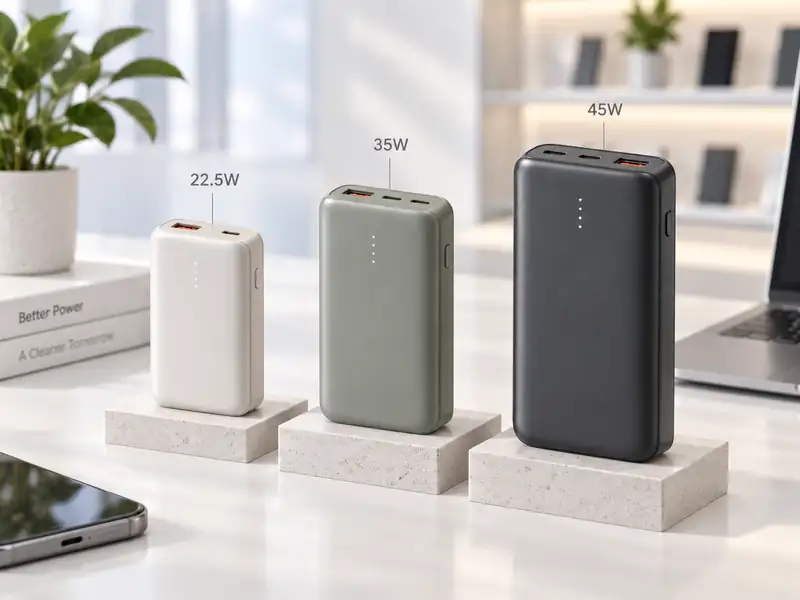
| 10K everyday core | Single or dual built-in cable; 22.5W–35W depending platform | Daily carry with fewer accessories | Adding too many overlapping 10K cable models |
| Travel convenience | Dual cable, retractable cable or AC/travel integration | Reduce separate accessories in the bag | Complexity without a clear travel benefit |
| Higher-power step-up | 20K / 35W–45W+ built-in cable architecture | Longer runtime and broader USB-C use | Large size with no clear reason for the shopper to trade up |
Single cable vs dual cable
A single integrated USB-C cable keeps the message clean. Dual-cable products can expand device coverage or create a stronger convenience proposition, but the buyer should make sure both cables have a clear role rather than simply increasing feature count.
Retractable vs fixed cable
Retractable cable changes the interaction and storage experience, so it can justify a separate SKU even at the same capacity. It also introduces different mechanical and validation questions that should be considered during product selection.
Built-in cable plus magnetic
This can work when the brand wants both wireless convenience and a wired fallback. The packaging must explain the two charging modes without implying unsupported wireless standards or certifications.
Turn the Shelf Signal Into a Buyer Brief
Instead of sending the supplier a screenshot and asking for “something similar,” define the product role first. A stronger brief could be:
That immediately gives the engineering and sales team a clearer decision path. Then compare the brief with current built-in cable platforms, retractable cable options or Custom Development if the required architecture does not exist.
Useful ZEROSET Resources
FAQ
Are built-in cable power banks automatically better for retail?
No. The format is useful when it solves a clear shopper problem and is easy to communicate. A built-in cable alone does not guarantee better demand or sell-through.
Should a range include both single-cable and dual-cable models?
Only if they own different use cases. If the shopper cannot explain why both exist, the two SKUs may be too similar.
What capacity works best with built-in cable?
There is no universal answer. Compact formats, 10K everyday models and 20K higher-power products can all work when the cable architecture matches the intended role.
Related News
Need a Built-In Cable Range That Does Not Look Repetitive?
Share the channel, target user, capacity, power tier and cable format. ZEROSET can map the brief to an existing platform or a deeper development route.