22.5W vs 35W vs 45W Power Banks: Buyer Selection Guide
Choose 22.5W, 35W or 45W by target device, range role and channel—not wattage alone. A practical guide for private-label power bank buyers.
The right question is not “What is the highest wattage?” but “Which power tier gives each SKU a clear job?”
For a private-label range, 22.5W can cover everyday phone-led use, 35W can create a compact step-up, and 45W can serve broader USB-C, travel or higher-demand use. The best choice depends on the target device mix, capacity, cable architecture, thermal design and retail positioning.
Start with the role of the SKU, then choose the wattage that supports it.
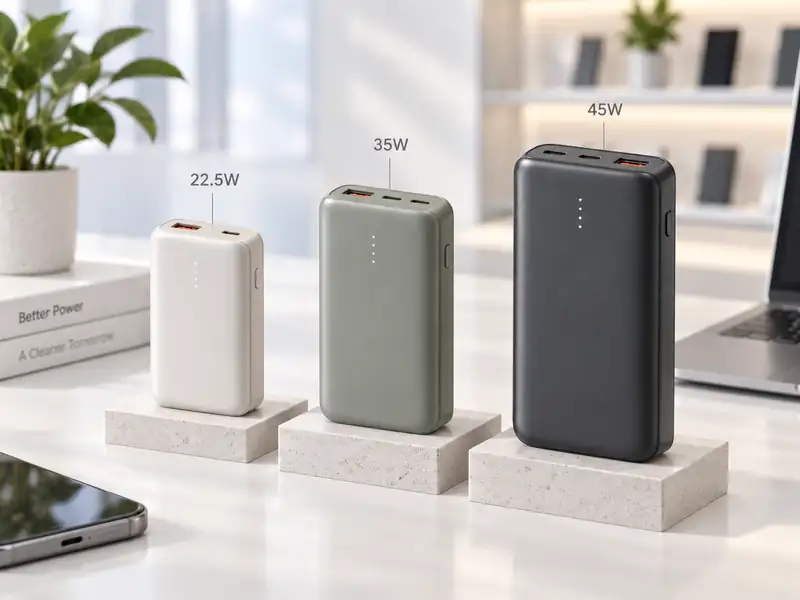
Build a Power Ladder, Not a Wattage Race
- 22.5W can work as an accessible phone-led everyday tier when compactness and value matter.
- 35W is a useful middle tier when the buyer wants more USB-C headroom without moving directly to a larger high-power platform.
- 45W makes sense when the range needs a clearer higher-power story for compatible tablets, compact computers or heavier multi-device use.
- The advertised maximum is not the same as the power every connected device will draw; exact profiles and compatibility must be checked model by model.
Three Power Roles Buyers Can Separate
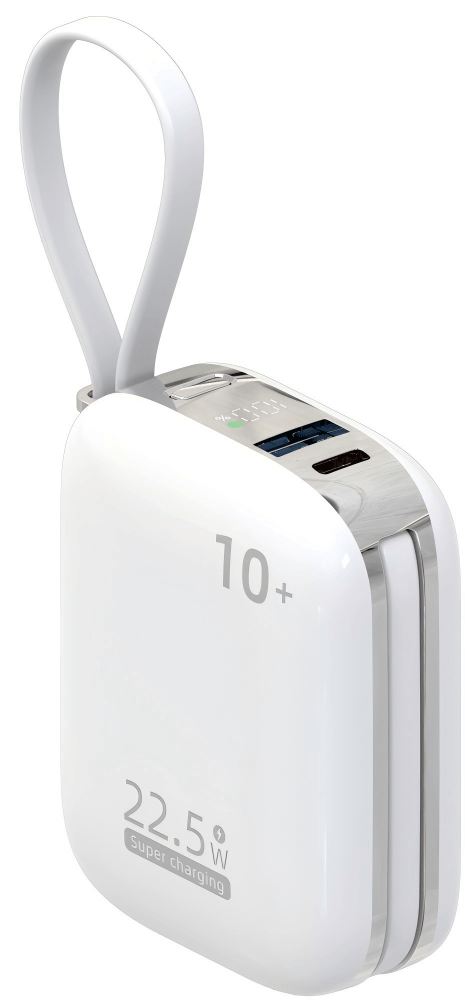
22.5W
Useful when the range is phone-led and the main selling points are portability, built-in convenience and accessible positioning.
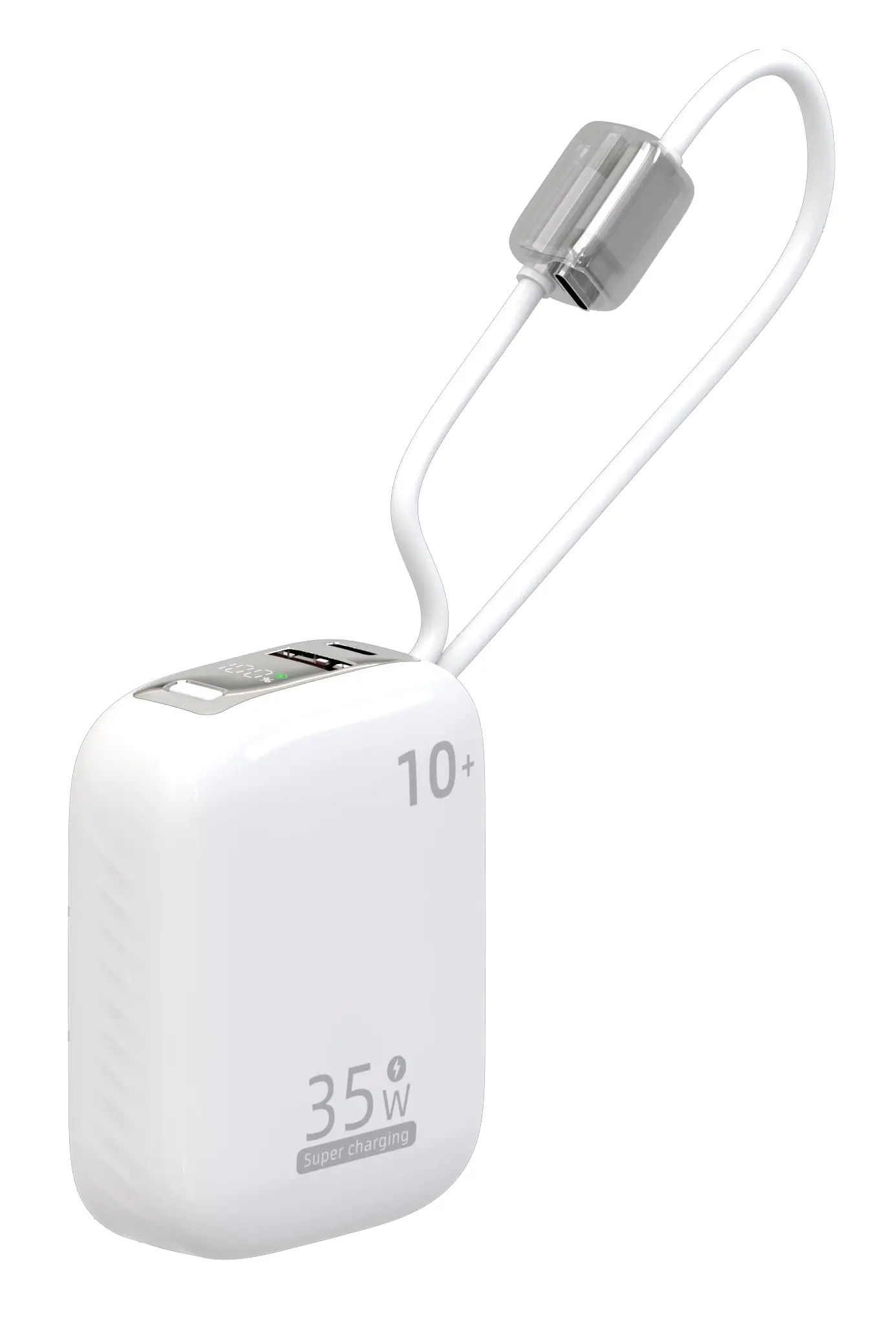
35W
A strong middle tier for buyers who want more USB-C power headroom while keeping a compact 10K-class everyday form.
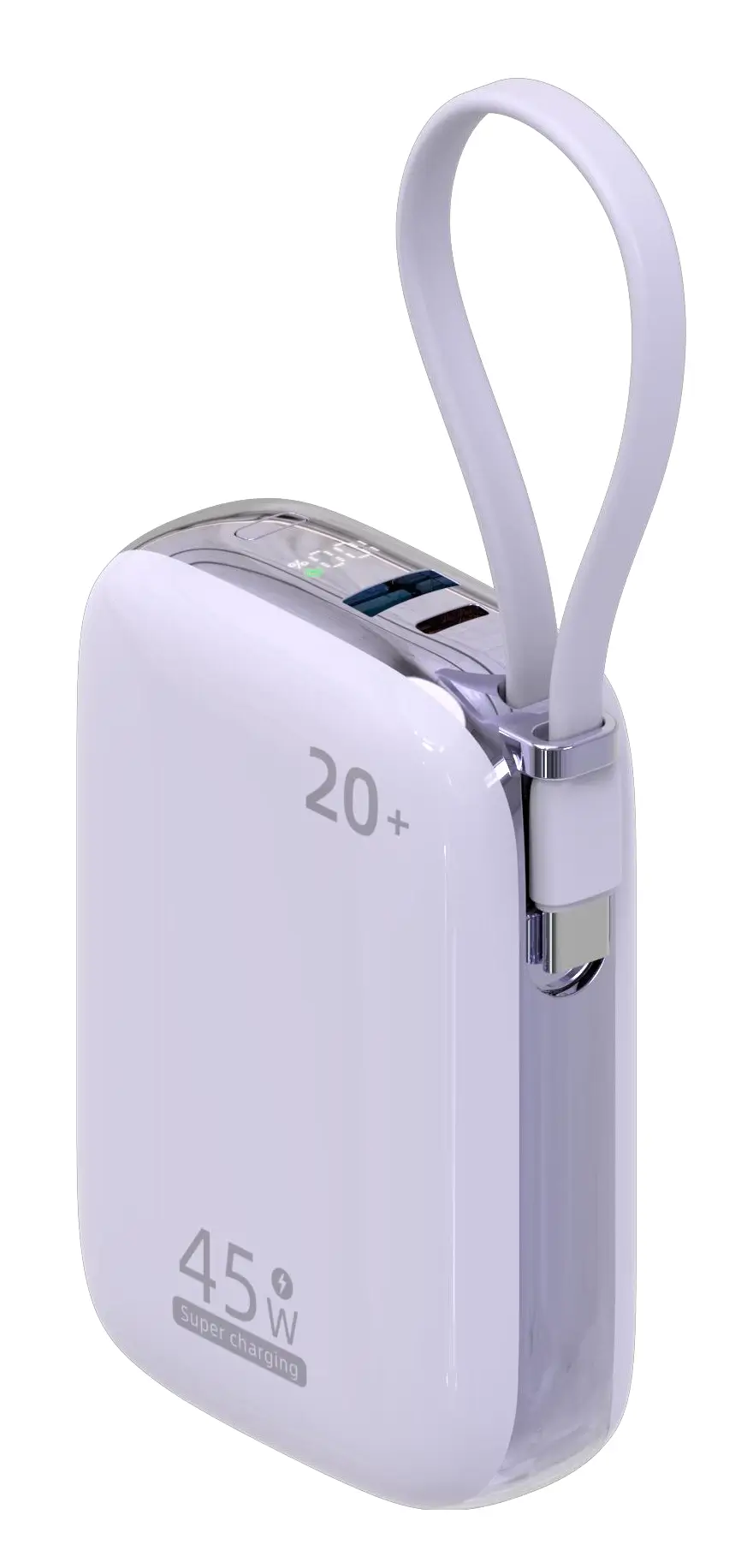
45W
Best when higher-demand USB-C use, longer travel use or a larger-capacity step-up gives the wattage a clear reason to exist.
| Power tier | Best role to test | What must be explained | Main risk |
|---|---|---|---|
| 22.5W | Everyday phone-led entry/core | Convenience, size, cable architecture and value | Looking generic if wattage is the only distinction |
| 35W | Compact step-up / stronger USB-C core | Why the added power matters without adding too much bulk or cost | Overlap with 22.5W if the user benefit is not visible |
| 45W | Higher-power / travel / broader device tier | Compatible device use, capacity, cable and thermal story | Paying for a headline number the target user rarely needs |
Maximum Output Is Not the Same as Actual Device Input
USB-C charging is negotiated between the power source and the connected device. A power bank may be capable of a higher maximum output, but the connected device still determines which supported profile it accepts. The cable and product implementation also matter.
This is why a buyer should not write “45W means every phone charges faster” on packaging. A safer workflow is to define the target devices, confirm supported profiles and then validate the real combinations that matter for the product launch.
Higher Power Changes More Than the Number on the Box
Power path and PCB
Moving upward in output can affect the converter design, component selection, current path and board layout. The platform should be reviewed as a system rather than by changing only the printed wattage.
Thermal behavior
Higher sustained output can create a different heat profile. Validation should cover the actual usage combinations the buyer plans to support, including charging the power bank, discharging it and simultaneous-use scenarios where applicable.
Built-in cable and connector
If the product uses an integrated cable, the cable assembly becomes part of the charging system. Current capability, mechanical life, connector quality and the intended output profile all need to be aligned.
Capacity and use time
Output and capacity solve different problems. A 10K/35W compact model and a 20K/45W travel model can coexist because one emphasizes daily carry and the other emphasizes longer runtime and broader device use.
A Simple Buyer Decision Matrix
| Buyer situation | Start with | Why |
|---|---|---|
| Mainstream phone accessory range, strong price discipline | 22.5W | Keep the story focused on everyday convenience and value |
| Want one stronger hero SKU without moving to a much larger format | 35W | Create a meaningful power step while preserving compact carry |
| Travel, tablet, compact computer or broader USB-C use is part of the brief | 45W | Give the higher-power tier a clearer device and usage reason |
| Unsure whether three tiers are needed | 10K core + one step-up | Start with fewer, clearer roles before adding another wattage layer |
ZEROSET’s current platform map includes Built-In Cable Power Banks, High-Power PD Power Banks and deeper Custom Development when the existing architecture does not fit the brief.
Primary Standards Reference
Useful ZEROSET Resources
FAQ
Is 45W always better than 35W?
No. It is better only when the target device and use case benefit from the additional capability enough to justify the product architecture, size and cost.
Can a 45W power bank force a phone to charge at 45W?
No. The connected device accepts only charging profiles it supports. Actual input depends on the device, cable, protocol negotiation and operating conditions.
Do I need all three tiers in one private-label range?
Not necessarily. Many ranges are clearer with one everyday core plus one meaningful step-up. Add a third tier only when it solves another visible shopper need.
Related News
Choose the Lightest Development Route That Fits
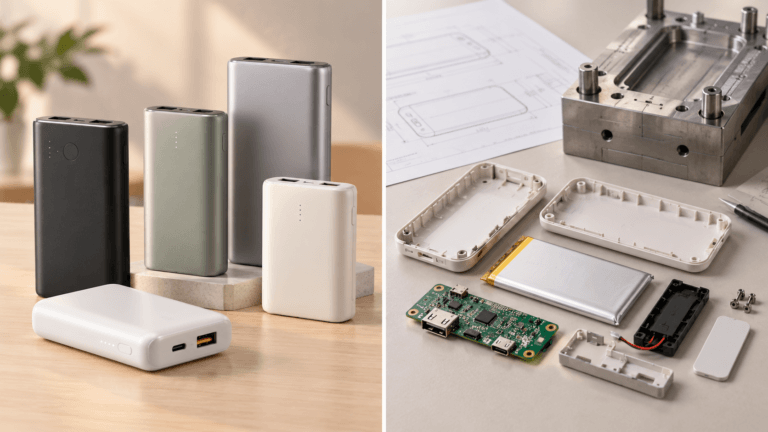
After choosing the power tier, keep the product on a mature platform unless the project really needs deeper changes.
Mature platform · from 1,000 pcs/model
Controlled internal changes · from 2,000 pcs/model
Review target sample, BOM and required match points
New private mold · from 3,000 pcs/design
Typical mature-project baseline: 500 pcs/color · samples 7–10 days · mass production about 30 days.
Need a Clear 22.5W / 35W / 45W Product Ladder?
Send your target market, device mix, capacity, form factor and quantity. ZEROSET can map suitable mature platforms or ODM routes before the RFQ is locked.