A practical product-strategy framework for private-label brands deciding how 10,000mAh and 20,000mAh products should work together instead of competing with each other.

Published September 19, 2026 · Product Strategy
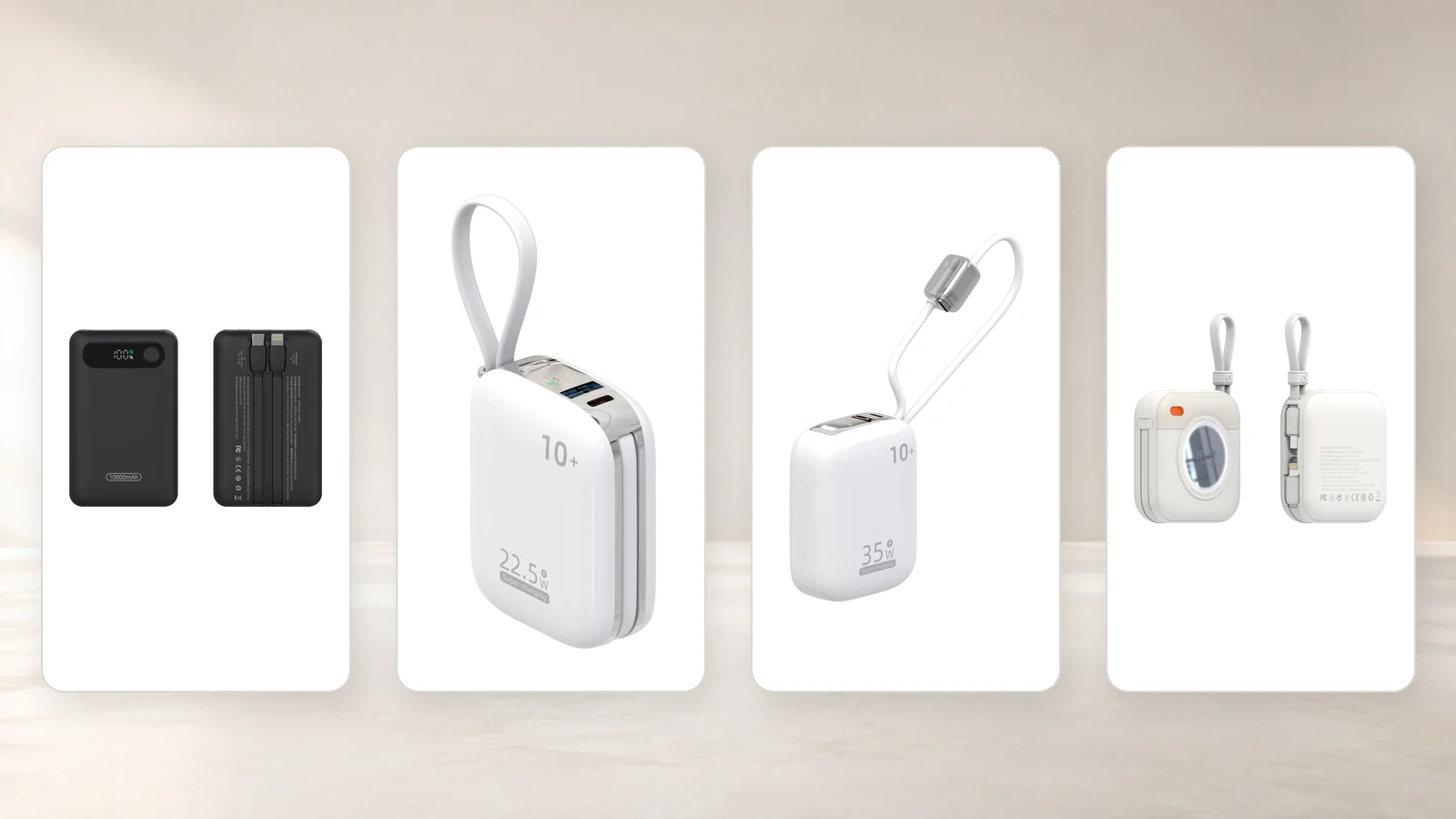
Prioritize pocketability, weight and a visible convenience feature such as built-in cable, magnetic attachment or compact carry.
Use the additional capacity for travel, heavier daily use or higher-demand devices. Add higher power only where the device mix and shelf role justify it.
Higher output increases pressure on the power path, cable loss, thermal management and component selection. A 35W or 45W platform can be the right answer, but only when the target devices and commercial positioning need it. A well-defined 22.5W convenience product can be a cleaner retail proposition than a higher-cost SKU with no clear shelf advantage.
For the engineering trade-off, use PD & PPS Charging, Built-In Cable Loss and Thermal & DC-DC Efficiency.
Share target market, expected first quantity, 10K / 20K role, charging power, cable or magnetic direction, packaging and certification scope. That is enough to start platform matching.