
Wholesale Power Banks for Distributors: Building a 5,000mAh to 20,000mAh Retail Range
A distributor range plan with SKU roles, documentation, cartons and reorder economics.
A distributor should buy a small number of clearly different power-bank roles: 5K pocket or magnetic, 10K mainstream fast charge, 10K integrated-cable step-up and 20K runtime. Quote by exact model, packaging and market. Build replenishment on sell-through and defect codes, not a blended volume promise, and keep one approved technical file for every SKU revision.
Market signal and its limits
Eurostat reported that 78% of EU people had ordered goods or services online in 2025, while the U.S. Census estimated e-commerce at 17.1% of U.S. retail in Q2 2026. These measures use different populations and cannot be compared as market shares, but they show why distributors must support digital product data as well as store cartons.
A distributor's catalog serves many downstream buyers. The range must make it easy for a retailer to choose a good, better and best tier without stocking near-duplicates. A 5K magnetic unit answers carry; a 10K 22.5W unit answers everyday value; a 10K 35W cable unit can be a feature step-up; a 20K unit answers longer runtime. Actual sell-through determines what deserves a wider color or pack extension.
Channel statistics and design standards do not establish power-bank sell-through for a specific product. Treat 2027 product choices as hypotheses until item-level data is available.
Four roles in a 5K-to-20K range
Build SKU cards that compare the same fields: capacity/Wh, output, dimensions, cable/port map, package size and document status.
| Role | Supplier brief | Approval gate |
|---|---|---|
| 5K pocket | Magnetic or compact built-in-cable, with exact wireless profile | Test pocket size, heat and device compatibility. |
| 10K core | Measured 22.5W with clear ports and display | Check price-volume ladder and retail readability. |
| 10K step-up | Validated 35W cable format | Test built-in cable and supported device charging. |
| 20K runtime | Wh labeled, weighted and cartonized for the route | Check freight, returns and flight-use wording. |
Agree a sample board for every range review. Record which device and measurement underpins each claimed wattage; a power output stated on a competitor package is only a starting point.
“A distributor earns the reorder by making each SKU easy to compare and easy to restock.”
Wholesalers need consistent master data, stable packaging and a predictable cost ladder. A technically exciting SKU can fail if its carton, barcode and documentation cannot be reused across retailers.
The unusual challenge is range overlap. Two 10K products may cannibalize each other unless one offers a visible cable, output or design benefit at an intentional price step.
ZEROSET model and image reference
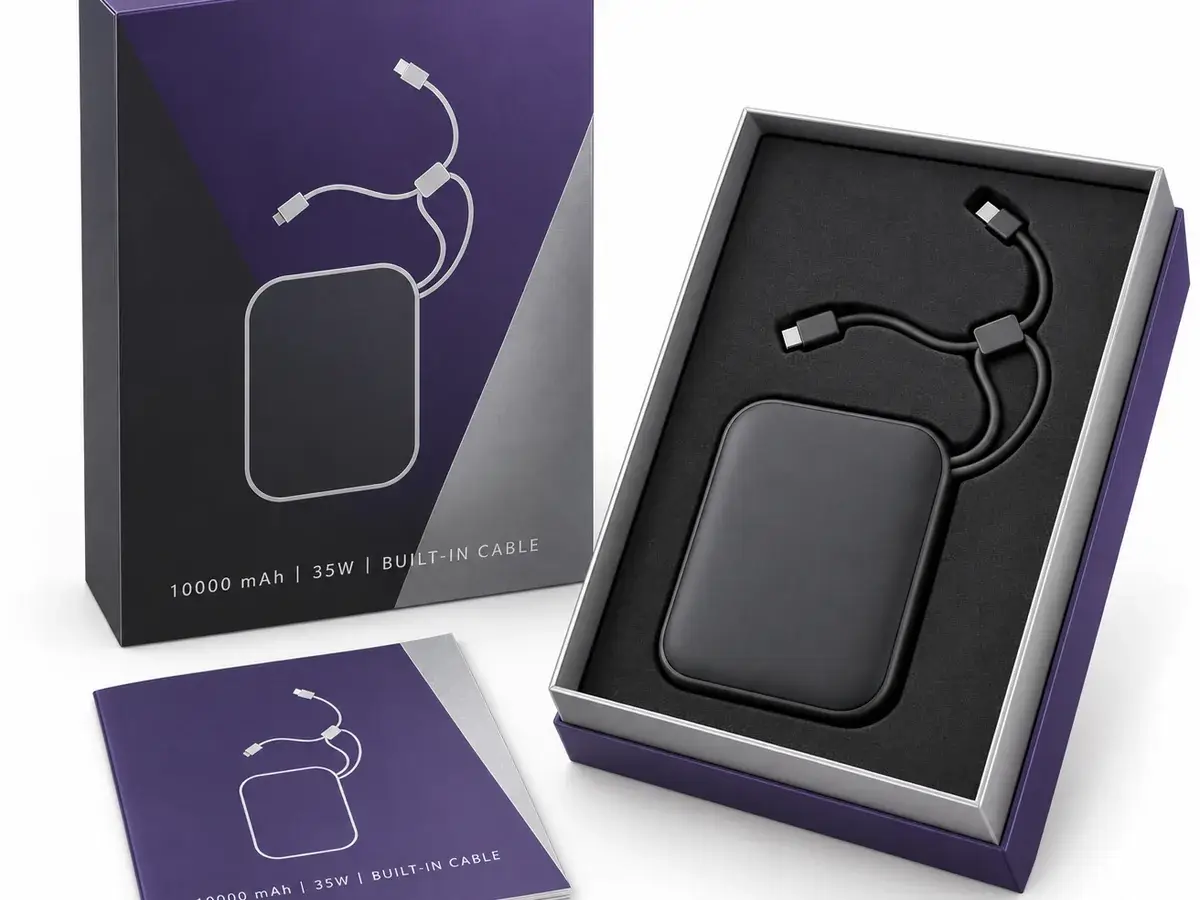
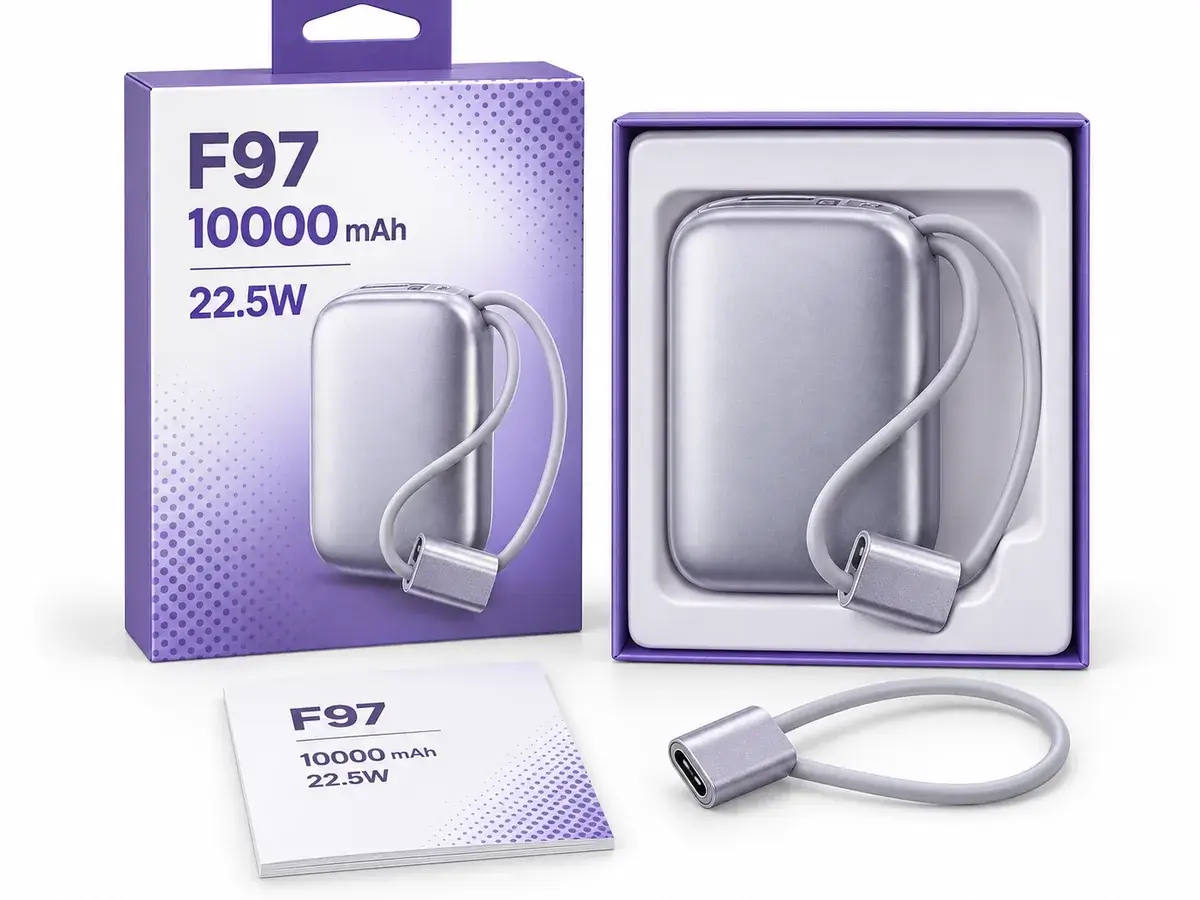
The WEKOME F97 case shows a documented 10K / 22.5W built-in dual-cable format. The CIBOLIBO 10K / 35W case shows a distinct higher-output built-in-cable presentation. Use these as a range-comparison exercise; private-label supply requires separate revisions and commercial permission.
Neither case establishes a distributor sell-through rate or a new buyer's rights to the pictured brand artwork.
Supplier brief and purchase-order gates
Give the supplier a controlled brief for the exact target market, channel, customer and sample revision. Use this sequence before paying for a large production lot:
- Map downstream channels. Collect retailer types, target shelf prices, destination countries and forecast by capacity tier.
- Issue one comparison RFQ. Use identical line items for cell, output, cables, packaging, cartons, testing and documents.
- Sample by role. Test why each model deserves a catalog slot and what replaces it if the target price cannot be met.
- Agree master data. Lock barcode, dimensions, Wh, gross weight and image rights for each SKU.
- Replenish by SKU. Set reorder triggers from actual sell-through, returns and agreed factory lead time.
Request a written quantity ladder, packaging and tooling assumptions, test/document ownership, production lead time and the rules for any component change. The buyer should see the item that will actually ship, not a platform photo.
Frequently asked questions
How many wholesale models are enough?
Start with distinct use cases, then add color or capacity only when sell-through supports it.
Is 5K too small?
Not for pocket or magnetic carry, if the buyer understands its runtime limits.
Can a distributor private-label these examples?
A new approved private-label configuration is required; the pictured brands are references.
What should appear in a price list?
SKU revision, capacity/Wh, outputs, packaging, carton, quantity ladder and validity date.
How should a retailer compare 10K models?
By tested output, cable convenience, size, price and support files.
What causes avoidable returns?
Mismatch between listing, box and actual charging behavior is a common preventable risk.
Sources and scope
- Eurostat Digitalisation 2026 — 2025 EU online buying
- U.S. Census e-commerce — Q2 2026 U.S. retail context
- WEKOME F97 case — 10K example
- CIBOLIBO 35W case — step-up example
Checked October 2026. The product plan is an editorial sourcing scenario for 2027; verify current platform policy, destination law and exact-model documentation before a listing or purchase order.
Send your destination markets, catalog price tiers and carton needs. ZEROSET can prepare a role-based wholesale range and revision-specific quote.