How to Start a Power Bank Brand in 2027: Finding an OEM Manufacturer and Choosing Your First Three SKUs
An evidence-led first assortment, supplier brief and launch sequence for a new portable-charging brand.
Start with a buyer and channel, then choose three clearly different jobs: a compact 5,000mAh daily-carry unit, a 10,000mAh built-in-cable core seller and a higher-output or 20,000mAh travel option. Send one controlled RFQ to manufacturers specifying target devices, outputs, battery Wh, country, packaging, documents, quantities and artwork. Approve the exact revision by sample before any volume order.
What the current market data does and does not say
The U.S. Census Bureau estimated e-commerce at 17.1% of total U.S. retail sales in Q2 2026. PPAI measured $27.1 billion in 2025 U.S. promotional-products channel sales. These are two distinct channels, not forecasts for power banks.
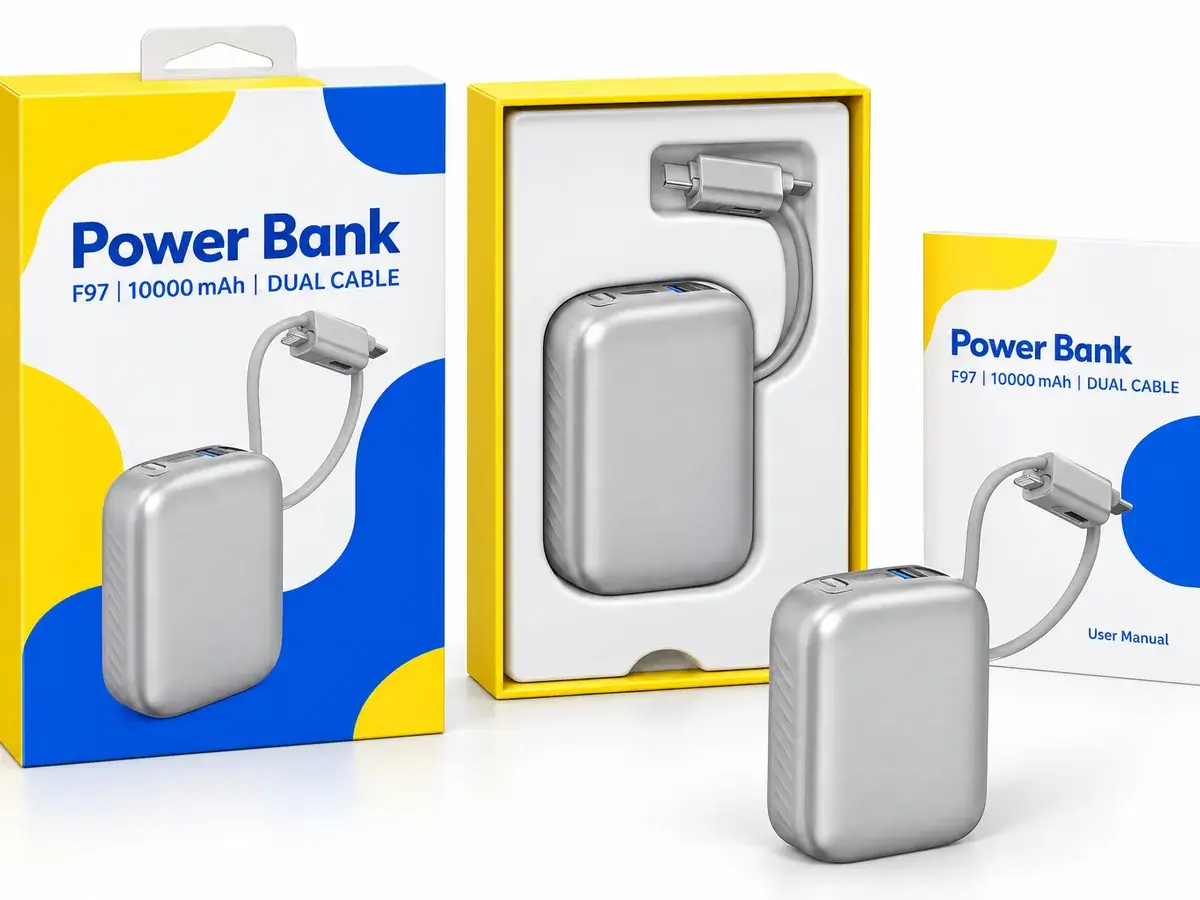
A new brand should decide whether it wins by online demonstration, retail shelf clarity or corporate customization. A magnetic battery can carry visual differentiation; a dual-cable 10K solves a practical daily problem; a higher-capacity unit offers a visibly different use case. Launching three cosmetic variations of the same product makes search listings and distributor pitches harder to distinguish.
These are channel-level signals. They do not measure power-bank unit sales or prove any one design will be a bestseller.
The first three-SKU brand architecture
Use one SKU per purchasing job. Keep color variants within a model rather than treating every color as a separate first-launch platform.
| Role | Specification to brief | Decision gate |
|---|---|---|
| 5,000mAh magnetic or direct-plug concept; confirm device compatibility and output | Can a buyer explain the use in one image and verify the exact battery rating? | |
| Everyday | 10,000mAh, built-in USB-C cable, visible remaining-charge indicator | Does the sample pass cable-cycle, charge/discharge and package-copy checks? |
| Travel/power | 20,000mAh or higher-output concept, with Wh clearly labeled | Are dimensions, weight, airline guidance and shipping documents acceptable? |
The mix is a test hypothesis. Hold repeat orders until returns, conversion, charging performance and channel-level margin are measured by SKU.
“A first power-bank brand needs three reasons to buy, not three versions of the same promise.”
When every listing claims fast charging, the assortment has to show an immediate difference in portability, cable convenience and runtime. Packaging, photography and the approved specification must tell the same story.
The unusual challenge is revision control. A logo proof, electrical sample and marketplace listing can each describe a different product unless the supplier locks the battery, output, cable and artwork to one signed version.
A documented model and packaging route
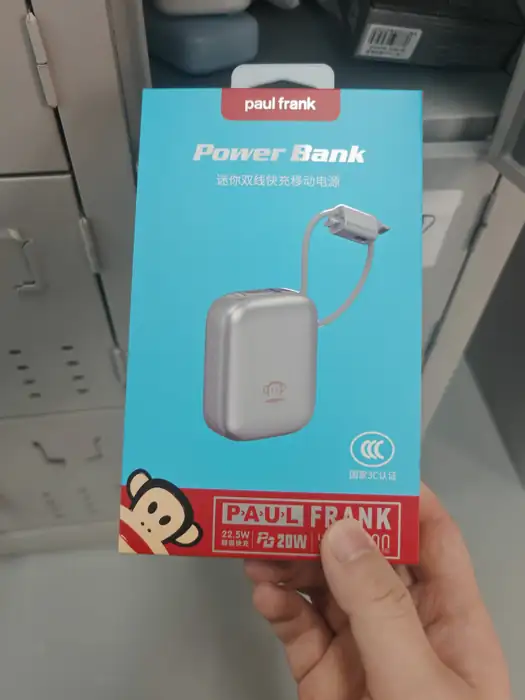
The Paul Frank F97 case study documents a 10,000mAh, 22.5W dual-cable model and retail box that names ZEROSET's manufacturing entity. It is a useful reference for how a branded 10K can combine recognizable design, cable convenience and a coherent box. For a new brand, request a fresh private-label configuration and confirm permissions for all artwork.
This case is a manufacturing and presentation reference. It does not disclose order volume or prove that a new label may use Paul Frank artwork.
Supplier brief and launch gates
A first order should be governed by a short supplier file, not a long unstructured chat history.
- Define customer and selling route. Record device mix, expected retail price band, sales country, launch month and who handles returns.
- Freeze an RFQ. Specify each SKU's nominal capacity and Wh, output profiles, cable type, dimensions, packaging, included accessories, barcode and manuals.
- Request evidence per exact revision. Ask for battery test summary, transport documents and market-specific compliance evidence; do not substitute a different model's report.
- Compare physical samples. Test real-device charging, thermal behavior, cable strain, magnet alignment where relevant and packaging accuracy.
- Release a small measured launch. Use actual conversion, reviews, defects and return reasons to decide which platform earns the next production lot.
Ask the factory for a unit-cost breakdown by quantity and decoration method, then model landed cost, marketplace fees, freight, returns and warranty reserve before approving a sales price.
Frequently asked questions
How many SKUs should a new power-bank brand launch?
Three differentiated platforms are a manageable hypothesis; a narrower start is sensible when sample or channel evidence is weak.
Can I put my logo on an existing platform?
Often yes, subject to artwork, housing and packaging feasibility. The final specification and design permissions still require approval.
Do I need a custom mold immediately?
Usually begin with a platform and measured demand; commission tooling only when a distinct form factor has a commercial reason.
What documents should an OEM quote identify?
At minimum request the exact model revision, cell and Wh details, battery transport evidence and destination-specific compliance scope.
What is the right first-order quantity?
It depends on configuration, decoration, packaging and channel economics. Obtain a quantity-price ladder and sample gate from the manufacturer.
Can one model work for Amazon and retail shelves?
Possibly, but listing data, image requirements, pack copy, barcodes and retail carton dimensions need separate channel checks.
How do I reduce launch risk?
Lock the revision, test samples, verify documents, then reorder from observed sell-through and returns.
Sources and scope
- U.S. Census Quarterly Retail E-Commerce Sales — Q2 2026 U.S. share
- PPAI 2025 Sales Volume Estimate — 2025 U.S. promo-channel sales
- Paul Frank F97 project reference — model and box evidence
Data checked October 2026. Forecasts and SKU recommendations are ZEROSET editorial scenarios for 2027; platform policies and model documents must be rechecked at listing and purchase-order approval.
Send your destination market, target channel, three intended price bands and launch quantity. ZEROSET can return a model shortlist and a revision-specific RFQ checklist.