
How Supermarket Chains Source Power Banks: Shelf-Ready Packaging, Price Tiers and Reorder Plans
A practical buying file for supermarket and mass retail electronics shelves.
Supermarket buyers should source a compact entry unit, a recognizable 10K core SKU and a clearly superior convenience or runtime step-up. Require shelf-ready packaging with readable capacity, output, ports, Wh and accessories; define barcode, master carton, planogram footprint and reorder service levels before purchase-order approval. Test the unit and the box as one commercial product.
Market signal and its limits
U.S. Census put e-commerce at 17.1% of total retail sales in Q2 2026; most retail sales therefore still occurred outside e-commerce. This aggregate is not supermarket power-bank demand, but it shows why physical shelf execution remains a separate buying problem.
A shopper may spend only seconds comparing boxes. The front should identify capacity and one distinguishing benefit; the back should resolve port/output, device and safety questions without unsupported promises. Retail price tiers should correspond to a real feature ladder, not just color or graphic changes. Store handling also puts pressure on hang tabs, tamper evidence and pack durability.
Channel statistics and design standards do not establish power-bank sell-through for a specific product. Treat 2027 product choices as hypotheses until item-level data is available.
A retailer's three-tier planogram
Define tiers by benefit and costed shelf space, then assign specific widths and facings from the retailer's planogram.
| Role | Supplier brief | Approval gate |
|---|---|---|
| Entry | Compact 5K or basic 10K; one clear charging use | Check packaging readability at shelf distance and target margin. |
| Core | 10K fast charge with visible display or integrated cable | Check item/box consistency, barcode and pack-out. |
| Step-up | 20K runtime or validated multi-device convenience | Prove the feature premium, weight and replenishment case. |
For each tier, obtain unit measurements, shelf/hook orientation, carton count, master carton strength and visual proof of the final pack. A display-ready box that fails handling adds returns and labor.
“A power bank is bought from a box long before the shopper tests a port.”
Shelf-ready packaging converts electrical specifications into a ten-second comparison. It must also survive stocking, scanning and returns without obscuring the real product.
The unusual challenge is pack-to-product consistency. A sample can look good while its box shows different ports, cables or branding. Approve product, artwork, barcode and carton as one controlled revision.
ZEROSET model and image reference
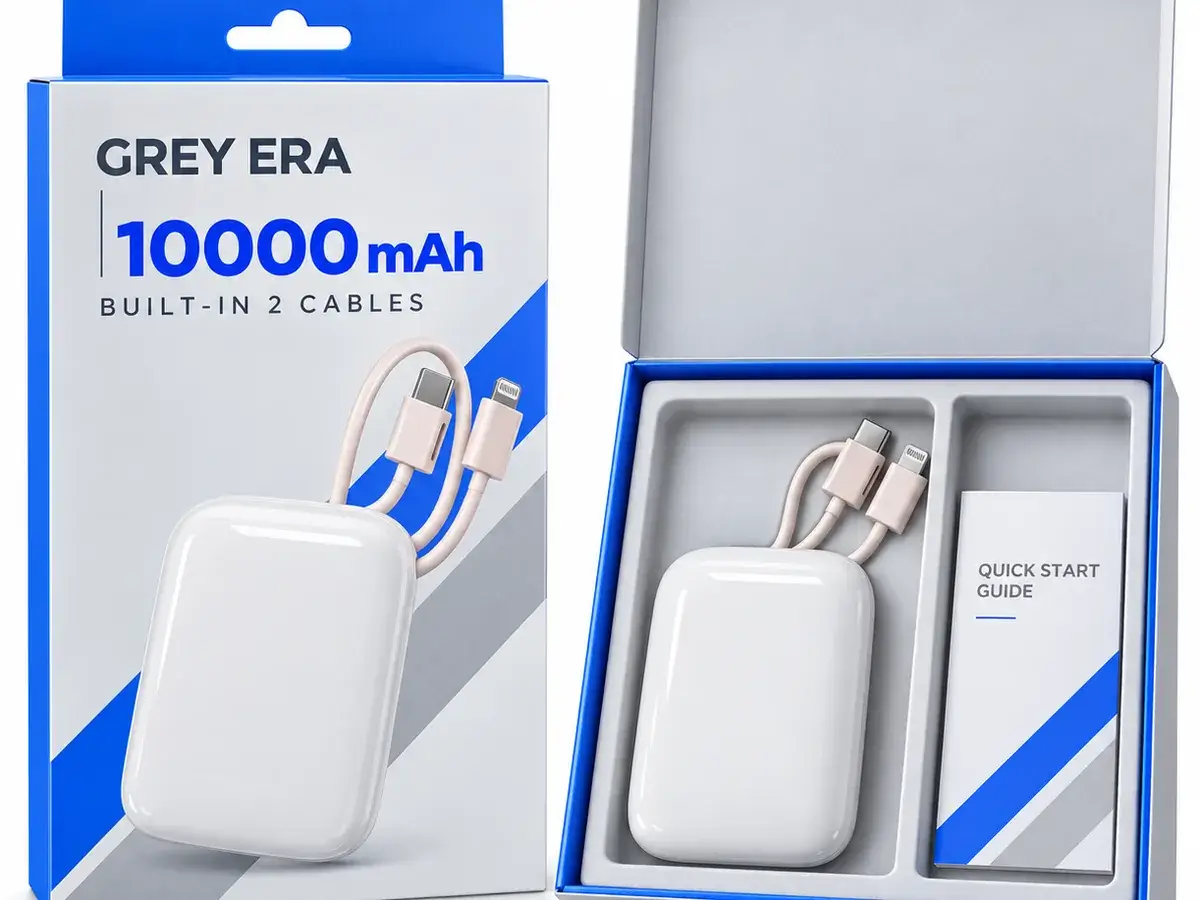
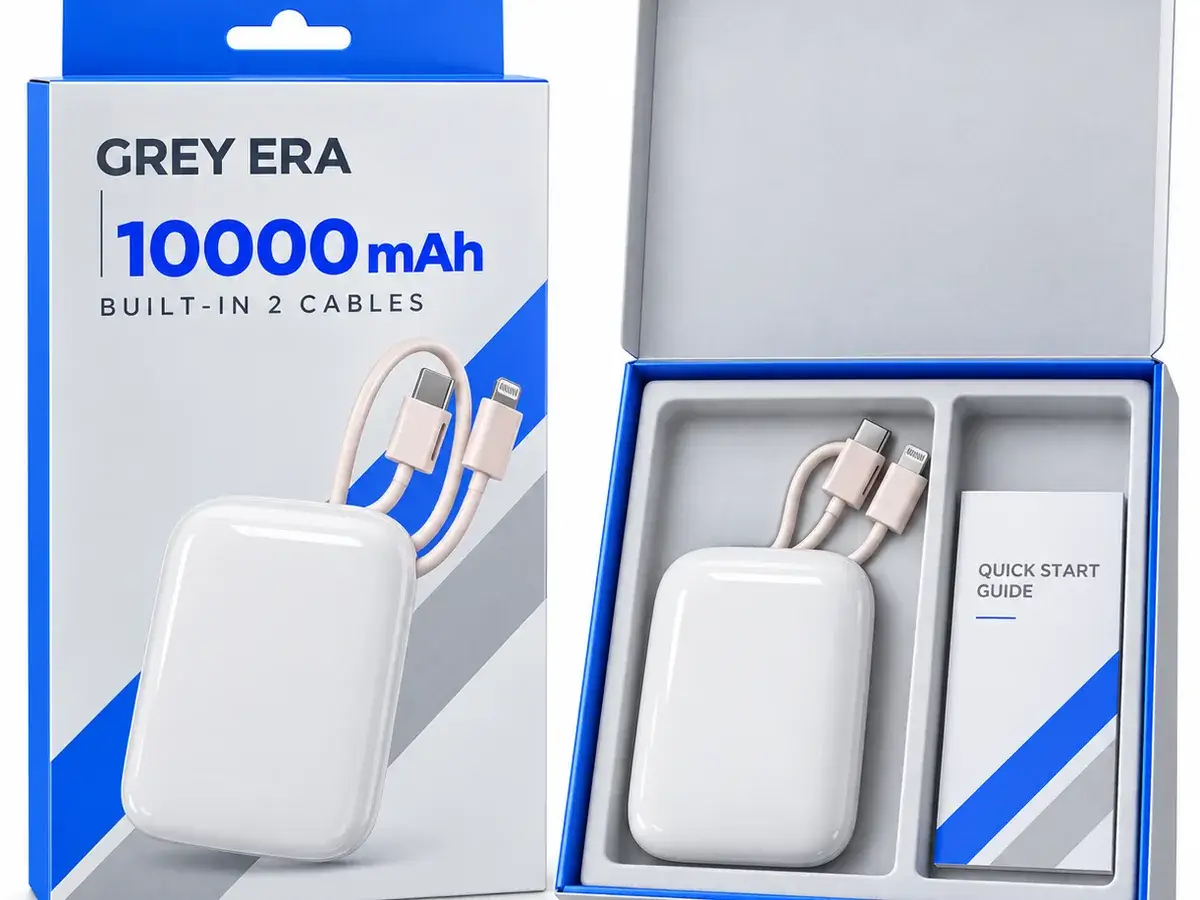
The HSJ Grey Era 10K case shows a two-cable retail format. Its documented sample also highlights a real packaging-brand alignment issue; use that lesson as an artwork gate when specifying a supermarket private-label box. ZEROSET can propose a separate approved configuration.
This is a packaging and product-format example, not evidence of supermarket distribution or sell-through.
Supplier brief and purchase-order gates
Give the supplier a controlled brief for the exact target market, channel, customer and sample revision. Use this sequence before paying for a large production lot:
- Specify the fixture. State hook, shelf or counter display, available width, carton handling and theft-control needs.
- Build a priced ladder. Separate entry, core and step-up benefits with target shelf prices and landed-cost ceilings.
- Test shelf samples. Inspect front-of-pack clarity, barcode scan, tamper resistance and product accuracy.
- Approve store pack-out. Define inner/mater carton quantities, labels and delivery-point rules.
- Set reorder signals. Track weekly units per store, returns and out-of-stock; replenish by tier rather than one blended total.
Request a written quantity ladder, packaging and tooling assumptions, test/document ownership, production lead time and the rules for any component change. The buyer should see the item that will actually ship, not a platform photo.
Frequently asked questions
What does shelf-ready mean for a power bank?
A pack that fits the fixture, communicates the main benefit, scans reliably and protects the unit.
Is a 10K product enough for a range?
It can be a core anchor, but a range should offer distinct roles and price tiers.
Should packaging show Wh?
Use the exact battery and destination rules; ensure capacity and transport information agree.
How should chains plan reorders?
Use store-level sell-through and return data by SKU with an agreed lead time and safety stock.
Can one carton serve online and stores?
Sometimes, but e-commerce protection and shelf display often have different needs.
What should the first RFQ include?
Store count, fixture, price tiers, packaging, quantity and delivery calendar.
Sources and scope
- U.S. Census Q2 2026 e-commerce — channel context
- HSJ Grey Era case — packaging lesson
Checked October 2026. The product plan is an editorial sourcing scenario for 2027; verify current platform policy, destination law and exact-model documentation before a listing or purchase order.
Share fixture dimensions, planned stores, target shelf prices and forecast by tier. ZEROSET can prepare a pack-and-product sample shortlist.