
45W USB-C Built-In-Cable Power Bank Supplier: Sourcing for Tablets and Compact Laptops
Test the USB-C power path, built-in cable and exact-device compatibility before calling a bank laptop-ready.
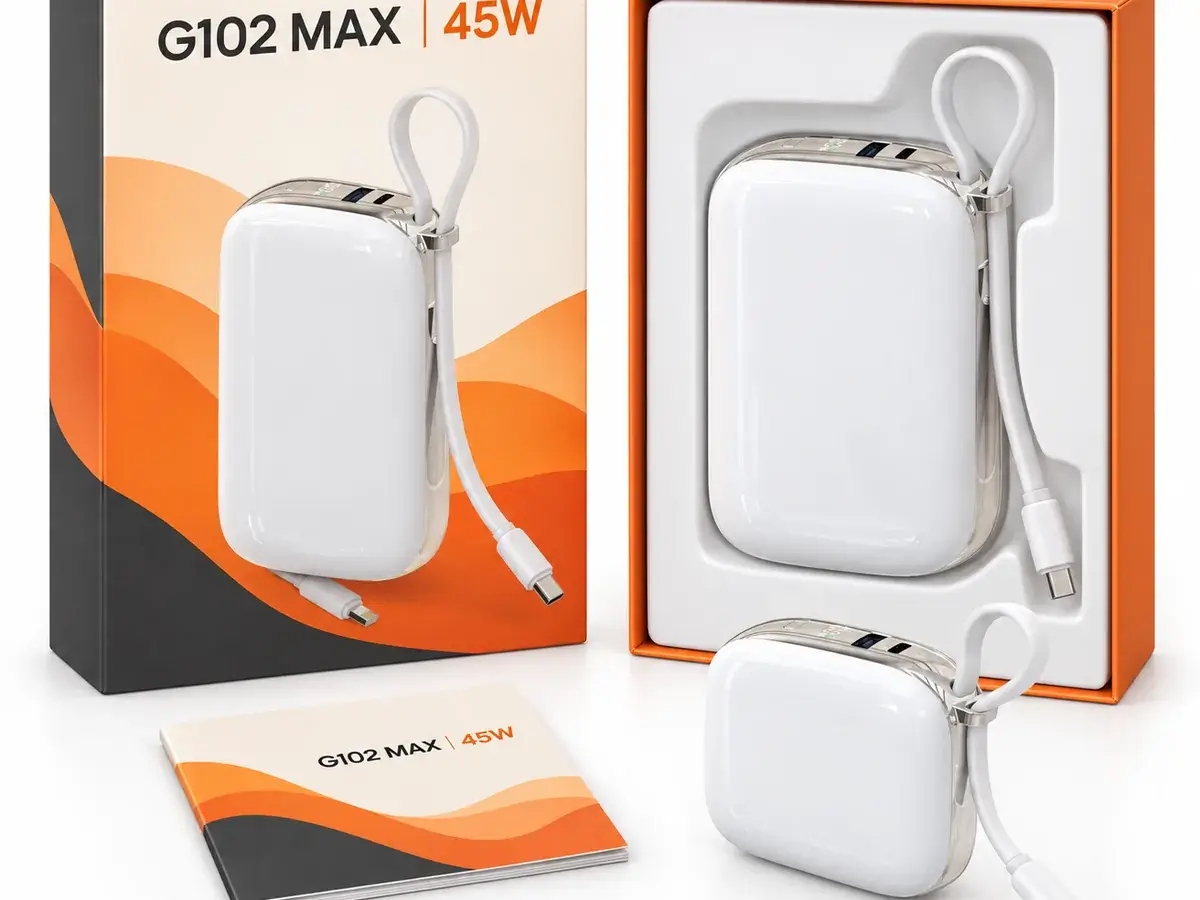
A 45W USB-C power bank can be a useful tablet and compact-laptop candidate only when the target device accepts its voltage/current profile and the built-in cable carries that output. Brief the supplier on specific devices, USB-C PD profiles, simultaneous-output behavior, capacity in Wh, cable durability and thermal limits. Validate the finished unit with real devices before making a laptop-compatibility claim.
What current evidence tells a buyer
USB-IF states that USB Power Delivery can support up to 240W in the standard; that ceiling does not mean a 45W power bank powers every laptop. FAA guidance generally limits spare lithium-ion batteries in carry-on baggage to 100Wh without airline approval, so both output and energy rating matter to a travel-oriented SKU.
The sales message should distinguish three different quantities: battery energy (Wh), maximum USB-C output (W) and how long a device runs under its actual load. A 45W label can be compelling for tablets, handheld computers and some lightweight laptops, but charging may slow or stop when the device demands more power. Measure voltage negotiation, cable drop, multi-port derating and heat.
The cited market figures measure their stated channels or populations. They do not prove sales or demand for this exact power-bank SKU.
A device-based sourcing matrix
Do not start with 'laptop power bank' as an unrestricted claim; start with a tested device list and charging conditions.
| Buying role | Supplier brief | Approval gate |
|---|---|---|
| Tablet/phone | 45W USB-C output through the integrated cable | Measure peak and sustained power on named devices. |
| Compact laptop | Confirm PD negotiation and in-use charging result | Check whether the laptop charges while operating, sleeping or only when off. |
| Multi-device travel | Map total output when USB-C and USB-A or second cable run together | Test derating, heat and Wh labeling. |
If the target laptop requires 65W or more for full-speed charging, quote a different platform instead of stretching the claim. A clear compatibility table can reduce avoidable returns.
“A USB-C wattage is only useful when the device and cable can negotiate it.”
Built-in-cable convenience is visible in a photograph. The electrical path is not. Buyers should ask for a sample test showing the exact device, cable and charging state.
The unusual challenge is mixed-output behavior. A bank may deliver 45W on one port alone but less when another device is connected. Retail copy must state the condition under which the claim holds.
ZEROSET model and image reference
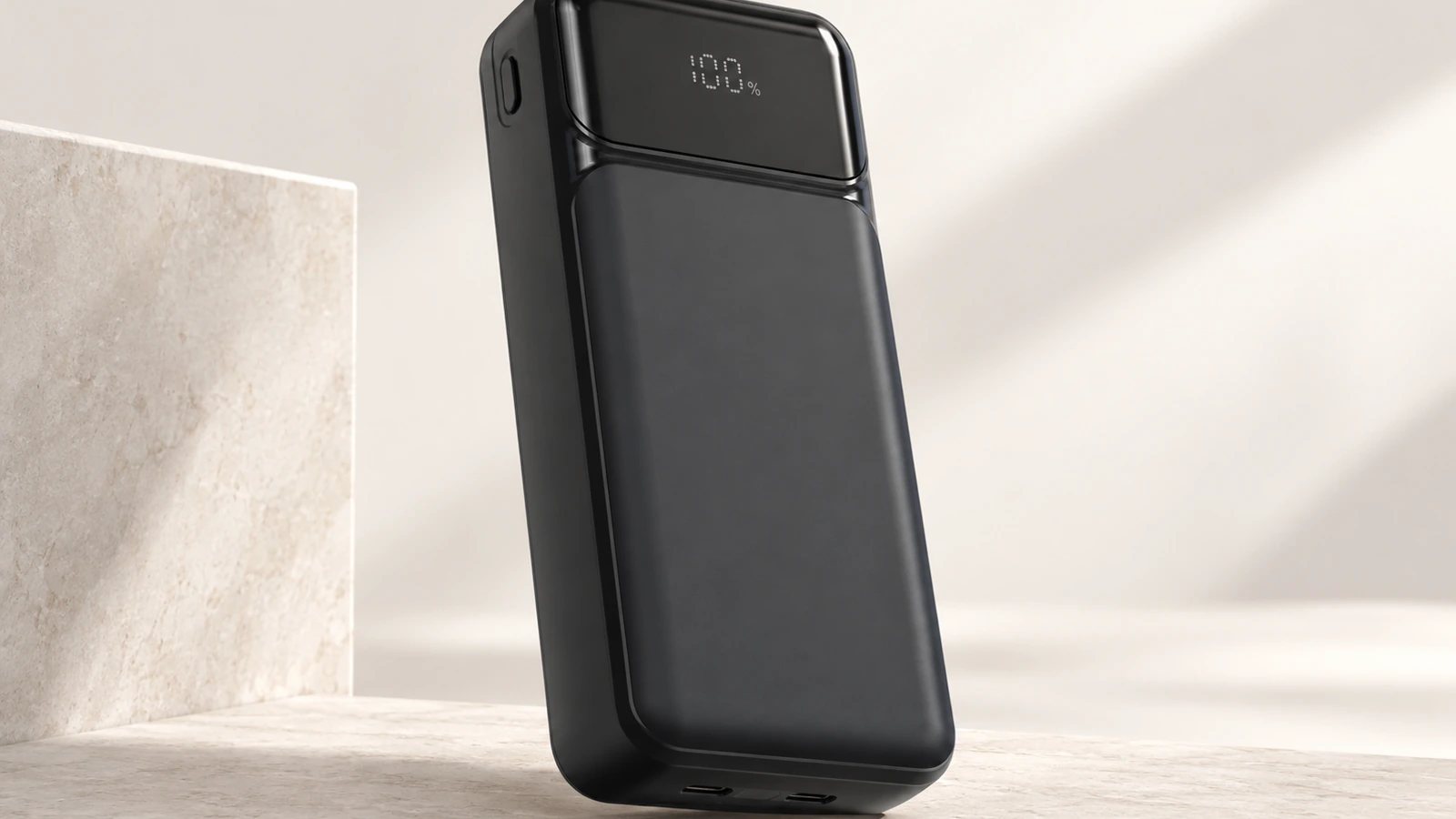
The MEITUAN SQUIRREL G102Max project has retained package evidence for 45W USB-C, 22.5W USB-A, built-in Type-C and Lightning cables and a 71.62Wh pack, with ZEROSET named as manufacturer. Use it as a documented architecture reference and request a new sample for the intended devices.
The case does not prove compatibility with every laptop or that a separate platform image shares the G102Max specification.
Supplier brief and release gates
Use one controlled file for the exact battery, electronics, cable, artwork, destination and sales route. Ask the factory to identify the model revision on every sample and document.
- List target devices. Name tablets and laptop models, required charging modes and USB-C port conditions.
- Request PD profile data. Record voltage/current profiles, cable rating and single versus combined output.
- Test sustained operation. Measure energy delivery and heat on real devices at realistic ambient temperature.
- Check transport file. Match cell, Wh and UN38.3 summary to the exact revision.
- Write conditional copy. State supported devices and charging conditions rather than a blanket laptop-ready claim.
Before signing a purchase order, request quantity tiers, sample approval criteria, packaging and carton details, document ownership, production timing and a written component-change procedure. Review real device performance rather than relying only on brochure specifications.
Frequently asked questions
Will 45W charge every laptop?
No. Required profiles and power draw vary; test the exact target model.
Is 45W the battery capacity?
No. Watts describe output power; watt-hours describe stored energy.
Can the built-in cable be the limiting factor?
Yes. Verify the cable, connector and controller as one power path.
What happens with two devices connected?
Output may derate; test and publish the combined-output specification.
Does 71.62Wh guarantee flight acceptance?
No. It is below the FAA's general 100Wh threshold, but airline and jurisdiction rules must be checked.
What should the factory provide?
Exact revision, PD profiles, Wh, transport summary and sample test evidence.
Sources and scope
- USB-IF Power Delivery overview — standard capability
- FAA PackSafe lithium batteries — passenger carriage guidance
- G102Max project case — model evidence
Checked October 2026. The assortment recommendations are sourcing scenarios for 2027 and must be validated with item-level tests, current platform rules and destination requirements.
Send your target devices and charging conditions. ZEROSET can test a 45W candidate against the actual use case and quote the approved revision.