USB-C Power Bank Charging Claims: A Buyer’s Device-and-Cable Test Matrix
How can a buyer substantiate a USB-C power bank charging claim?
A 45 W label can describe a particular port and profile under particular conditions. It does not tell a shopper what happens through an arbitrary cable into a device that requests less. A useful launch file bridges that gap without turning a test trace into a blanket claim.
Describe the complete power path
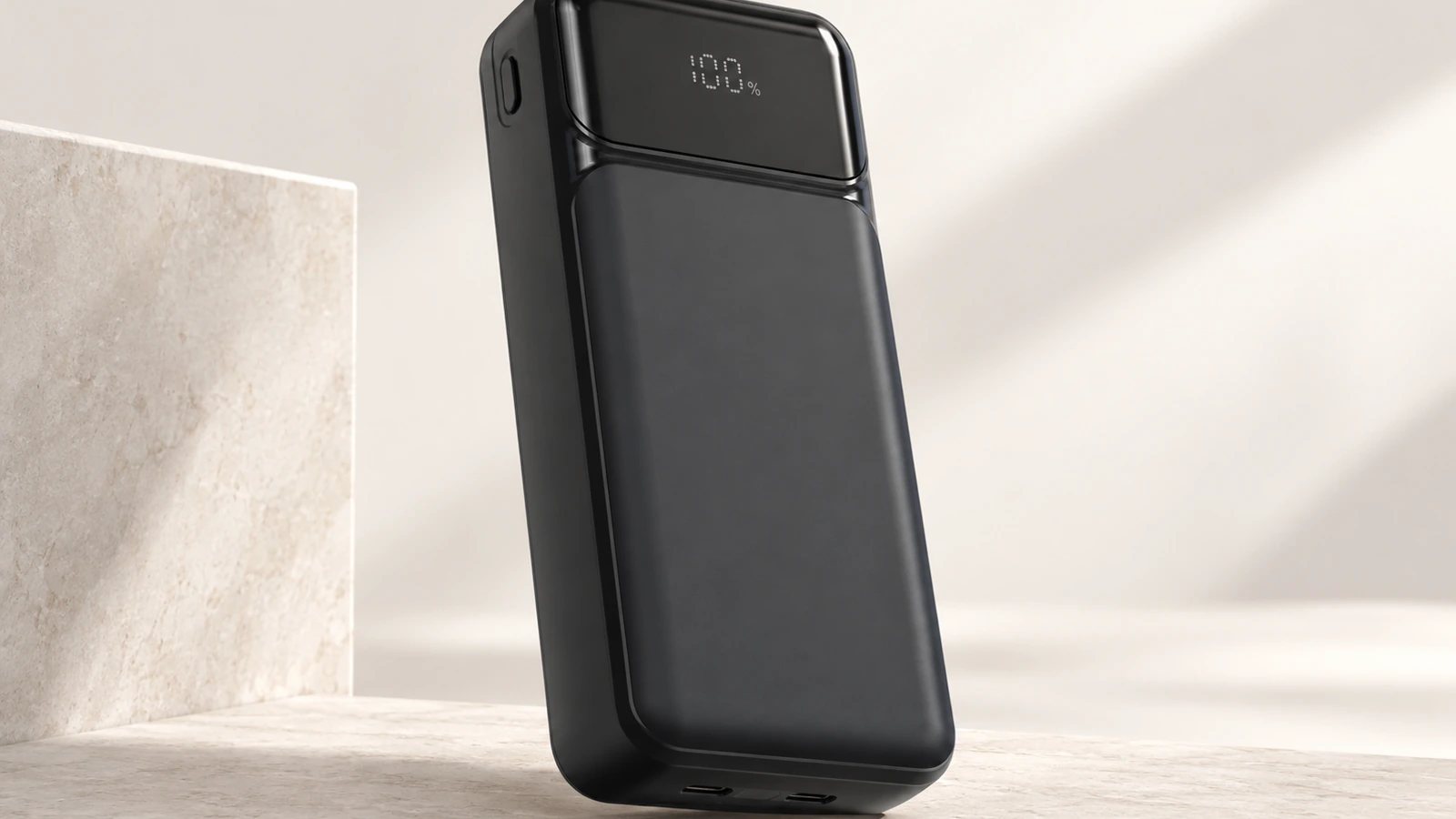
For each claim, name the power bank SKU and firmware, port, cable type and rating, destination device, software state, starting charge level and test duration. Where multiple ports are used, log each port’s behavior separately; a combined total must not be presented as one-port output.
USB-IF publishes the USB Power Delivery specification and source-power test material. Use the relevant specification as a technical reference, but request actual exact-SKU results instead of assuming that a protocol label proves a retail statement.
Measure the claim the customer will read
Separate an electrical capability from a user outcome. “Supports a profile” is different from “charges this named laptop at this rate,” and both differ from “adds X% in Y minutes.” The last statement requires device-specific conditions and repeatable observations.
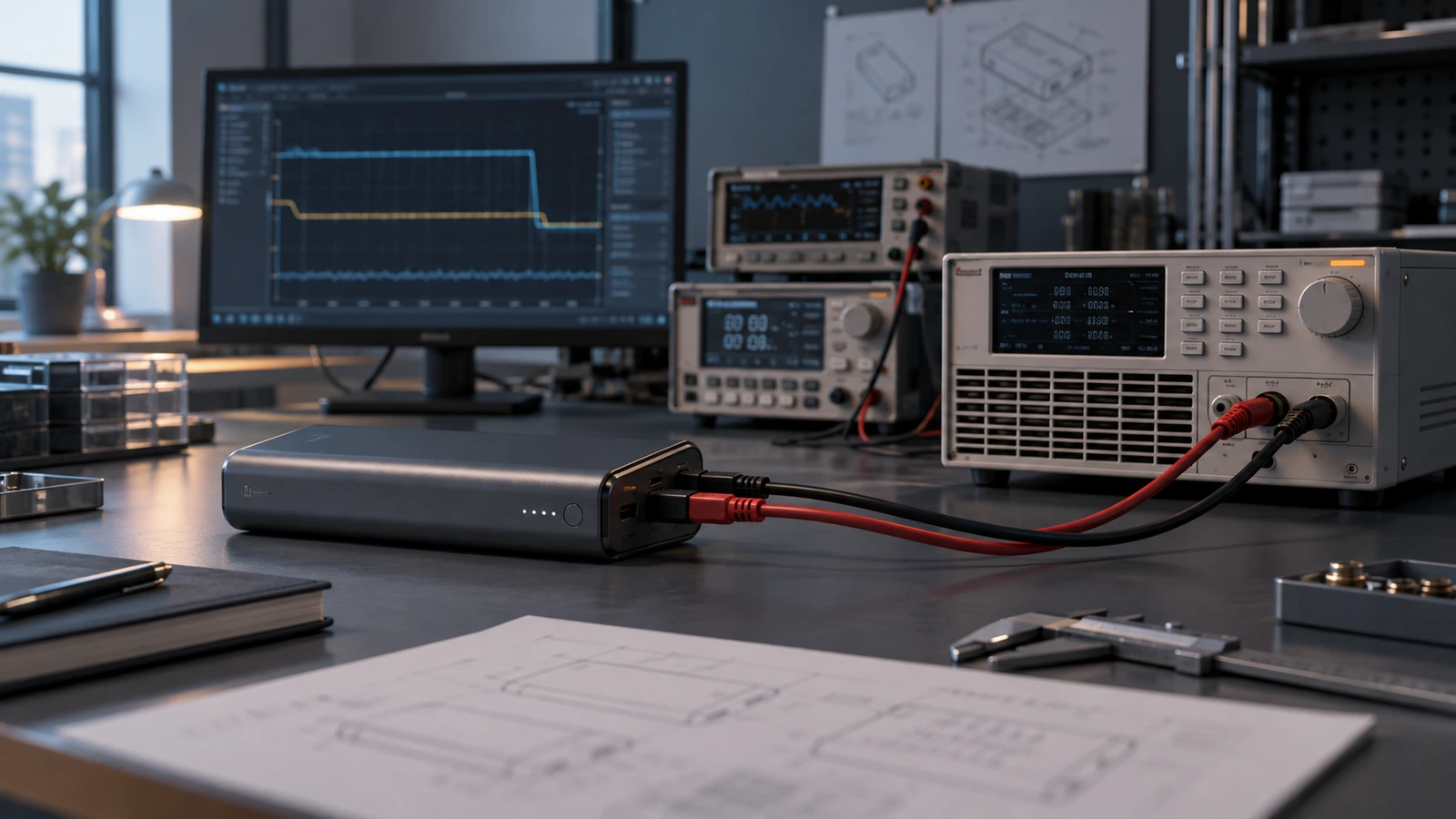
Run a matrix that includes a reference cable, the included cable if any, and realistic third-party cables. Capture negotiation failures, cable heating, interruptions and reduced output at lower state of charge. An unexpected result becomes a claim exception or product issue, not a discarded run.
Approve one claim ledger per SKU
Create a claim ledger with statement, test ID, date, firmware, hardware revision, devices and limits. Carry the approved wording into website, box, marketplace, distributor sheet and translated copy. A copy change should be treated like an engineering change when it expands the implied promise.
If the supplier changes the controller, port design, included cable or firmware, reopen the affected claims. Reusing a previous model’s test evidence is only defensible when the technical equivalence is documented.
Buyer approval matrix
| Claim | Minimum test record | Safe interpretation |
|---|---|---|
| Port output | Port, negotiated profile, load, duration | Capability under stated conditions |
| Device charge | Named device and software, cable, start state | Observed device-specific result |
| Multiport | All connected devices and split behavior | Total and per-port outputs remain distinct |
| Fast-charge time | Repeated start/end states and conditions | Do not generalize across devices |
A buyer scenario
Illustrative buyer scenario: a distributor compares two samples, both labeled 45 W. One reaches that level only through a specific single-port setup; the other reduces output when a second device is connected. The buyer changes the comparison sheet to show the tested one-port and two-port conditions before choosing the retail wording. No performance result here describes a ZEROSET model.
Frequently asked questions
Does a 45 W label mean every phone takes 45 W?
No. The receiving device, state of charge, protocol and cable affect the negotiated result.
Should the included cable be tested?
Yes. It is part of the sold experience and may differ from a laboratory reference cable.
Can two ports each deliver the headline output together?
Only if the exact multiport test and specification support that statement.
What is a useful charge-time test?
Name the device, software, start/end charge, cable, ambient conditions and repeat count.
Is a protocol icon enough evidence?
No. Retain exact-SKU implementation and test records; use certification marks only with valid authorization.
When should claims be retested?
After relevant controller, firmware, port, cell, cable or thermal changes.
What should be sent in an RFQ?
List target devices, ports, cable inclusion, advertised claim and the evidence format you expect.
Primary sources and scope
These sources explain standards or rules; they do not certify any ZEROSET model. Verify the exact SKU, destination and current requirements before making a market claim.