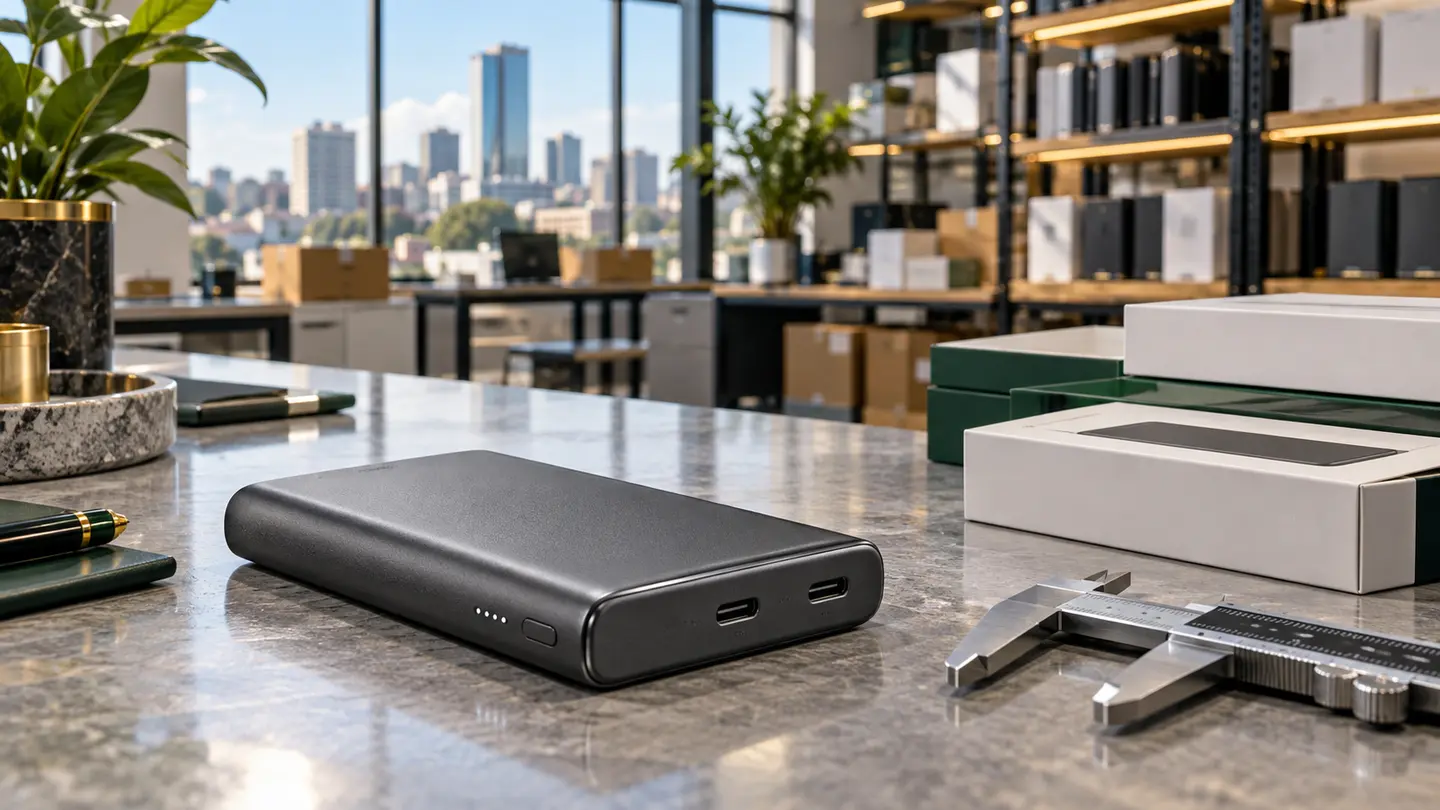
A Zimbabwe power bank import decision should start with the sales channel, the exact SKU file and landed cost—not a catalogue photo. This guide gives importers and distributors a defensible route from range planning to shipment release.
Country evidence: Use POTRAZ’s published sector-performance reports to track Zimbabwe’s mobile and data context, but do not convert telecom subscriptions into accessory demand. Record distributor orders, channel price points, warranty returns and currency assumptions separately for Harare, Bulawayo and regional accounts. Confirm standards questions with the Standards Association of Zimbabwe before purchase-order release.
Zimbabwe: verified local seller listings and import research
Inkvantage advertises Oraimo P118D 10K for US$15 and OPB-204D 20K for US$25; Incredibuy Harare advertises Oraimo 10K/15W for US$15. Magnet E-Store lists Belkin BoostCharge 10K for US$44. These are observed offers, not verified sales volumes or market-wide bestsellers.
Harare/Bulawayo sales channels and SKU choices
Own-brand mobile-accessory companies can test 10K built-in cable via online ordering and local delivery; physical store suppliers need an everyday 10K and differentiated 20K with batch-based warranty handling. Premium retail can evaluate magnetic or higher-output models. Incredibuy publishes a Harare store address; Magnet offers pickup/collection and delivery. This does not establish any ZEROSET supplier relationship. Review cable models and OEM/ODM.
Customs and sourcing evidence
The ZIMRA tariff handbook is a primary source for classification. Confirm the latest tariff version, surtaxes, VAT and approvals for the exact SKU. UN38.3 lithium-transport paperwork is a separate check. Keywords: power bank wholesale Zimbabwe, Oraimo 20000mAh Harare, power bank distributor Bulawayo, OEM portable charger Zimbabwe.
Market interpretation for Zimbabwe
Map the channel before choosing capacity. Phone-accessory wholesalers need compact cartons, clear model codes and simple warranty triage; ecommerce requires exact wattage, dimensions, weight and box-content claims; corporate and institutional buyers may require traceable batches and document packs. Start with two or three clearly separated SKUs, then measure 60–90 days of sell-through and returns.
A range built on declared specifications
Nominal cell capacity, rated output capacity and Wh are different quantities. Packaging, listing and inspection records must use the values approved for the exact model.
Compliance and lithium-battery file
Start local verification with Standards Association of Zimbabwe, the importer of record and a licensed customs broker. Freeze the model, cell configuration, PCB/firmware, cables and label before requesting evidence. Obtain the UN 38.3 test summary for the exact configuration, applicable safety/EMC evidence and destination-ready labelling. CE, FCC, RoHS or IEC 62133 files are not universal approvals.
- Freeze model, cell, PCB, firmware, cable and packaging revision.
- Match every report and label to that exact revision.
- Confirm registration, customs and carrier acceptance before production.
- Keep a shipment file with test summary, SDS/MSDS where requested, invoice, packing list, label and inspection record.
Quality plan and change control
Approve a golden sample and lock the BOM. The inspection plan should cover cell incoming checks, sampled capacity, protocol negotiation, port insertion, cable flex, thermal rise, protection functions, charge/discharge cycling, carton drop checks and cosmetic AQL. Record PCB and firmware revisions; no cell, PCB or cable substitution should be accepted without written review.
MOQ, timing and landed cost
Normal starting points are 1,000 pieces per mature model/design; 500 pieces per standard colour inside a qualifying order (custom colour normally 1,000); 2,000 pieces for deep ODM; and 3,000 pieces for a new private mould. A standard sample is normally 7–10 days and mass production about 30 days after approvals and material readiness. Compare quotations on the same configuration and separate product, packaging, testing, inspection, dangerous-goods handling, freight, duty, tax, broker, inland delivery, FX and warranty reserve.
RFQ / dossier d’achat
- Channel, retail band and annual forecast by SKU.
- Capacity, Wh, output protocols, ports/cables, dimensions and weight.
- Label language, importer fields, barcode and packaging dieline.
- Required evidence by model and revision.
- Incoterm, destination, mode and delivery window.
ZEROSET products · Buyer resources · Structured RFQ
Buyer questions
Does every ZEROSET model already meet every Zimbabwe requirement?
No. Evidence is model-, revision- and destination-specific. The importer must confirm the current route before production.
Is 20,000mAh always the best seller?
No. It adds runtime, but also weight, freight exposure and retail price. Validate the role with channel-specific orders and returns.
Can the standard MOQ be reduced?
Feasibility depends on model, colour, artwork, documents and schedule. The normal mature-platform baseline is 1,000 pieces per model/design and 500 pieces per standard colour within an eligible order.
What must match the UN 38.3 file?
The battery configuration and tested article must match the ordered model and revision. Check model naming, Wh, cell/PACK state, labels and transport documents together.
What should a first shipment inspection cover?
Verify quantity, packaging, markings, ports and cables, charging behavior, sampled capacity, cosmetic AQL, carton condition and exact approved revision before release.
Related buyer controls: use the power bank sourcing guide, release shipments with the pre-shipment inspection checklist, and govern substitutions through the component-change reapproval matrix.
Sources / Sources officielles
- POTRAZ — Zimbabwe telecommunications regulator.
- World Bank country indicators — accessed 8 October 2026.
- GSMA Mobile Economy.
- ITU Facts and Figures.
- IATA lithium battery guidance.
- UN Manual of Tests and Criteria, UN 38.3.
- Standards Association of Zimbabwe.
Procedures change. This is a sourcing checklist, not a customs ruling; the importer of record must verify the current route.