
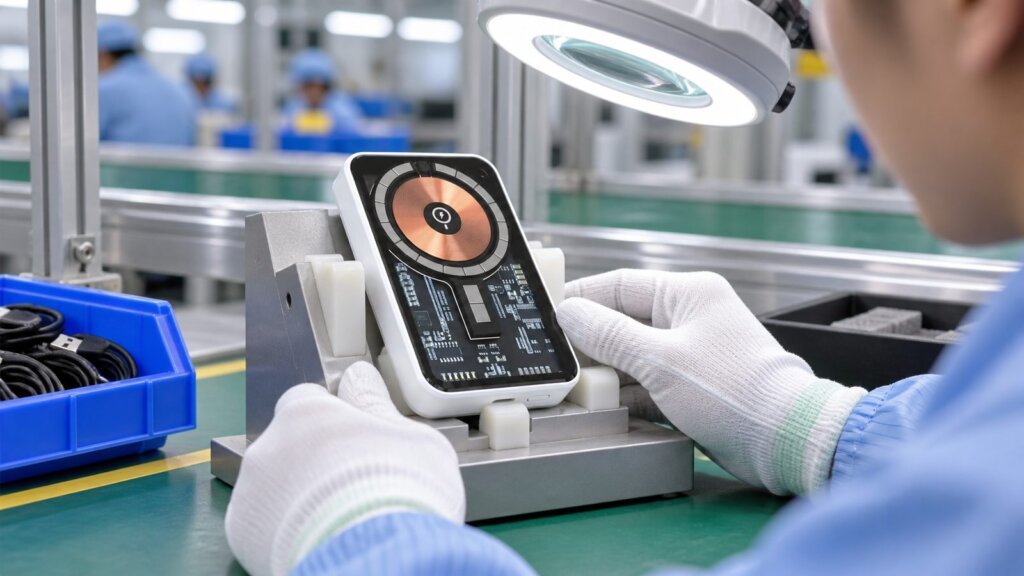
Record the exact SKU, production lot, released revision, station owner, result and disposition. Use project-specific process limits and released work instructions.
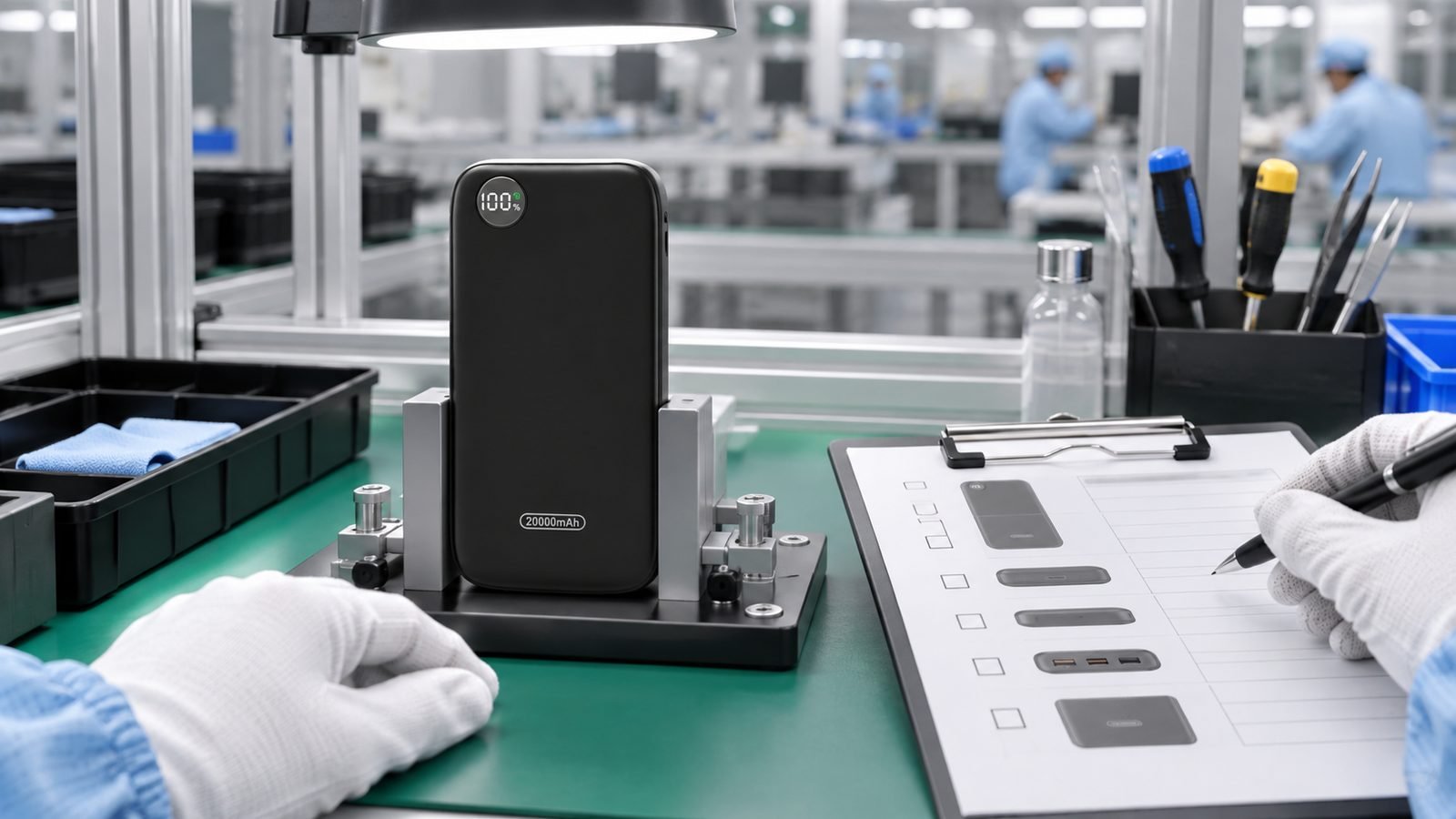
Best for: confirming the line starts from the released product state.
Model / SKU / production lot: ___
BOM / PCBA / firmware: ___
Approved material lots: ___
Fixture / equipment setup: ___
First-piece fit / charge / function: ___
Decision: Continue / Recheck / Hold
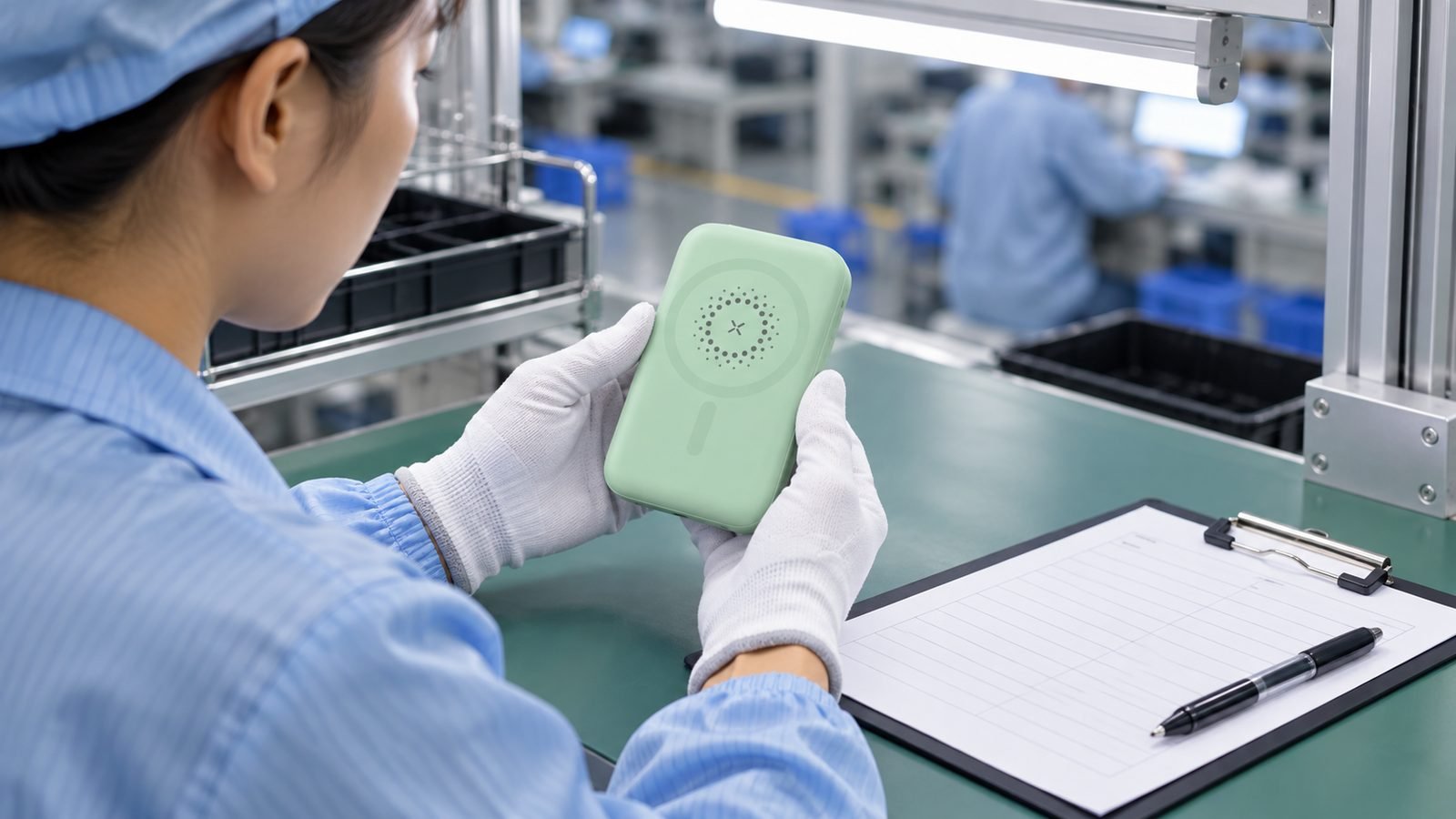
Best for: controlling firmware, cable, soldering and assembly inputs.
Programming version: ___
Cell / PACK polarity & insulation: ___
Cable / connector revision: ___
Solder / weld / flex route: ___
Torque / adhesive / cure state: ___
Decision: Continue / Correct / Hold
Best for: detecting drift after first-piece approval.
Power-on / I-O charging: ___
PD / PPS / cable / mechanism: ___
Protection indicators: ___
Gap / flushness / alignment: ___
Cosmetic / patrol trend: ___
Decision: Continue / Stop / Recheck
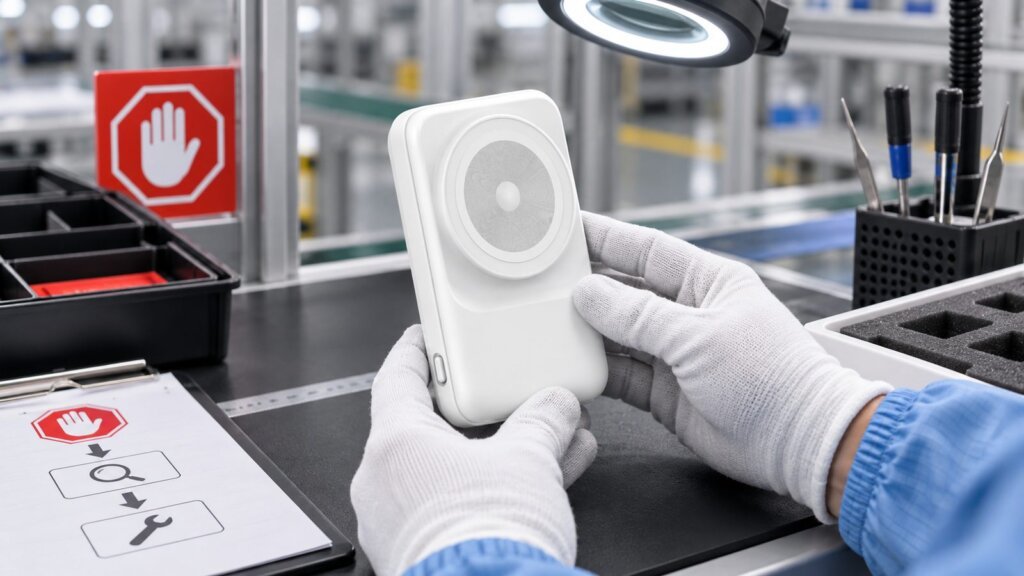
Best for: controlling defects before more units are affected.
Defect / NCR ID: ___
Affected quantity / time window: ___
Stop / hold / segregation: ___
Approved rework / re-inspection: ___
Lot / station traceability: ___
Release: Restart / Conditional / Hold