
Power Bank Pilot Build Failures: When to Release, Rework or Resample
When should a buyer release, rework or resample after a power bank pilot build fails?
A pilot build is meant to expose gaps between a good sample and repeatable production. The useful decision is not a pass percentage in isolation. It is whether the actual failure mode is understood, contained and prevented in the approved SKU.
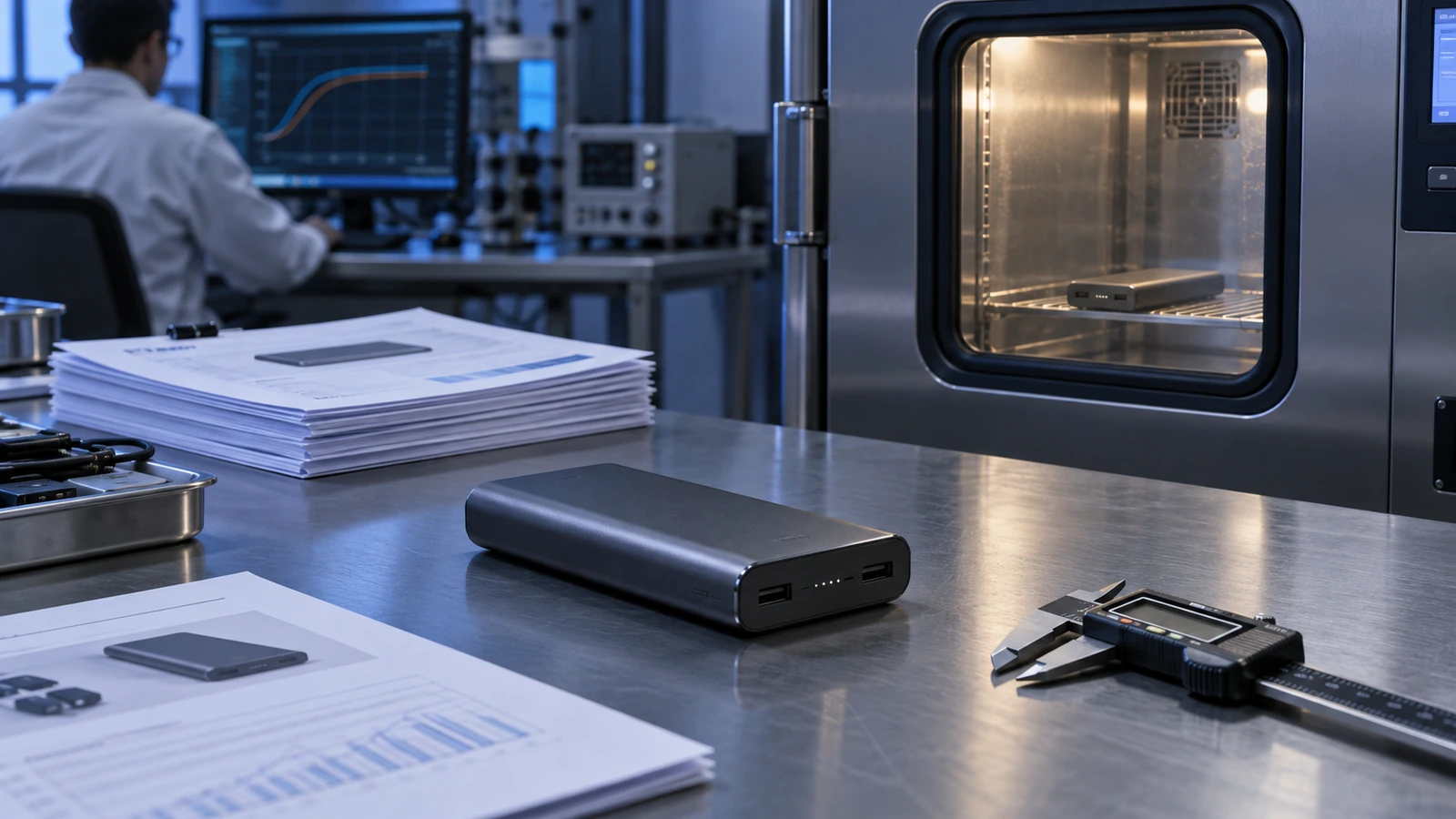
Triage by failure mode, not cosmetic severity
Collect failed and passing samples with unit IDs, work order, component lots, firmware, test conditions and operator notes. Separate safety-critical behavior, functional loss, intermittent faults, cosmetic defects and documentation gaps. The same visible symptom may come from different roots.
Use a containment rule for shipping and work in process while the cause is unknown. A high pass rate does not make a rare overheating or protection failure acceptable. Conversely, a packaging scuff may be solved at a narrower gate.
Choose the disposition with evidence
Release means the approved specification was met and the deviation has a documented rationale. Rework means there is a controlled work instruction, trained operator, before/after inspection and trace of reworked units. Resample means the design or process change affects what the original sample approval established.
Run verification on the changed function and the connected failure modes. A connector repair can affect charging, housing seal or cosmetic finish; a firmware fix can affect several power states. Document why each test was selected.
Close the learning loop
Update the control plan and incoming or in-process checks so the fault can be caught earlier. Tie the pilot result to the production release record, with open items, owners and dates. If a workaround remains, label it explicitly rather than silently moving it into routine production.
Buyers should ask for both the failed example and the corrected one. A polished sample without the defect history cannot show whether the process is stable.
Buyer approval matrix
| Observed failure | Immediate action | Release evidence |
|---|---|---|
| Safety/protection anomaly | Hold and investigate affected lots | Cause, correction, full relevant retest |
| Functional intermittent | Contain and reproduce | Repeatability and verified fix |
| Cosmetic variation | Grade against signed standard | Approved sample and inspection limit |
| Documentation gap | Block evidence-dependent claim | Complete exact-revision record |

A buyer scenario
Illustrative buyer scenario: pilot units intermittently disconnect when the built-in cable is bent. The team first considers reworking connectors, but root-cause review shows the exit-slot geometry concentrates strain. The buyer orders a revised sample and repeats handling and charging tests before any production release. This is an illustrative decision, not a reported ZEROSET build.
Frequently asked questions
Can a high pilot yield justify shipping with one critical failure?
No. Severity and cause matter; contain and investigate the affected population.
What is the difference between rework and resampling?
Rework fixes units under a controlled instruction; resampling reapproves a changed design or process.
Should the failed units be kept?
Yes, retain representative units and identifiers until root cause and verification are recorded.
Who signs release?
Assign technical, quality and buyer owners according to the failure and purchase agreement.
How much retesting is enough?
Retest the changed function and credible connected failure modes; justify the scope.
Can packaging be released while hardware is open?
Avoid irreversible print commitments if unresolved findings could change claims or identity.
What belongs in the pilot report?
Lot and revision IDs, failure counts, cause, containment, corrective action, retest and open decisions.
Primary sources and scope
These sources explain standards or rules; they do not certify any ZEROSET model. Verify the exact SKU, destination and current requirements before making a market claim.