ZEROSET
☰ Menu
EN
Get Quote

Saint Kitts and Nevis power bank wholesale guide

Buyer brief. A two-island supply plan needs clear carton identification, practical replacement rules and a compact range that works for residents, visitors and business channels. This guide does not estimate national sales or treat a small shelf sample as market share.
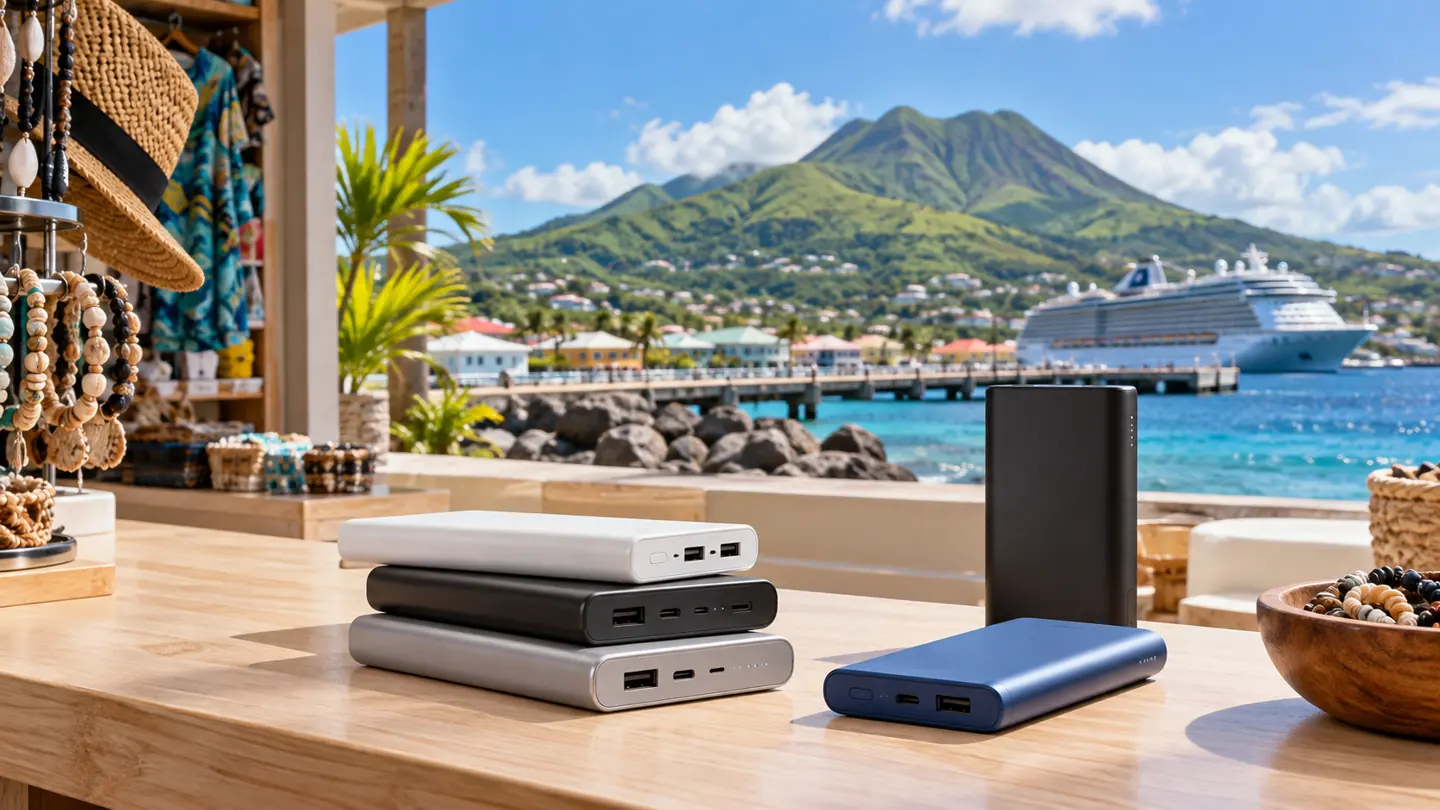
Saint Kitts and Nevis power bank sourcing concept
AI-generated sourcing illustration; not a customer project photograph.

Ten local decisions

  • Model replenishment for Saint Kitts and Nevis separately while keeping one controlled SKU file.
  • Use a three-role range before adding colours or near-duplicate capacities.
  • Show capacity, Wh, ports and included cable clearly for travel shoppers.
  • Avoid universal airline claims; refer travellers to current carrier rules.
  • Plan packaging for humidity, sea/air transfers and repeated handling.
  • Define who holds replacement units on each island and how credits are issued.
  • Date telecom, appliance, pharmacy and travel-retail observations.
  • Freeze barcode, colour names, carton marks and included cable.
  • Retain UN 38.3 summary, BOM revision, golden sample and inspection.
  • Keep online, packaging and service claims identical.

Range architecture and evidence

F91 at 5,000 mAh / 19.35 Wh, F97 at 10,000 mAh / 38.5 Wh and B102 at 20,000 mAh / 77 Wh are compact, daily and high-capacity platform references. They do not imply identical power, accessories or certification across variants.

Give each SKU one principal job and one controlled name. When two products look the same but carry different capacity, ports or cables, forecasting and customer service deteriorate.

Five approval gates

  1. Documents: specification, BOM, artwork, label, UN 38.3 summary and route files.
  2. Golden sample: appearance, weight, ports, cable, display and claims.
  3. Pilot: charge/discharge, temperature, flex, fit, pack drop and traceability.
  4. Content: packaging, master data, listing and service must match.
  5. Shipment: inspection, lots, master cartons and logistics hand-off.

Commercial planning

Mature platforms normally begin at 1,000 units per model; deep ODM at 2,000; and a new private mold at 3,000 per design. Standard colours normally begin at 500 per colour and custom colours at 1,000. Samples typically take 7–10 days; mass production around 30 days after approvals; quotations are normally valid for two weeks. The written quotation controls.

Verification sources

Record retrieval dates and confirm obligations with local advisers and route partners.

Frequently asked questions

What should buyers compare first?

Capacity, Wh, power, cable, size, weight, warranty and evidence.

Can the pack say “airline approved”?

Avoid a universal promise. Show Wh and direct travellers to the operating carrier.

Should we launch many colours?

Validate the base SKU and reorder economics first.

How many samples are useful?

Enough for buying, engineering, content, packaging and a retained golden sample.

When should compliance be reviewed?

At architecture choice, before artwork, with the final BOM and before shipment.

Build the Saint Kitts and Nevis RFQ

Send channel, capacity, power, quantities, colours, packaging, destination and launch date.
WhatsApp ZEROSETSend an RFQ