A single-hub range can simplify replenishment if every carton and warranty record carries the same selected SKU revision. This guide turns public context into questions for an importer, distributor or retailer; none of the country indicators below measures power-bank sales.
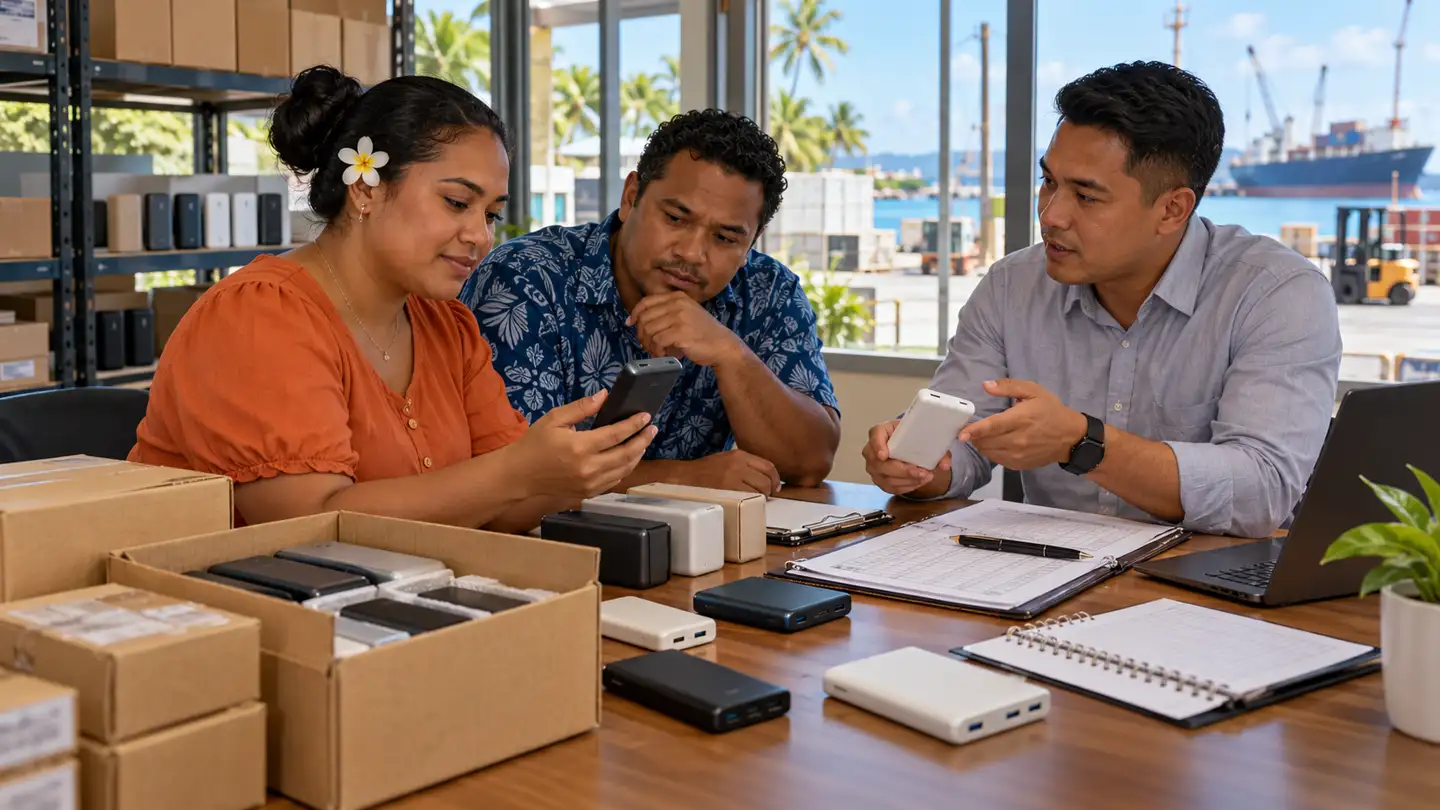
A Nauru-based 10K/20K mobile power-bank retailer with a verified brand/model, AUD shop price and confirmed inventory was not identified. Seek purchase quotation, shelf photo, merchant identity, stock and warranty evidence instead of inventing a market price.
Prospective own-brand mobile accessory merchants and electronics-shop suppliers can test 10K USB-C integrated cable versus 20K capacity. The Customs Act 2014 governs import valuation; 2024 Customs Regulations permit tariff classification and origin advance rulings. 2026 Gazettes may provide targeted exemptions but do not prove a general power-bank concession. Confirm tariff, goods value, UN38.3 and carrier rules. See ZEROSET ODM.
The latest available observations below come from the World Bank API and use different reporting years. Population sets scale, internet use informs digital listing reach, electricity access describes a household service, and urban share suggests where a first store audit may be practical. None gives unit demand, annual sales, capacity preference or an import forecast.
| Indicator | Latest value | Year | Source |
|---|---|---|---|
| Population | 12,025 | 2025 | World Bank indicator |
| Individuals using the internet | 83.0 | 2024 | World Bank indicator |
| Population with electricity access | 100.0 | 2024 | World Bank indicator |
| Urban population share | 100.0 | 2025 | World Bank indicator |
Internet use is 83.0% (2024); a marketplace listing can reach some buyers, but offline shelf evidence remains essential. Urban share is 100.0% (2025), which should guide sampling locations rather than be multiplied into a sales forecast. Electricity access of 100.0% (2024) does not tell us outage frequency, charging habits or willingness to pay.
No dependable Nauru-local power-bank shelf series was verified. A dated in-store audit and reseller interviews should precede claims about capacity preference or prices. View the cited shelf or context source. Capture the date, retailer, item name, nominal capacity, connector, stated output, displayed price and in-stock status. Compare like for like only after checking whether each figure refers to the input, one wired output, wireless output or combined output.
Begin with F97 10K (38.5Wh, 175g); test F91 5K only if slim magnetic fit is documented on actual phones and cases. Avoid a magnetic listing that implies universal alignment.
For each return note sale month, batch, phone, cable and fault category; calculate rate from units actually sold. Do not merge sample units, transit damage and customer failures into one percentage.
Ask for a golden sample tied to the model and revision on the carton. Test input and output with a named handset, cable and meter; photograph connector fit and the printed battery-energy label. Define pass/fail for cable retention, ports, housing and packaging before the purchase order. For the first sell-through review, keep a weekly line for opening units, receipts, sales, stockouts, transit damage and confirmed customer faults. Show both counts and percentages; a percentage without a sold-unit denominator is misleading in a small market.
Only after a phone-and-case fit trial shows F91 solves a distinct carry need beyond the F97 10K core SKU; keep the two revisions separate.
Request the model and revision discussed above as a physical sample. Include the connector, capacity/Wh label, port-specific output, packaging and one test handset in the acceptance sheet; do not substitute a similarly named variant.
State the exact port or cable, test voltage/current path, phone model, battery state and cable used. A catalog maximum is conditional, and sustained phone charging can change as the battery fills or warms.
Log invoice date, store or island, model, revision or batch, sale count for the period, fault symptom, photos and the result of a repeat test. Separate shipping damage from a verified electrical or mechanical fault.
Match one shop’s receipts, sold units and remaining cartons to batch-coded claims, while separating sample failures and transport damage.
Send your channel, target handset and case mix, preferred connector, trial quantity and test checklist to ZEROSET on WhatsApp first. For a structured specification and sourcing request, use the RFQ form second.